
Much of a movie’s tone, narrative, and look are decided long before scheduling shooting, and often before writing the script — but not always.
From Disney to Pixar, Warner Brothers and beyond, the demonstrable value of storyboards and previs efforts in production is undeniable. The most dynamic alterations that shape a franchise can sometimes happen in post-production — in the midst of creative collaboration, with multiple minds at work in a video review session. Speaking with users of the video review tool, cineSync, we’ve collected some of the most unexpected, impactful post-production moments that changed the direction for the world’s biggest blockbusters.
Jon Favreau – Iron Man
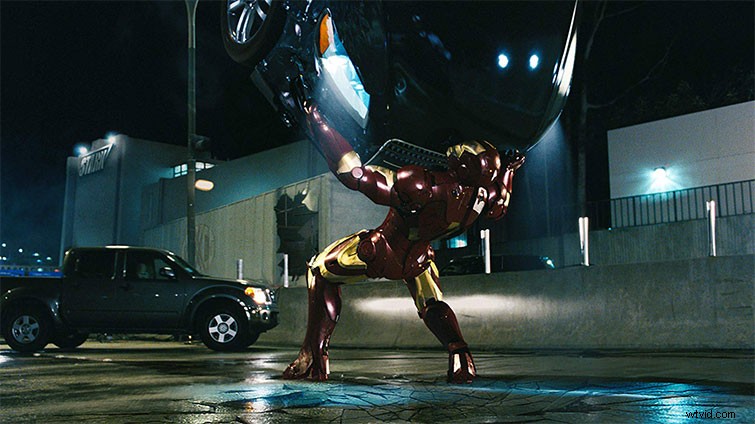
Video review tools were indirectly responsible for the very first character crossover in what later became the Marvel Cinematic Universe (MCU). During post-production for Iron Man, an ILM artist added Captain America’s shield into a scene — a little joke for Jon Favreau. From there, the crossover grew exponentially. Favreau told MTV News the following:
The MCU now encompasses twenty films, with twelve more in various stages of production. It’s the highest-grossing film franchise of all time, having grossed over $17.5 billion at the global box office.
Peter Chiang – Exodus: Gods and Kings
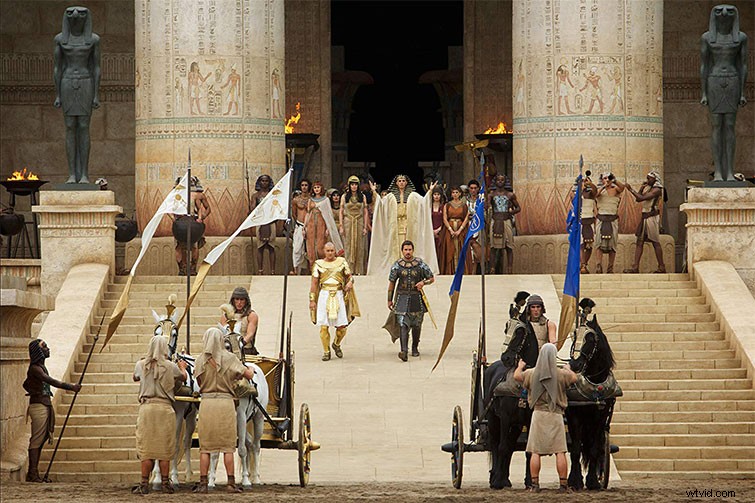
Ridley Scott‘s retelling of Moses leading the Israelites out of bondage in Egypt, Exodus: Gods and Kings, stands out as a movie for which video review was invaluable. The pipeline led Ridley Scott to pick up a Wacom Cintiq tablet and annotate directly on set images from anywhere in the world. This was especially important as shooting took Scott from Mexico, to Morocco, and even to Fuerteventura. Peter Chiang, the film’s VFX supervisor, recalls the following:
Ridley’s annotations pushed the quality of scenes to a new level — sometimes with minor refinements, and sometimes into an entirely new direction — allowing for full creative exploration so the VFX team could find the best solution to the shot. Chiang continues:
Swarms of locusts and parting oceans aside, the main VFX work on Exodus: Gods and Kings involved accurately portraying Egypt in 1300 BC, with all its grand architecture and magnificent environmental assets. All scenes in the movie passed under the artistic eye of Ridley Scott.
Jake Morrison – Thor: Ragnarok
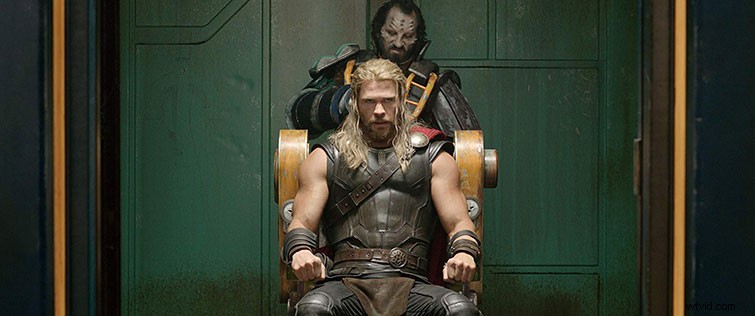
From superpowers to capes and tights, every comic book hero has their own iconic look. Color plays an important part in creating that look within the Marvel Universe. Besides adding a bit of personality, a standout color scheme for each character can help audiences keep track of what’s happening in the midst of a heated battle royale.
So, how does Marvel cycle through infinite shades of red, blue, yellow, green, and everything in between? Video review helped filmmakers isolate almost any color within a shot using a combination of contrast, saturation, and the hue wheel in cineSync.
For example, in the last few weeks of production on Thor: Ragnarok, Marvel and Image Engine teamed up to create an interdimensional portal introducing the film’s main antagonist, Hela. The result was a rolling mass of energy called a “curly crackle,” almost like a three-dimensional lava lamp crafted through particle simulations. But something in the scene still didn’t look quite right. Jake Morrison, Marvel’s VFX Supervisor, explains:
Best of all, the team didn’t have to go back and do another fifty rounds of particle simulation to pinpoint Hela’s one, iconic color. Her character quickly developed into a different style than originally proposed.