
The lens market can be a confusing place for beginners. While the 16-35mm and 24-70mm are a favorite with photographers, how do they fare when used for video?
The 16-35mm f2.8 and the 24-70mm 2.8 are two of three lenses that create the holy trinity of lenses that you see more or less every manufacturer produce—the other being a 70-200mm 2.8. Due to their wide range of focal lengths and fast speed, they are a favorite with photographers who prefer a couple of zoom lenses opposed to a large number of prime lenses.
Additionally, buying several professional prime lenses can quickly ascend into the thousands of dollars margin. But on the topic of affordability, f/2.8 zoom lenses don’t come cheap. Because of their build and quality, you’re typically going to see $1,500-$2000 minimum for one lens. So with that, which one should we get for video?
While the article below covers everything presented in the video, some segments may specifically call to the visual examples found within the tutorial. Make sure you save the video to your Watch Later list for when you’re free.
16mm is Wide
I’m primarily a prime lens user when it comes to video. I prefer that extra sharpness that comes with the prime glass. But late 2019, I approached landscape photography with more enthusiasm and picked up the 16-35mm and 24-70mm for my photos. And while I had no intention of using the glass for video, the versatility and proficiency of carrying fewer lenses became preferable for some shoots.
For landscape photos, the more expensive 16-35mm is the perfect lens for extenuating the scenic imagery. Still, many photographers suggest that that the broader end of that focal range is more specialized than your standard focal length and rarely used outside of landscapes. I love to use it for my video content as I live in quite a scenic location and emphasize the location more than the subject. But, it does have several limitations for video.
The 16-35mm covers a 19mm range, whereas the 24-70mm covers 46mm. That’s a lot more focal length for various angles. So what are we finding in that extra 8mm in the 16-35 that causes this lens to cost more usually? We need to acknowledge just how much extra viewing distance those extra 8mm gives us. Many don’t realize just how wide 16mm is on a full-frame camera. It costs more due to the lens’s engineering to make sure there’s no severe distortion at this wide of a focal length. So what’s the overall discrepancy between 16mm and 24mm?
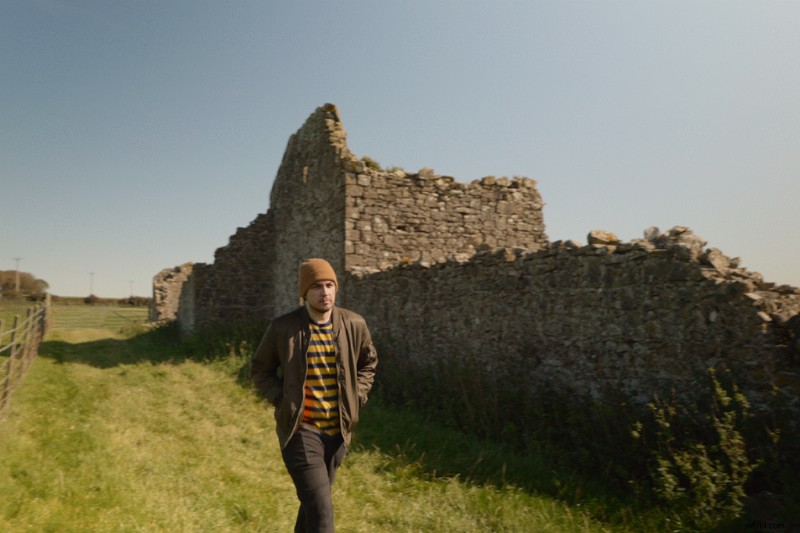
Take this shot at 24mm; it’s a wide shot and we could easily use it as an establishing shot.
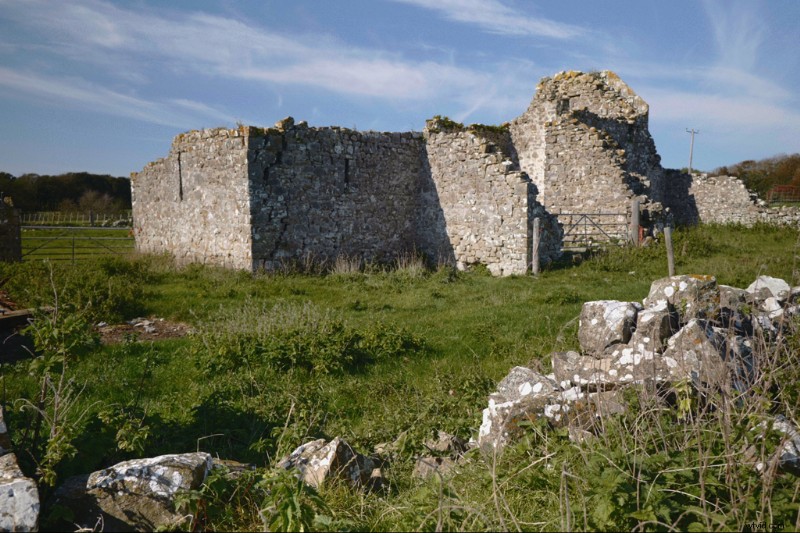
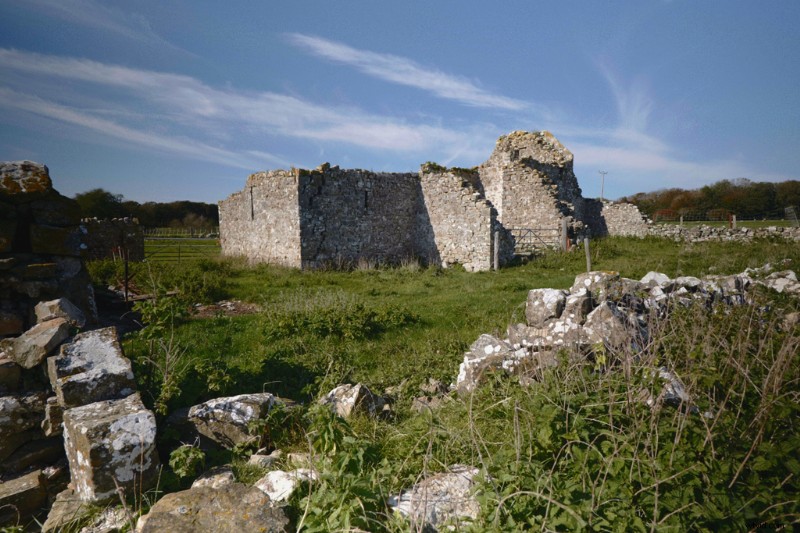
However, when we reduce to the focal length to 16mm, we can see the extremity of the wide focal length. We’re quite literally getting the left to right corner structure of the ruins in the shot, which sometimes doesn’t as natural to watch as a video clip as opposed to a still image.
Additionally, the subject, the location, has become a much smaller element within the image, while the foreground interest has taken up a larger space within the composition.
Wide Angle for Gimbal Work
From the angle of view, it should be noted that the 16-35mm, at 16-20mm, makes the perfect choice for gimbal work. Suppose you have a camera with less than excellent autofocus, and you may sometimes struggle to get efficient autofocus when the gimbal is coupled with a longer focal length. However, when you’re using a lens with a wide focal length, in our case, the lower end of the 16-35mm, it has a wider focusing distance. So, you could set your camera to manual focus, your lens to 16mm, the focus to infinity, and gimbal away like a Terrance Mallick movie without the worry of elements dropping in and out focus.
Focusing distance is simply the depth of field. It is typically controlled by the aperture to maximize and minimize the depth of field. However, the focal length also plays an essential factor.
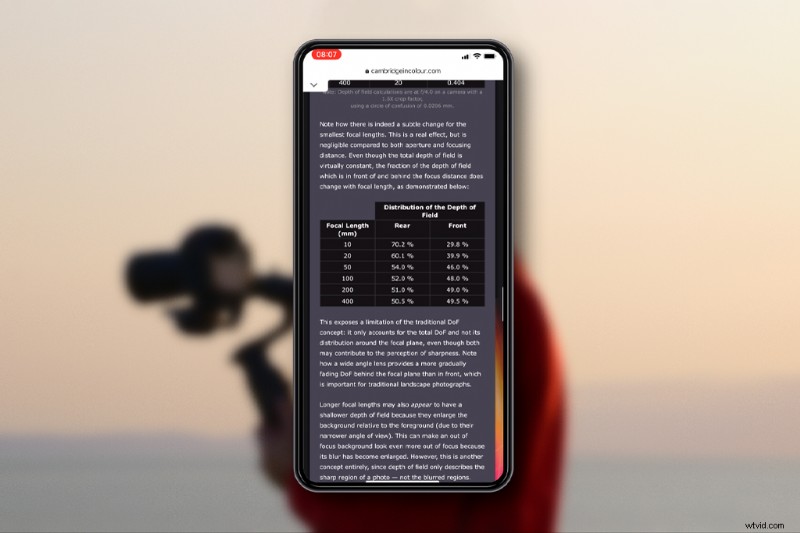
The website Cambridge in Colour is a fantastic resource for both practical and technical applications. Their article on the distribution of the rear and frontal depth of field depending on the focal length clearly shows that a wide-angle has more rear distribution. This means that if appropriately focused, by the time the image falls out of focus on the horizon it looks completely natural.
Wide Angle Detriments in Video
It’s also important to note that at 16-18mm, standard screw-in variable ND filters will often produce a form of vignetting. At 24mm, it’s not noticeable.
Yet when we revert to 16mm, we can now see the darkened areas of the image.
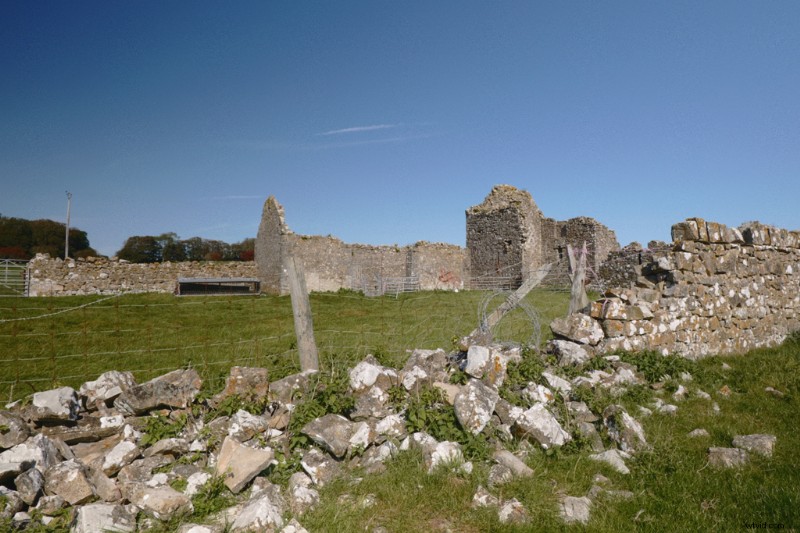
With a RAW photo, you can typically restore the vignetting as long as it isn’t too extreme. However, with video, especially with elements that cross into the darkened regions, it’s not going to be as easy, if at all, to fix. Therefore it isn’t too practical if you’re filming at 2.8 in strong sunlight. So to some extent, it feels quite impractical to have a lens that can’t make use of its wider focal length in specific circumstances.
The Merits of the 24-70mm Zoom
We’ve talked a lot about the 16-35, so let’s look at the merits of the 24-70mm. Running with Cambridge’s In Colour‘s information, we can see that with the increase in focal length, the field window’s depth becomes increasingly narrower regardless of your aperture.
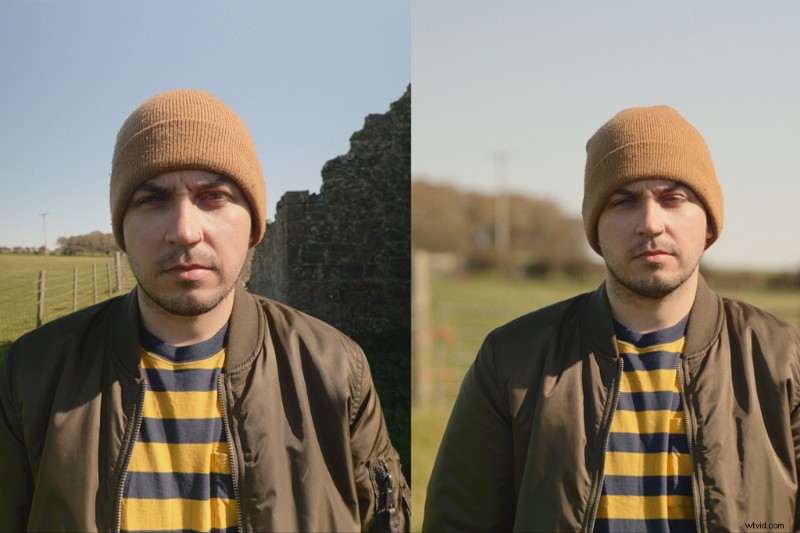
I think this is an important aspect to consider for those creating short-form narrative video content. Even though numerous elements create the “cinematic” look, it’s undeniable that a shallow depth of field will certainly add to it. Take these two shots; the first one is shot at 20mm.
There’s nothing inherently wrong; it’s fine. But if you lack other production elements, lights, costume, and everything else that makes the film look, you can assist in raising your production value with a tighter focal length. When we punch into 50 and have that shallow depth of field separate the actor from the background, it does promote a better sense of cinema.

The visual language of filmmaking is told through the shots presented on the screen, and several core shots can only be acquired with specific focal lengths. Thankfully, you can pretty much form all of them through the focal lengths found within the 24-70mm focal range, from establishing shots, mid shots, and extreme close-ups.
While yes, you could in theory obtain a number of these with the 16-35mm, depending on the selected focal length, you may get distortion when too close. Or, if you’re at 35mm and trying to get a close-up, you’ll find that you’re going to have to get the camera right up into the face of the subject. If that’s quite literally a human face, it can make for an awkward experience.
On the topic of camera placement, the increase in focal length will also dictate where you position your camera to frame a mid-shot. And of course, the further you move back as you increase the focal length, the more compressed the background becomes. As such, shooting from 50mm to 70mm is an excellent way to isolate your subject from your background.
Of course, what you think looks better is subjective, but it’s important to note the wider the focal length, the more accentuated the image will appear. It may cause your subject to look unflattering, whereas 50 to 70mm starts to photograph the face more accurately.
Conclusion
I think it could be summarized into the following; if you’re mostly filming landscape or even cityscapes, get the 16-35. It offers that extra versatility in wide locations, and also hits the sweet spot of 35mm for shots with people. But, if you’re mostly filming people and narrative content, opt toward the 24-70. It still lingers in the wide region for landscape, but tightens in for a more extensive range of conversational and narrative focal lengths.
Just getting started with making your own video content? Learn more about the art and science of video production with these articles:
- The 5 Essential Phases of Video Editing
- Everything You Need to Know About Neutral Density Filters
- 7 YouTube Channels on Filmmaking, Camera Reviews, and Gear
- From Tripod to Gimbal: What Is the Best Camera Stabilization System?
- 9 Essential Cuts Every Video Editor Needs to Know