
If you’ve spent any time around a professional film set, chances are you’ve seen a C-stand. What are they, and what do they do?
C-stands are a beautiful invention. There aren’t many things on a film set that can’t benefit from a C-stand. Whether it’s holding a sunshade for the director or supporting flags or diffusers — C-stands are the ultimate film set necessity.
While there are many uses for a C-stand, there are quite a few specific, intentional uses for this versatile piece of gear, including their original use (holding reflectors).
In this video, I’ll show you some basic guidelines for working with and getting the most out of C-stands on set.
As you can see, this versatile tool deserves your respect. The C-stand is your friend, and its only limitations depend on your imagination. In many ways, the C-stand is like your filmmaking erector set. Build whatever you want with it.
What’s in the Name?
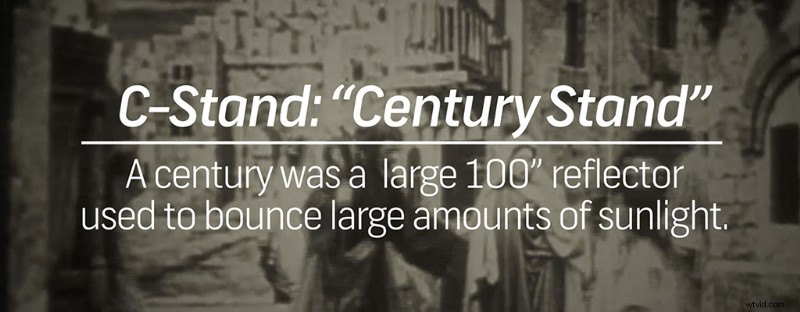
The “C” in C-stand comes from the word “century.”
A Century was a 100″ reflector that bounced light onto film sets in the early days of filmmaking (before big, bright film lights came along). They would put these big reflectors in front of a rotating set and rotate the set as the sun moved across the sky.
In the ’40s, a company called Matthews Studio Equipment started creating new versions of the C-stand, including the first version with a collapsible base, which made the stands easier to transport.
There are now many companies on the market that have taken this design and come up with additional innovations.
Different Types
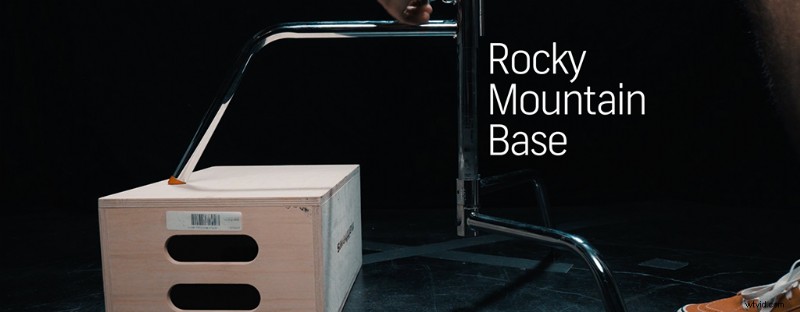
There are many different kinds of C-stands today. The one pictured above, for example, features what we call a Rocky Mountain Base. This means that you can slide the largest leg up and down for steady and reliable use on uneven surfaces like curbs or stairwells.
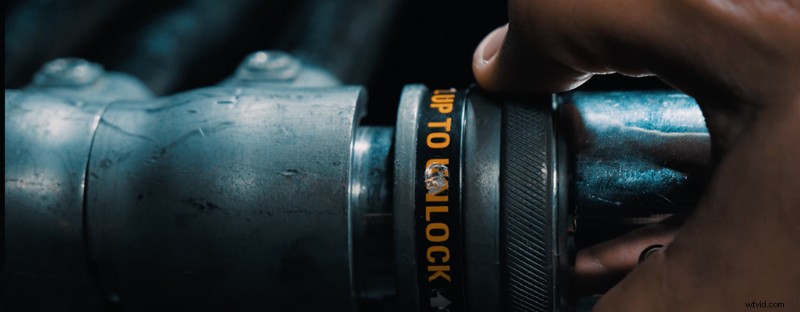
This version from Impact Studio Lighting includes a quick release for the legs. This, in my opinion, is a bit more user-friendly than the standard leg release model.
The turtle base is another popular type of C-stand. You can remove the main riser and pole from the legs, which allows you to make the C-stand more compact — and to stick smaller stands in the space for additional customization.
Ways to Use A C-Stand
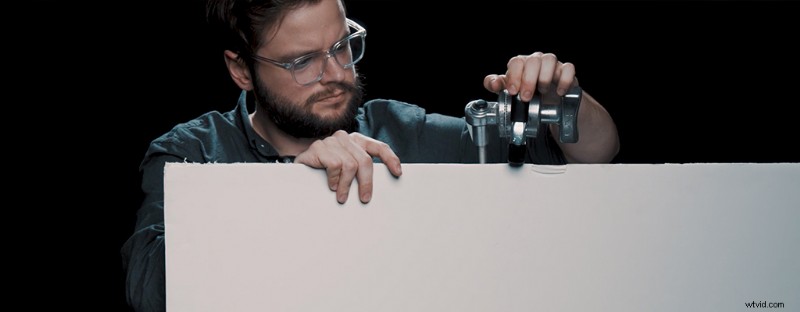
There are countless ways that you can, and should, use a C-stand. As you can see above, with a baby-pin to clamp adapter, you can throw on a quick bounce board to add some fill lighting to your subject. (You could also create a negative fill or flag with a piece of black cardboard.)
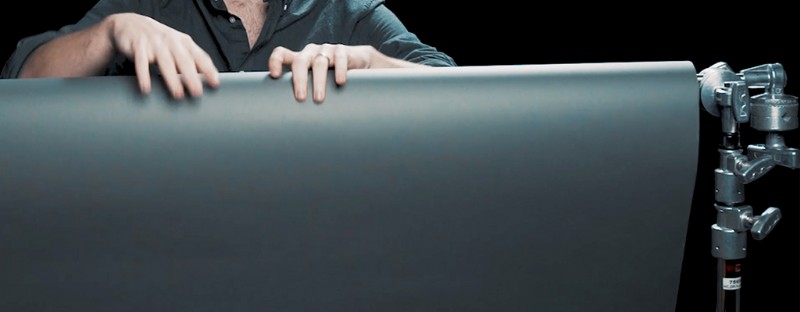
Here, the C-stand functions as a backdrop holder with a roll of 50% gray seamless paper.
This is a quick way to throw up a backdrop. If you have a longer roll of seamless, you can go ahead and throw a second C-stand on the other side.
As you unroll, make sure that you do so evenly, and add a spring clamp to both sides to keep the backdrop still.
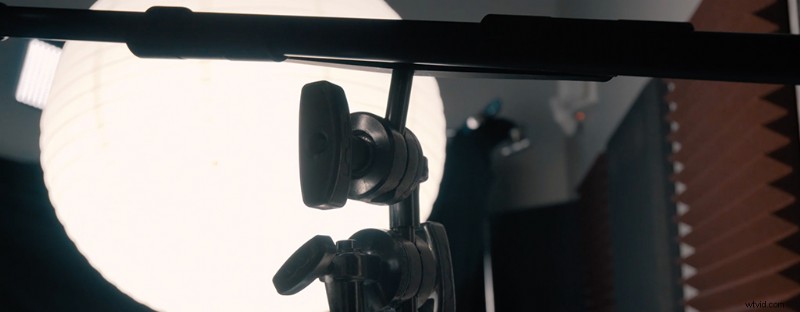
There are also a number of peripherals available for C-stands. Here, we see a boom pole holder in the grip head for the C-stand.
This makes it very easy to keep a nice and clean studio setup and save your audio team’s arms some trouble.
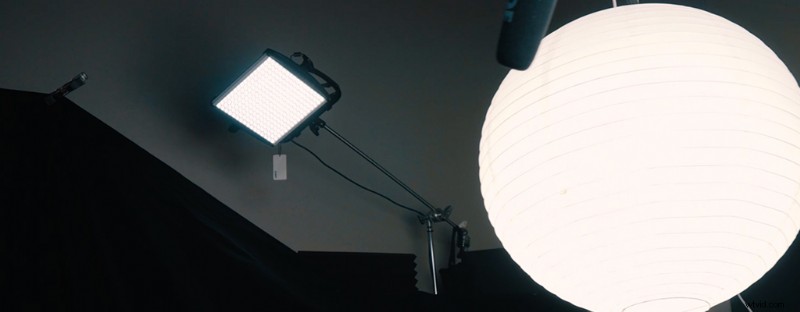
Here, a C-stand is getting some extra reach out of a backlight. This is a common use of C-stands, as their strength (if used correctly) makes them a secure way to protect your talent from falling lights (as long as you correctly counterweight the big, bottom leg with a sandbag).
The C-stand is an amazing tool, and you need to make sure that you use it appropriately. Get creative with various uses, and you’ll soon see why you need this handy piece of equipment on set.
Looking for more filmmaking videos? Check these out.
- Video Tutorial: Cleaning Up Noisy Video in 30 Seconds
- Camera Lenses 101: When to Choose Wide or Telephoto
- Video Tutorial: What Is Gaff Tape, and How Do You Use It?
- How To Properly Expose An Image: Understanding ISO
- How To Properly Expose An Image: What Is Shutter Speed?