
If you have ever been on a film set, you may have heard people referring to “gaff tape.” In this tutorial, we explain what it is and why you should use it.
Since the early days of the film industry, professionals have been using a form of adhesive tape called gaffer’s tape — or “gaff” tape. It is primarily used by the gaffer, who is the chief electrician on set — hence the name. Why does the community prefer this tape? Well, for many reasons. First off, it is highly heat resistant, which is great for use near the powerful lights you’ll usually find on set. Second, it is a very strong, tensile tape, which is necessary when you’re working with rugged equipment.
Here, we are going to explore some of the reasons you would use gaff tape on set — and how to become a taping pro. Let’s get started!
Running Cable
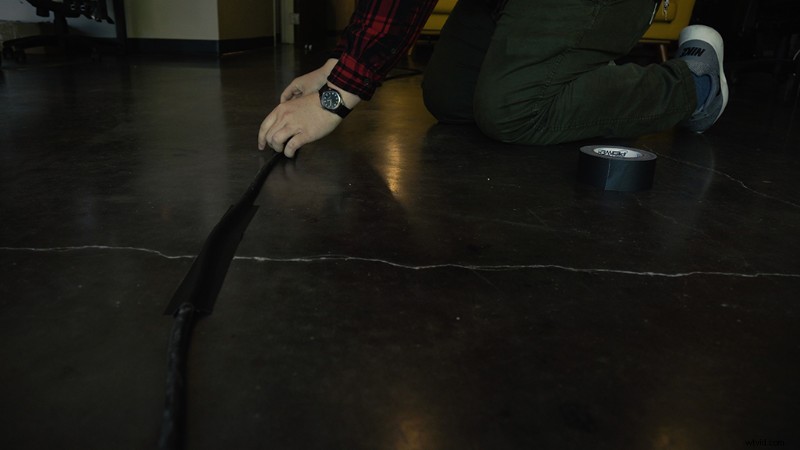
Cable running is one of the most important parts of maintaining a safe set. This means taping down the cables that are running across the set. The reason for this is to keep the cables in place, and to keep them as close to the ground as possible to prevent snagging and tripping. Remember that you do not have to run tape along the entire length of the cord — place the tape in sections so you can conserve gaff tape and speed up the process.
Marking Blocking Locations
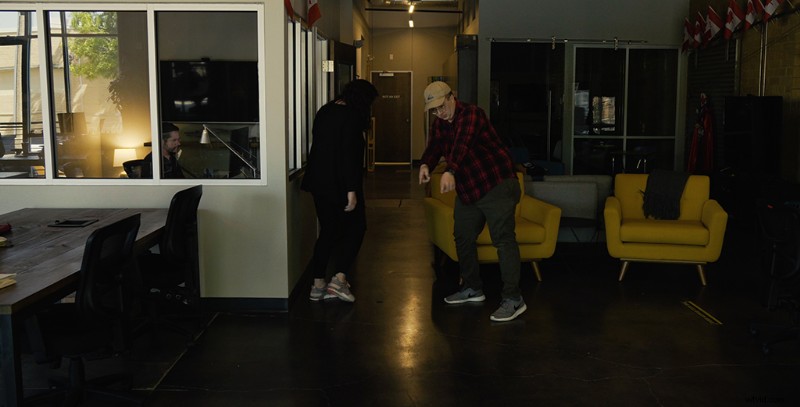
When working with actors on set, it’s important to convey where, exactly, they need to be in a certain shot. This is where “blocking” comes in — the planning and execution of an actor’s movements on set. Using gaff tape to mark the spots they need to hit can be beneficial for both the actor and the camera crew. The camera will know exactly where to focus, and the actor knows exactly where to be to maximize the shot. (Fun fact: this is where the term “Hitting your mark” comes from.)
Quick Fixes and Improvisation
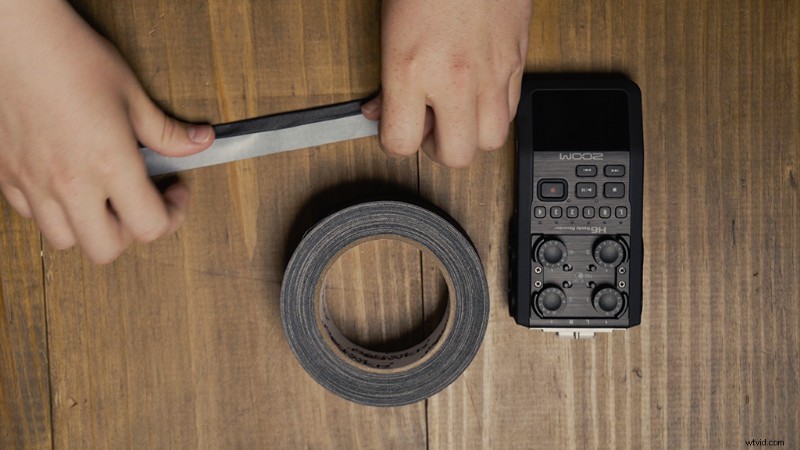
On set, things often go wrong. So, it’s always good to have something on hand for making quick fixes. When something breaks, you can patch it up with gaff tape and hope for the best. It’s a pretty strong tape, so you can usually rely on it in a pinch.
Another use for gaff tape is improvising gear solutions. For example, I needed to tie an audio recorder to my belt to run sound by myself. Since there was no string on hand, I fashioned a loop with gaff tape to secure the recorder to my belt. That way, I could monitor audio while still running the boom.
Bonus Tip: Marking SD Cards
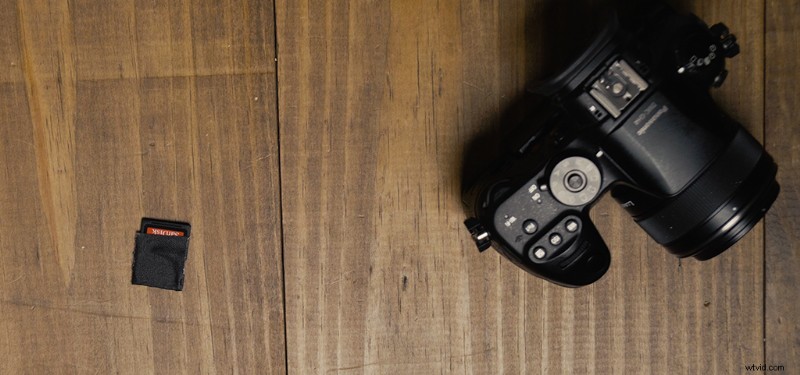
When you have filled up a SD card on set, one of the worst things you can do is record over it — or have someone format it by accident. To prevent this, place a piece of gaff tape over the connector to mark that it is full, and do not remove it until you have dumped the footage to your computer.
Looking for more filmmaking and videography tutorials? Check these out.
- How To Properly Expose An Image: Understanding ISO
- How To Properly Expose An Image: What Is Shutter Speed?
- How To Properly Expose An Image: All About the Iris
- Video Editing Fundamentals: Exporting Projects for the Web
- DIY Filmmaking on a Budget: Building a Homemade Dolly Setup