
When done properly, VFX work should be invisible — as if everything the camera captures is a natural occurrence. One of the oldest VFX techniques for pulling this off is the use of driving plates. Today, driving plates are frequently video clips composited with green screen footage of characters in a car, but there is a much deeper history of rear projection, traveling mattes, and revolving screens used to make characters look like they are traveling.
Let’s take a quick look at the poor man’s process and the VFX compositing used to make green screen car footage look real.
Poor Man’s Process
The poor man’s process is a green screen technique in which a vehicle is stationary (often in a studio) so the camera crew can capture footage of actors in a car without moving at high speeds.
The term gets its name from process trailers, which are low-riding vehicle trailers pulled behind a truck. (You can read more about process trailers and camera cars here.) The poor man’s process doesn’t use a truck and trailer, often because production can’t afford them.
Here is an example of the poor man’s process from Grip Rigs on the set of ABC’s Charlie Foxtrot.
Grips on set will often move lights to add realistic lighting to the footage, and they may even push the car back and forth on set. You can dive much deeper into the poor man’s process and see the technique used on the set of The Nice Guys in this article from PremiumBeat.com.
Driving Plates
After the crew records the car scene, it’s then up to the VFX artists to make the footage come to life. First, they key out the green screen, then VFX artists composite driving plates and vehicle footage into a single, seamless composition.
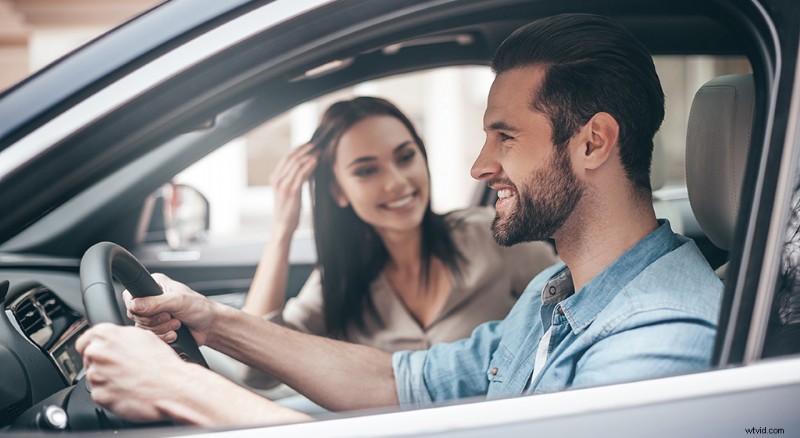
Driving plates can come as single-footage files, usually captured from the rear or front of a vehicle, or 360-degree shots captured from multiple cameras at once. The single-angle shots are only for scenes involving only one window of the vehicle on screen. For example, if you are shooting a scene with two characters in a car having a conversation, you might have the camera locked in position. Take this shot for example.
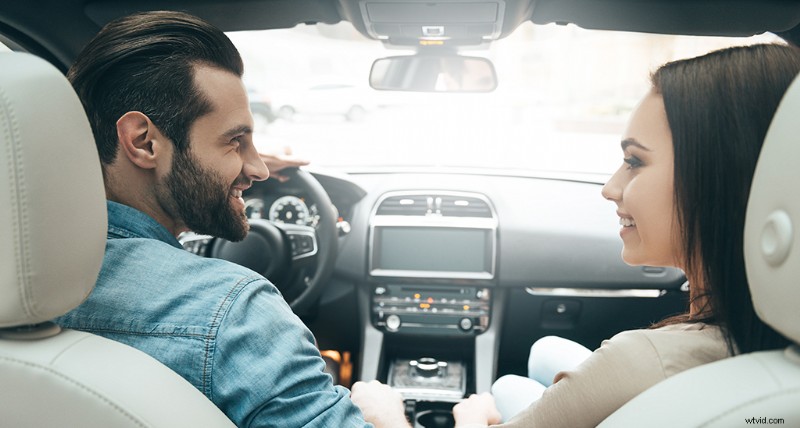
Image by contributor g-stockstudio.
In this situation, the camera is likely locked in position. That means the VFX team will only have to replace the footage in front of the windshield, where a single camera angle is enough to capture the shot. For the car to appear as if it is moving, the VFX team only needs a single driving plate of a forward-facing camera traveling down a street.
The VFX artists create a mask around the the windshield and composite footage similar to this clip from lovemushroom.
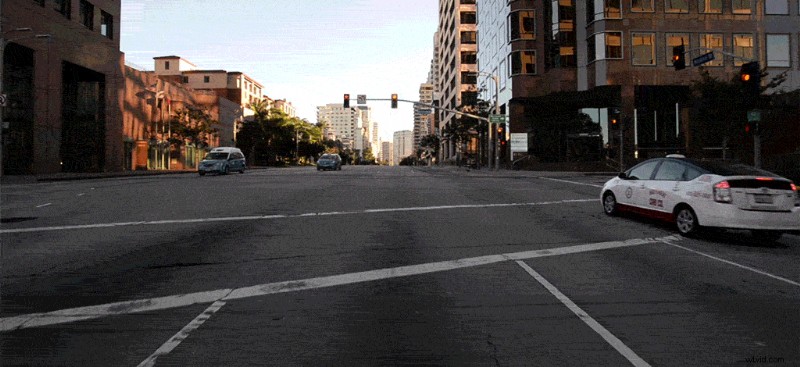
To really sell the look, the VFX artists will slightly overexpose the footage to make it look more realistic, then add some reflection where the windshield glass would be.
However, things get a little more complicated when you start adding more visible windows to the shot.

If you have a scene with two characters conversing in a vehicle, with alternating takes between characters, you will then need driving plates for both the driver-side and passenger-side windows. This is where multiple-angle driving plates come into play.
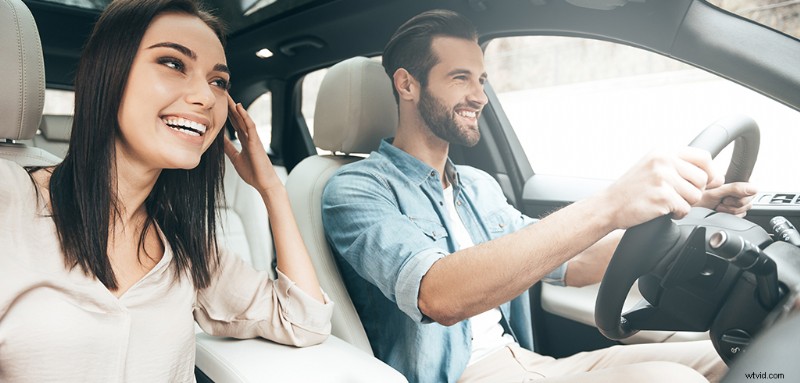
For the best results, 360-degree driving plates are available for VFX artists to composite synced footage in every visible window. That way the vehicle movement will look consistent, no matter which angle appears onscreen. Here is a glimpse of a 360-degree driving plate from contributor DrivingPlates.com LLC.
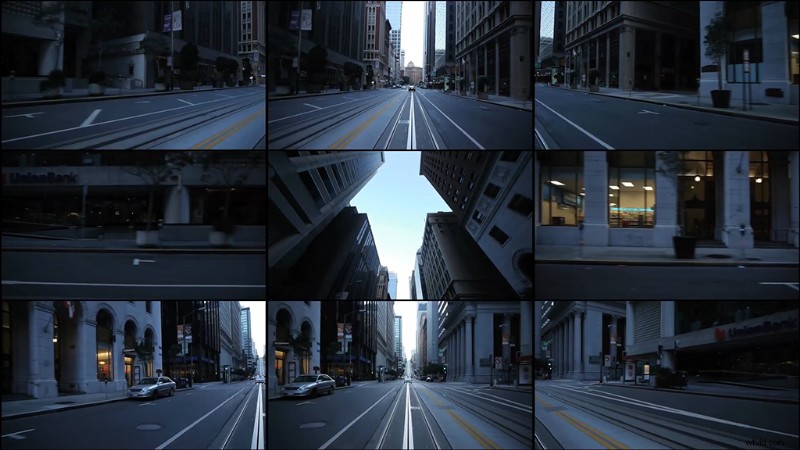
Not only do you have footage for every window, you can also use the center shot as an overlay on a vehicle’s hood or roof to make the scene more realistic.
With all the footage in place and some color correction, you get a realistic car scene.
For more on working with vehicles in production, check out these helpful articles.
- Camera Cars & Trailers — The Real Movie Cars
- Car Crashes and Comedy: Actionable Tips from The Nice Guys
- Combining Practical Lighting With VFX
- How to Shoot a Car Conversation Scene
- How an Average VFX Pipeline Works
- The Mill’s Blackbird Camera Car Is a Real-Life Autobot