
If you’ve worked in film or television production, you may be familiar with green screen compositing and the many wonders chroma key technology can help achieve. From meteorologists on your nightly news programs to superheroes in the biggest blockbuster films, green screen compositing has become a staple of video production.
However, as you can imagine, before digital cameras and LED lighting, it wasn’t always this easy — and the screens weren’t always green. Let’s dive a little into the colorful past of green screen compositing and how it evolved through video production history.
The Black Screen
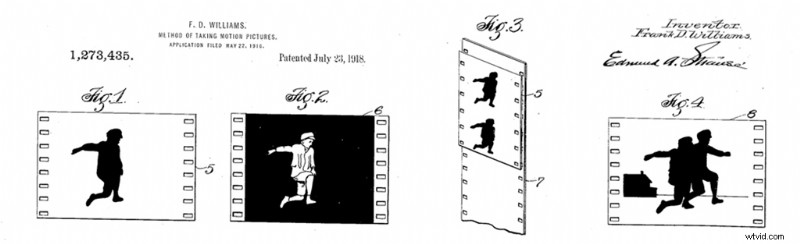
In the early days of filmmaking, every small act had to be a major production breakthrough because filmmakers had to establish the basics of the art form. While filmmakers like Georges Méliès found innovative techniques for splitscreen compositing, it wasn’t until the 1910s and ’20s when the “traveling matte” and “Williams Process” techniques became popular. You can see a diagram above (as explained by Frank Williams, who came up with his namesake process) detailing its use in famous films like The Invisible Man.
The “Yellow” Screen
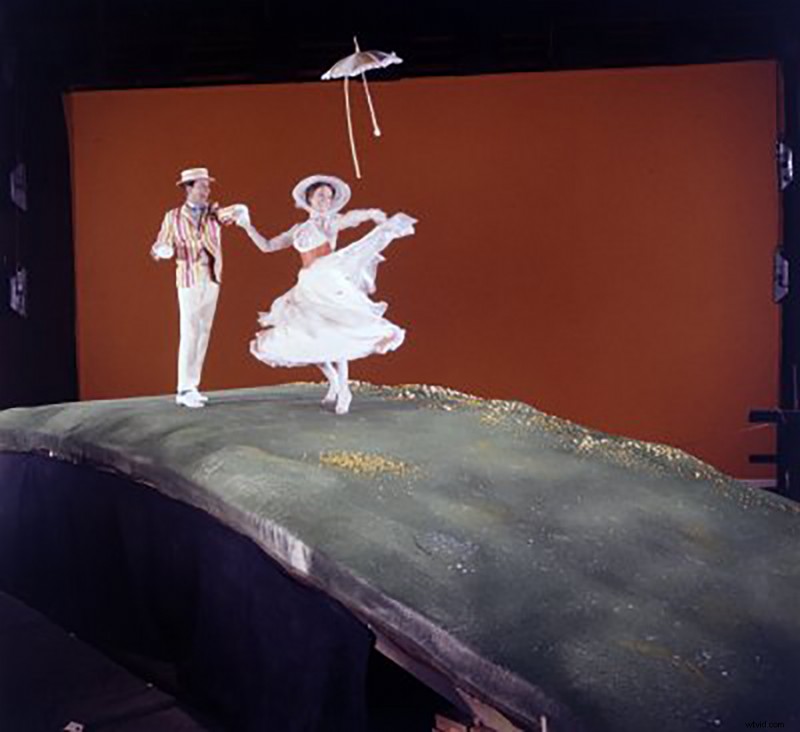
Image via Disney.
In what is sometimes called the “Yellow Screen,” renowned film innovator Petro Vlahos developed the sodium vapor process for technicolor film production. This process, which utilized a very specific light wavelength as a backdrop, would effectively “key” out certain colors through a very special camera, which Disney used heavily in the ’50s and ’60s.
You can see the technique in action in one of Disney’s most successful films Mary Poppins (above) as well in this series of behind-the-scenes videos on the production.
The Blue Screen
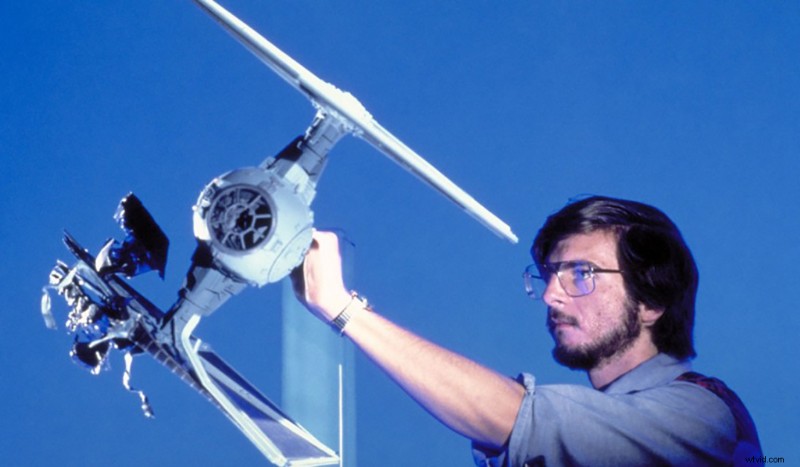
Blue screens have technically been in use since the era of black and white filmography (as part of the Dunning Process) on films like King Kong. It wasn’t until the technicolor films of the late ’50s and ’60s that blue screens make their major mark in Hollywood. Again pioneered by Petro Vlahos, a blue difference matte aided with color negative exposing, color cancellation, and color separation techniques. Overall, the process was tedious at best until the latter part of the ’60s, when microprocessors came along to help.
Perhaps one of the best (and last) examples of the process was in Richard Edlund’s work on The Empire Strikes Back, which you can see in this video by Mark Vargo.
The Green Screen
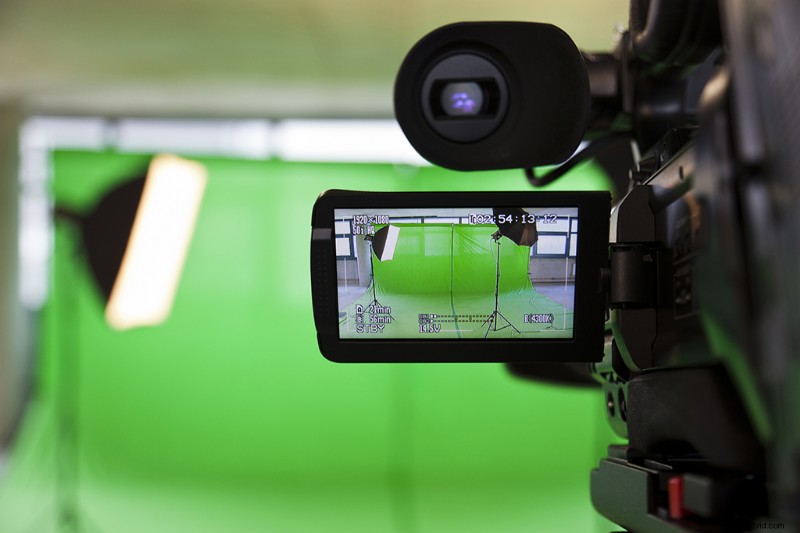
Image by antb.
Finally, with the advert of digital cinema and true chroma key technology becoming widespread, accessible and simple green screen compositing has become popular on productions both big and small. While you still see blue screens at times for costuming or location-based needs (i.e. if your superhero is green lantern, it might be best to go blue), green screens have become the uniform choice for how they stand out from common skin and hair tones (as well as current fashion styles).
You can see some samples of how green screen compositing looks before and after in some of the latest blockbuster films below.
https://www.youtube.com/watch?v=2lLAc03DaeI
For more info on how to work with green screen compositing, check out some of these resources.
- The Basic Fundamentals of Lighting a Green Screen
- Proper Green Screen Tips and Techniques
- Advanced Spill Suppression Techniques in After Effects
Top image by A Mac.