
Involving a subject matter expert (SME) early in your content creation process is one of the most effective ways to prevent costly rework and protect credibility. When SME input arrives after a draft is already structured, the work shifts from building reliable content to fixing assumptions.
TechSmith’s Senior Information Developer, Rachel Clark, puts it simply:
“The issue is loss of time and money — content creators sometimes have to redo content if it’s not accurate or lacks the appropriate context.”
That rework isn’t just expensive. It also strips content of the real-world nuance that builds trust. Without early guidance, even polished work can miss the mark. It often lacks the edge cases, applied context, and practical insight that make content feel useful instead of generic.
To avoid that cycle, Clark recommends involving SMEs during outlining and scripting, before decisions are locked in. This shift upstream helps teams start with content that reflects how tools and processes actually work.
By bringing in expertise early, teams can avoid rewrites, reworked visuals, delayed launches, and frustrated users, and move forward with content that’s accurate, credible, and built to scale.
Key takeaways
- Early SME involvement reduces costly rework by closing accuracy and context gaps before scripting and production begin.
- SME input becomes essential when content is technical, niche, regulated, or tied to safety and compliance.
- Expert-driven content stands out because it’s clear, concise, consistent, complete, and correct, and built to anticipate real user questions and edge cases.
- SMEs scale best as validators and strategic partners, not primary creators, especially when requests are focused and well prepared.
- Video is a powerful way to capture expertise because it preserves nuance, supports asynchronous review, and can be repurposed across multiple deliverables.
What late SME input breaks (and why it’s costly)
Accuracy is often the first thing to break when SME input arrives late. Content creators may have enough general knowledge to build a high-level draft, but once it reaches reviewers, gaps start to surface. Incorrect terminology, misleading descriptions, or missing context all require rework.
As Clark explains, “real-world conditions, common issues, insights, or applied use cases and scenarios help establish your authority.” When this input comes after the structure and messaging are already set, it becomes harder to retrofit without revisiting the entire piece.
The simple fix: Involve SMEs during outlining and scripting
You can avoid rework by bringing SMEs in before drafting begins. Starting at the outlining and scripting stages helps you confirm direction, align on what matters most, and avoid building around the wrong details.
Clark advises, “involve SMEs early in the outlining and scripting process, and later ask for a quick review.”
That way, the later review stays lightweight. The SME can confirm accuracy and flag edge cases instead of doing extensive edits and corrections.
When SME input becomes non-negotiable
Not every project needs the same level of SME involvement. The right approach depends on the risk behind the content:
“The more technical, research-backed, niche, regulated, or industry-specific the subject is, the more we should lean on SME guidance and reviews.”
In these cases, risk management is as important as quality assurance. “Risky or unsafe practices mean you could face legal repercussions, compliance issues, or possibly put users at harm.”
The SME necessity scale: A quick decision checklist
A few practical questions can help you determine whether a project is low, medium, or high risk. SME involvement becomes non-negotiable when your content is:
- Technical or highly detailed
- Research-backed, data-driven, or reliant on studies or benchmarks
- Niche or written for a specialized audience
- Regulated or subject to compliance, legal, or industry standards
- Connected to safety implications, system behavior, or real-world outcomes
Clark frames the stakes clearly:
“Would you provide instructions on how to operate machinery without ever observing it being operated? Or would you blindly suggest medical advice without reading the clinical study or consulting a medical professional first?”
What to do at each risk level
Once you’ve assessed the risk, you can scale SME involvement to match the potential impact.
- Low-risk content (e.g., high-level explainers, awareness pieces): Adopt a light-touch approach. You may not need direct SME input, or you can ask for early validation of key assumptions and claims.
- Medium-risk content (e.g., product walkthroughs, technical overviews, training materials): Plan to involve an SME during outlining and scripting. Early structure reviews help catch incorrect assumptions before they appear in copy and visuals.
- High-risk content (e.g., regulated topics, safety-related guidance, compliance documentation): SME validation is mandatory. Use structured reviews, confirm accuracy, and surface edge cases, warnings, and constraints that non-experts may overlook.
“Risky or unsafe practices could result in legal repercussions, compliance issues, or possibly put users at harm.”
How to recognize SME-driven content
SME-driven content stands out because it addresses common user problems, anticipates frequently asked questions, and acknowledges imperfections while offering guidance.
The “5 Cs” rubric you can apply before you publish
- Clear: Can a reader follow the instructions or explanation without additional interpretation or outside help?
- Concise: Does the content include only what the reader needs, without burying critical steps or warnings in excess detail?
- Consistent: Are the same terms, labels, and concepts used throughout, or does the language shift in ways that could confuse users?
- Complete: Does the content reflect real usage, including edge cases, recurring mistakes, and FAQs?
- Correct: Has the information been validated by someone who knows how the system, process, or subject actually works, especially where errors would matter?
The rhythm of expertise: Why pacing and emphasis matter
Pacing and emphasis are one of the clearest signals of SME-driven content. Clark explains:
“Place importance on pacing and emphasis. It does not treat all steps equally. SME-driven content slows down or emphasizes when mistakes have repercussions, or when to pay detailed attention to an important step in the process. The content slows down on high-risk steps and speeds past low-risk ones.”
Make this visible in both writing and video. For example, call out common mistakes or flag moments where action is irreversible or final. “SMEs explain things the way they’d coach someone next to them, not how a policy would.”
Rethinking the SME role: From bottleneck to strategic partner
Early SME involvement doesn’t mean that the SME takes over content creation.
“Shift SMEs from the executor or creator role to validators. Utilize SMEs for reviews, approvals, and guidance on edge cases.”
The content creator still owns execution, testing, and drafting.
Clark believes creators should also take the lead on when to involve SMEs: “Gather information, research, and test processes yourself. Rely on SMEs to provide insight where you get stuck or need expert assistance.”
Before and after: SME as creator vs. SME as validator
These workflows show where SMEs add the most value when positioned as validators instead of primary creators.
Before: SME as creator
- SME is asked to draft content or record a walkthrough from scratch
- SME fits content work around core responsibilities, which creates delays
- Draft is reviewed after the fact, revealing gaps or inaccuracies
- Follow-up questions and revisions pile up, especially around edge cases
After: SME as validator
- Content creator drafts the outline or script and tests the process independently
- SME reviews the structure early to validate accuracy and assumptions
- Creator produces the content
- SME performs a final check
SME input at stages two and four is critical for surfacing edge cases, such as regional restrictions or conditional system behavior. This is where expert knowledge adds the most value and is hardest to infer without validation.
Why comprehensive SME interviews don’t scale
A common misconception is that SME interviews need to be long and exhaustive. But trying to capture everything in one session is inefficient and hard to sustain. This belief often shows up as the idea that “you need to know EVERYTHING from an SME and conduct a long, complicated interview or information sharing session. It is best to keep the information sharing process quick and simple.”
A scalable workflow reduces the burden by having the content creator research, test, and draft first. “Start with your project goal and identify key questions and content gaps before you set up the interview or SME request.”
The same principle applies to recordings. It’s a mistake to assume you can reuse SME recordings as final content. To avoid this, Clark recommends including specific instructions, directed questions, and recording best practices to ensure you get quality content the first time.
Maximize SME time with a simple preparation protocol
SME time is scarce, so every interaction needs to be intentional. Before you ask for time, define your project goals, target audience, content gaps, and key questions you need answered.
This upfront clarity helps you focus the conversation, avoid unnecessary follow-ups, and get usable input in one pass.
The pre-SME checklist (what to do before you book 30 minutes)
Keep your preparation simple with this checklist:
- Define the project goal: what this content is meant to enable or change
- Identify the target audience: who the content is for and what they already know
- Map content gaps: areas you can’t confidently explain or validate on your own
- Run through the process yourself first: especially for procedural or instructional content
- Document specific questions and sticking points: where assumptions break or something isn’t clear
The final step will form the basis of your SME interview. Use Clark’s tip to stay focused:
“If you’re documenting or training on a workflow, run through the process yourself first. Where do you struggle? What questions do you have?”
How to structure SME requests so you get usable input the first time
Unfocused questions such as “how does it work?” or “walk me through the process” often lead to vague or lengthy responses. Keep your workflow on track with clear, targeted requests.
As a simple rule, “provide clear instructions and keep the SME information collection process simple.” Outline exactly what you need, why it matters, and how you’ll use the inputs.
Structure matters even more for videos and walkthroughs. To reduce re-recording and editing churn, Clark suggests including specific instructions, directed questions, and recording best practices to ensure you get quality content the first time.
Why video changes the SME knowledge equation
Video is a powerful medium for knowledge sharing because it preserves detail and context that are easy to miss in written documentation. Clark notes that it captures nuances content creators can revisit, eliminating the pressure to document everything in real time.
It also removes scheduling friction. Asynchronous video allows SMEs to record or share their expertise when it works for them.
And it adds a human layer that text alone can’t convey. As Clark explains, “video, especially webcam video, preserves tone, connection, and visual cues that help with audience engagement and trust.”
An async capture workflow using Camtasia tools
Use video in the SME validation process so experts can contribute without joining live sessions. Camtasia Online supports this async approach by letting you invite SMEs to collaborate on a project with no downloads or installation required.
Need to show your screen?
Skip the downloads. Use Camtasia online to record your screen, camera, and microphone right in your browser for free.
Start Recording
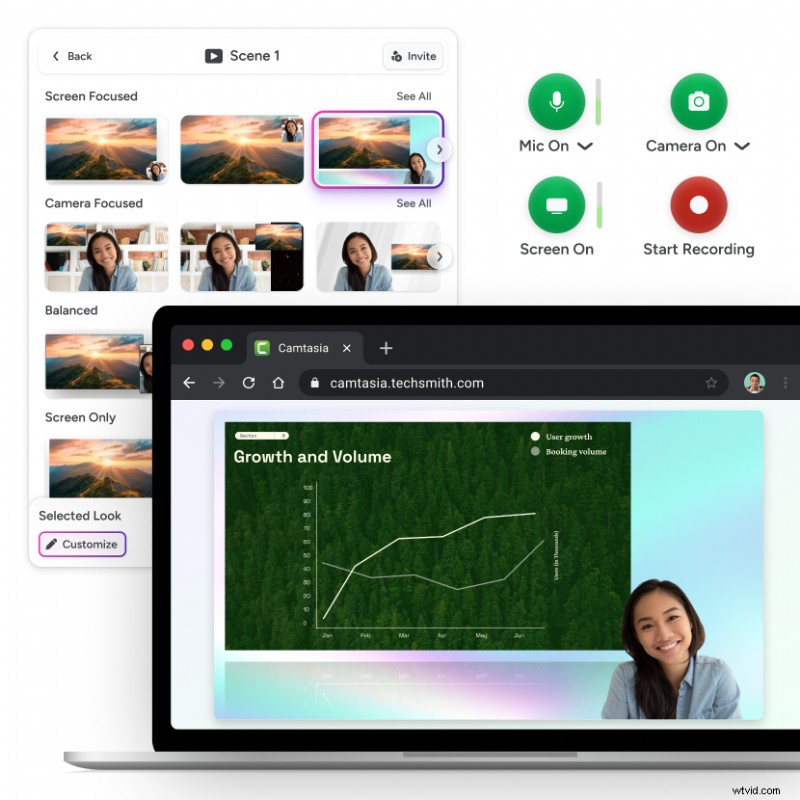
“The SME can record their assigned scenes asynchronously to answer specific interview questions or demonstrate processes on their computer.”
If recordings run long, Audiate helps make them usable. With instant transcription, you can edit by text or automatically remove filler words such as ums and ahs.
For step-by-step documentation, Snagit’s Step Capture records a process on the screen and automatically creates screenshots for each step, turning it into a guide.
Record your screen with Snagit
Snagit makes it easy to share quick updates and how-to’s by capturing exactly what’s happening on your screen.
Get Snagit
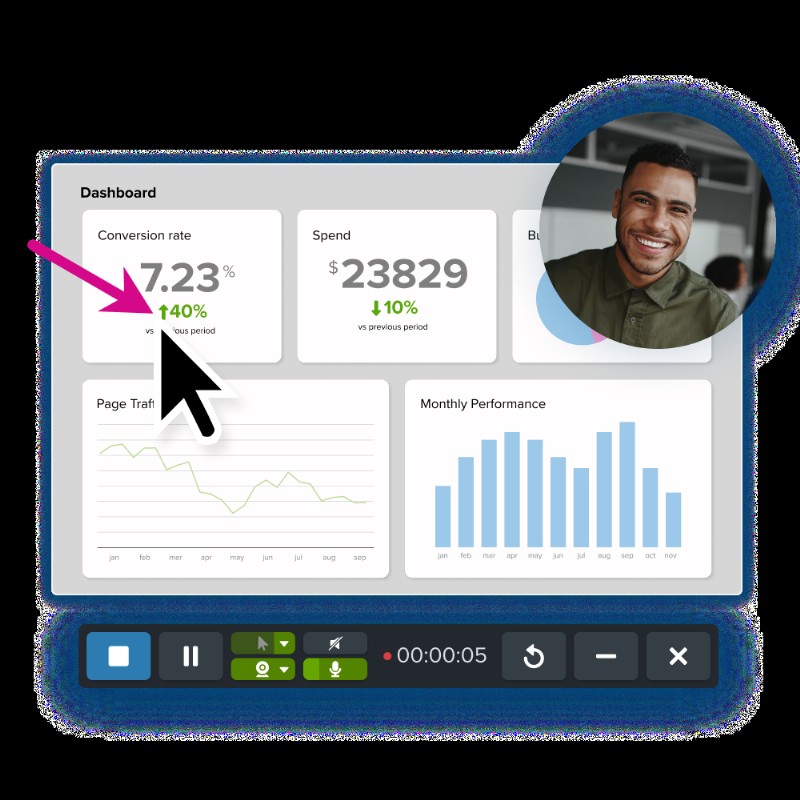
Used together, these tools support the validator model by reducing meeting load and making SME input easy to review and reuse.
How to repurpose one SME recording into multiple assets
One of the biggest advantages of capturing SME input on video is that it can be reused across formats. A single recording can support multiple deliverables, such as:
- Short training videos
- Quick reference guides
- FAQ resources
As Clark highlights, “video captures contextual details that enable content creators to rewatch the nuances.” This makes it easier to extract explanations or examples long after the initial recording. The ability to record any time asynchronously also supports scaling SME expertise across teams.
Build sustainable SME networks without burning people out
Relying on a single SME for multiple projects can create bottlenecks and burnout. A more sustainable approach is to build a network of SMEs you can tap when credibility is needed.
“Utilize an entire group of SMEs or don’t always use the same individual. This may help to get collective input without the pressure of additional responsibility and time.”
This model also reinforces the overall workflow: involve SMEs early, then return for a quick final validation.
Rotate contributors and use group reviews for collective validation
Drawing from different SMEs helps capture a wider range of perspectives and improves coverage of edge cases. Group reviews also reduce blind spots by surfacing differences across regions, roles, and workflows that a single expert may miss.
This approach protects credibility while distributing the time and responsibility across contributors, rather than placing the burden on one person alone.
Set two SME touchpoints to prevent endless feedback loops
Just as important as who you bring in is when they’re engaged. Constant involvement leads to fragmented feedback and stalled progress.
Clark’s simple rule of thumb helps keep collaboration focused: “Involve SMEs early and ask for a quick final review.”
One touchpoint validates direction. One confirms accuracy. No continuous review cycle in between.
SME-centered content is faster, more credible, and easier to scale when expertise is captured early, requests are structured, and validation happens at the right moments. Instead of relying on late reviews and rework, this approach builds accuracy, nuance, and trust into the process from the start, while protecting limited SME time.
Video helps make this model sustainable. Asynchronous capture allows SMEs to share their expertise when it works for them, while preserving the context teams need to reuse, review, and repurpose knowledge without pulling experts back into the process.
An integrated toolkit makes this model easier to run at scale. Camtasia Online enables async scene capture, Audiate turns long recordings into editable transcripts, and Snagit’s Step Capture transforms walkthroughs into clear, reusable guides. Together, they support the validator workflow.
Ready to put SME-centered content creation into practice? Explore other Camtasia products for scalable knowledge capture.
Go from screen recording to polished video
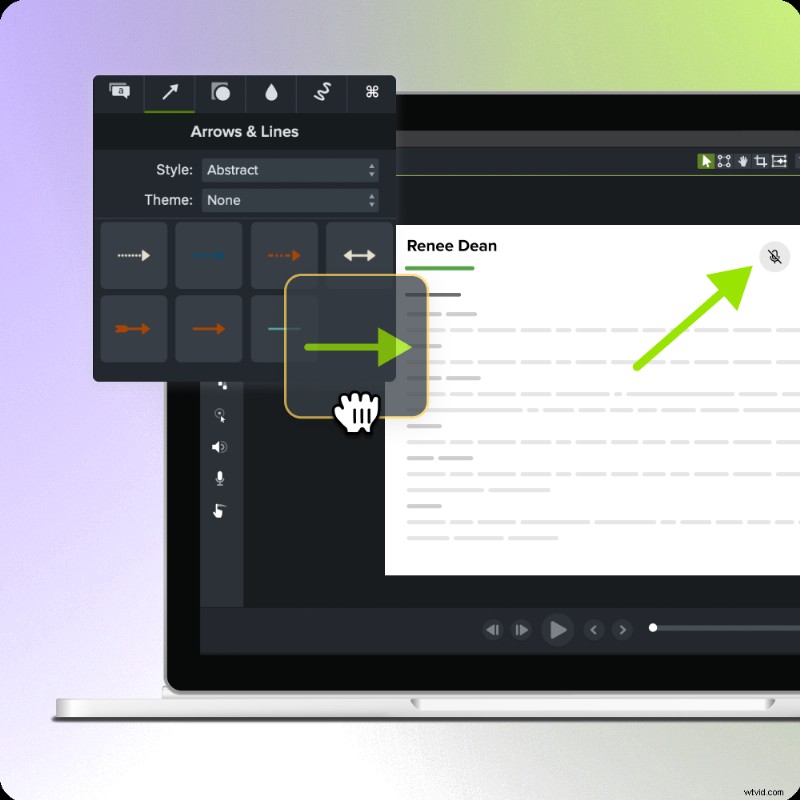
A screen recording is just the start. Camtasia’s editor helps you add the callouts, animations, and edits you need to create a truly professional video.
Free Download
FAQs
When should I involve a subject matter expert (SME) in content creation?
Bring an SME in early when accuracy and context matter, especially during outlining and scripting. SME involvement becomes essential as technical complexity rises or when content touches regulated, niche, or safety-related topics.
For lower-risk topics, you can often draft first and use an SME for targeted validation. The goal is to prevent late-stage rework while still respecting limited SME time.
How do I keep SMEs from becoming a bottleneck?
Treat SMEs as validators and strategic partners rather than primary creators. Do your prep work first by testing the process, identifying gaps, and writing targeted questions.
Keep requests focused so SMEs can confirm accuracy, add nuance, and flag edge cases without owning the whole deliverable. Use an early outline review plus a quick final validation to avoid endless loops.
What does “SME-driven quality” look like in finished content?
It follows five quality signals: clear, concise, consistent, complete, and correct. It also anticipates user questions and reflects real-world conditions, not just ideal scenarios.
Strong expert-driven content highlights high-risk steps, calls out where mistakes matter, and moves faster through low-risk steps. This pacing and emphasis make the instruction feel coached and practical.
Why is video especially useful for capturing SME knowledge?
Video preserves nuance that’s easy to miss in notes, including tone and visual cues. It lets content creators rewatch important details and reduces pressure to capture everything live.
It also supports asynchronous workflows, so SMEs can contribute when their schedules allow. A single recording can often be repurposed into multiple assets, such as training, quick references, and FAQs.
How can I structure an SME request so I get what I need in one pass?
Start by defining the project goal, audience, and content gaps so your questions are targeted. Run through the process yourself first, then document exactly where you got stuck.
Send directed questions and clear instructions so the SME can validate what matters and add edge-case guidance. This approach reduces re-recording and makes reviews faster and more reliable.
How do I avoid relying on the same SME for everything?
Build a small network of SMEs and rotate contributors based on topic fit and availability. Use group reviews when you need collective input without overloading one person.
Keep SME involvement to clear touchpoints, such as early outline feedback and a final validation. This spreads the workload, protects credibility, and helps prevent burnout.