
Music is the invisible thread that pulls a film’s story into the audience’s heart. This guide unpacks every facet of the movie score—its purpose, creation, and legacy.
Without a score, a film loses its emotional depth, pacing, and dramatic tension. Soundtracks are more than background music; they are the narrative’s heartbeat, guiding viewers through the cinematic world.
What Exactly Is a Movie Score?
A movie score is original music written specifically for a film’s scenes. Composers are hired to craft melodies, harmonies, and textures that heighten emotion and define the movie’s sonic identity.
The tradition began in the silent‑era era, when pianists improvised music in theatres to fill the absence of dialogue. That practice evolved into the sophisticated art of film scoring we recognize today.
For an in‑depth look at the history of film music, watch this acclaimed documentary.
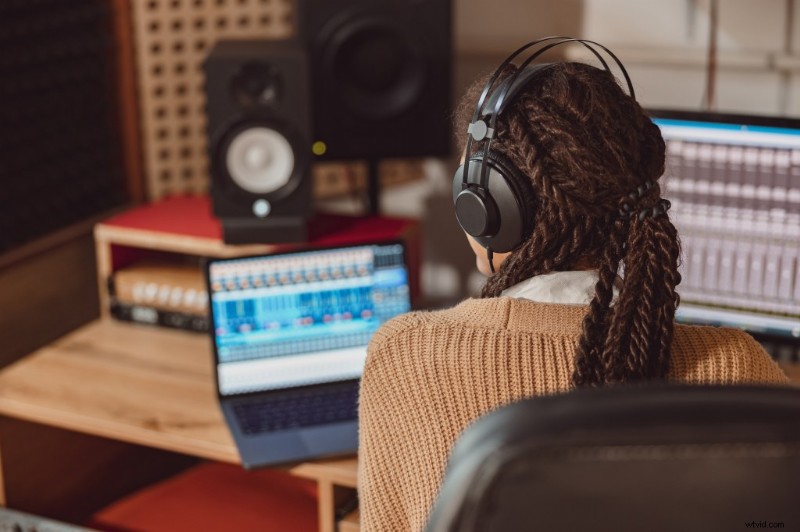
While orchestras remain the gold standard, modern scores often blend live instruments with virtual technology, thanks to advances in Digital Audio Workstations.
Why Do We Need a Movie Score?
Scores deliver emotional subtext, synchronize with on‑screen action, and deepen immersion. Each cue—musical phrases timed to a specific moment—amplifies the narrative’s stakes.
Score vs. Soundtrack: Clarifying the Difference
The score is custom‑written music that follows the film’s visual beats, crafted in collaboration with the director. A soundtrack, by contrast, is a curated collection of songs—often featuring vocals—that the film incorporates.
While both serve to enrich the viewing experience, only the score is original to the movie’s narrative structure.
What Makes a Great Score?
A compelling score mirrors the film’s setting—whether it’s a distant galaxy or a historical era—using appropriate instrumentation and sonic palettes.
Emotionally, music should never undermine dialogue. A balanced mix keeps the score supportive rather than overpowering, reserving powerful passages for wide shots or climactic scenes.
Timing is crucial: aligning musical phrases with visual beats enhances impact. A well‑placed opening note can set the tone for an entire scene.
How Is a Score Created?
1. Writing
The process starts with a dialogue between director and composer, outlining narrative beats. From a simple melodic motif, the composer expands ideas into full thematic material.
2. Orchestration
Here, the orchestrator translates the composer’s sketches into detailed parts for each instrument, respecting ranges, timbres, and the desired sonic texture.
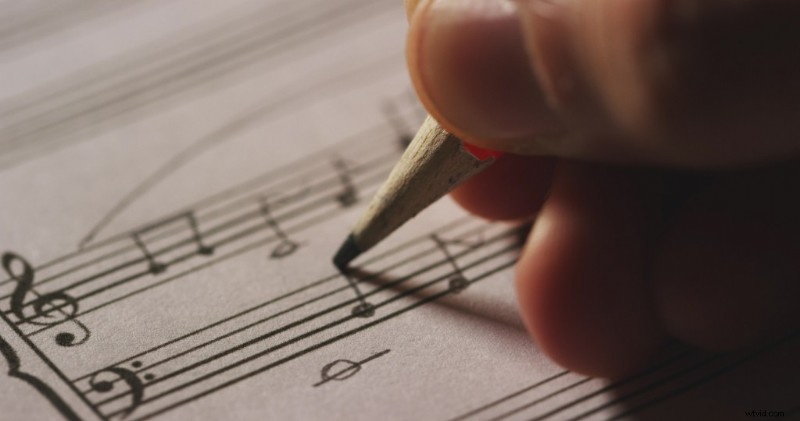 Image via Kitreel.
3. Recording
A conductor leads the musicians, ensuring precise timing with the film’s action. The composer and director often attend to fine‑tune dynamics and emotional nuance.
4. Syncing
Syncing aligns the score to the film’s beats using SMPTE timecode or visual cues on screen. Post‑production editors polish transitions to match the narrative flow.
Key Elements & Structure
Underscoring—music that subtly enhances mood—is foundational. Geographical and temporal contexts guide harmonic and melodic choices.
Leitmotifs—recurring themes tied to characters or locales—create thematic cohesion. Composers like John Williams and Ennio Morricone masterfully adapt leitmotifs to reflect narrative shifts.
Sound design, especially for electronic scores, adds realism. Spatial placement—panning and stereo imaging—immerses viewers in the film’s world.
Horror scores often use dissonance and percussive motifs to evoke dread; Psycho exemplifies this with its iconic violin stabs.
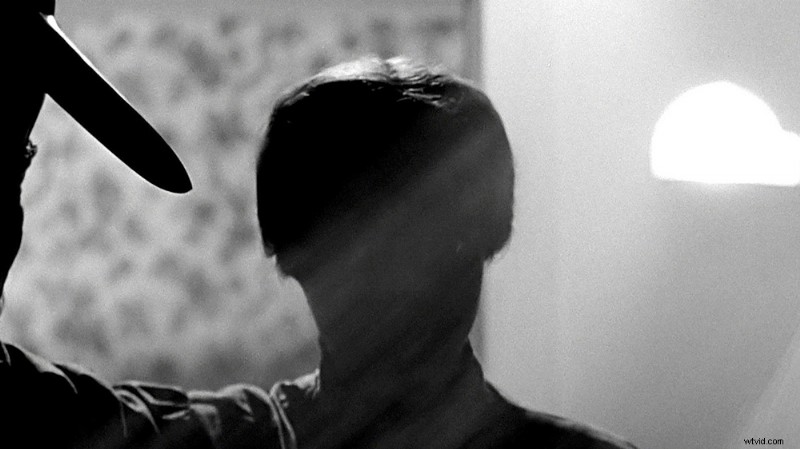 It’s impossible not to hear the score when you see this image. Some scores can be so impactful they are baked in your audience’s minds for decades to come. Image via Universal Studios.
Thematic Structures
Common forms include AAA (repeated theme with development), AABA (contrast between two themes), and ABAC (three distinct ideas). These structures mirror narrative arcs, guiding viewers through emotional peaks and resolutions.
Renowned Film Score Composers
John Williams
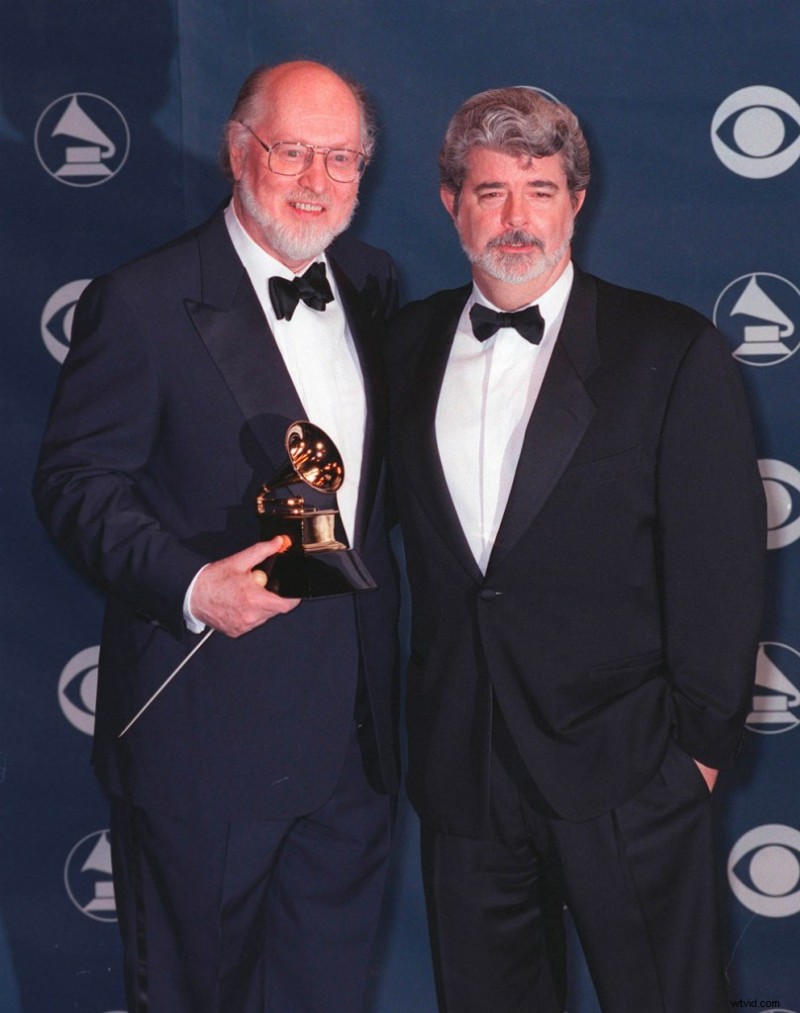 John Williams and George Lucas collaborate often. Image via Featureflash Photo Agency.
With over a hundred scores, Williams’s memorable motifs—such as the “Imperial March”—have become cultural touchstones. His mastery of orchestral color sets a benchmark for cinematic music.
Ennio Morricone
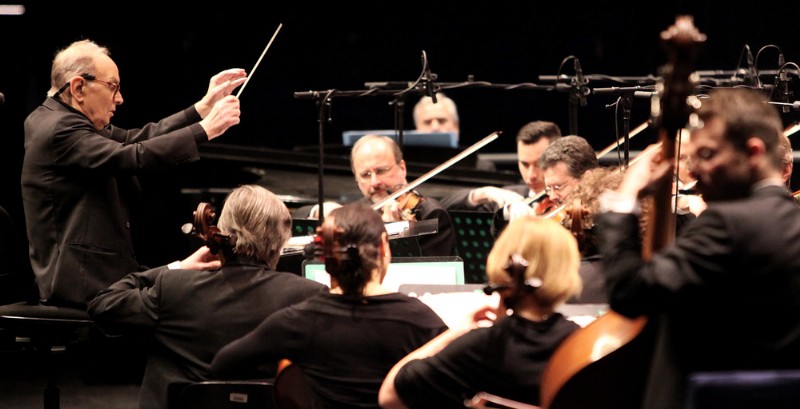 Ennio Morricone conducting an orchestra. Image via praszkiewicz.
Morricone’s work on the Spaghetti Westerns—The Good, the Bad and the Ugly, A Fistful of Dollars—exemplifies his innovative use of space and instrumentation to capture the American West’s stark landscapes.
Hans Zimmer
Zimmer blends orchestral depth with electronic textures. Scores for Inception, Interstellar, and The Dark Knight showcase his ability to build immersive sonic worlds.
Other Icons
Bernard Hermann’s dissonant score for Psycho, Howard Shore’s sweeping music for The Lord of the Rings, and Alfred Newman’s timeless themes for early Hollywood classics all illustrate the genre’s rich diversity.
Some of the Greatest Movie Scores
Ben‑Hur (1959)
Miklós Rózsa’s score earned an Oscar, drawing on authentic Greek and Roman motifs to underscore the film’s epic scale.
King Kong (2005)
James Newton Howard delivered a grand, orchestrated score in just five weeks, balancing choir, ethnic instruments, and modern orchestral techniques.
Planet of the Apes (1968)
Jerry Goldsmith broke conventions with avant‑garde textures and non‑traditional instruments, creating an unsettling sonic landscape.
Black Panther
Ludwig Göransson’s score was born from cultural immersion in Senegal, fusing African rhythms with symphonic grandeur.
Jurassic Park
Williams’s iconic theme harnesses leitmotif to convey awe and terror, cementing the film’s place in pop culture.
Titanic
James Horner’s sweeping score, crowned by the Oscar‑winning “My Heart Will Go On,” captured the film’s tragic romance.
The Social Network
Atticus Ross and Trent Reznor’s minimalistic, digitally‑driven score earned nine major awards, mirroring the film’s tech‑savvy narrative.
Doctor Zhivago
Maurice Jarre’s lush string writing, especially the “Lara’s Theme,” reflects Russian musical traditions, enhancing the film’s emotional core.
Once Upon a Time in the West
Morricone’s fusion of harmonica, electric guitar, and orchestral forces created a timeless western soundscape.
Terminator 2: Judgment Day
Brad Fiedel’s use of metallic percussion and stereo field manipulation set a precedent for futuristic film scores.
Film composers are filmmakers in their own right, translating visual storytelling into sonic language. Their craft demands research, technical skill, and close collaboration with directors to elevate the narrative.
For further exploration:
- Creating Scenes with Audio: Make Your Setting Appear Silent
- Sound Editing vs. Sound Mixing: What’s the Difference?
- Film Scores: Are They Getting Better or Worse?