
Let’s explore the art of camera operating by examining what a film looks like without one. As you’ll see — the camera operator’s role is critical.
There are a lot of roles on a film set. And, while they all might be important in their own right, none is perhaps more critical than the camera operator. You know, the person who actually handles the camera for every shot and scene.
Yes, there’s a director and a cinematographer, and often an entire camera team involved, but at the core of the role, you need someone with a specific set of skills to operate the camera for the cinematic results.
To prove the importance of this role, this hilarious video put together by Vanity Fair perhaps best exemplifies how critical a camera operator is to any film or video production. And, not just by showing everything a camera operator does, but by also showing what a film would look like if they just didn’t exist.
So, with expert operator Oliver Cary (John Wick 3, Orange Is the New Black) as our guide, let’s explore the all-important role of the camera operator, as well as dive into how you can learn some of the more advanced styles and techniques.
What Is a Camera Operator?
Again, this video takes a pretty straightforward approach to answering this question by having Mr. Cary stand in as an entire camera department, but he does a great job of breaking down the basics. A camera operator is the person (or team) who operates a camera on a film set under the guide of a director of photography (DP) and by following the direction of the director.
If you’d like to learn more about being a camera operator, as well as the other roles in the camera department, check out these advanced articles:
- State of the Industry: Camera Operators & Cinematographers
- Camera Crew Breakdown: Jobs and Responsibilities
- 5 Essential Rules for Working with a Second Camera Op
Basic Motivation Camera Shots
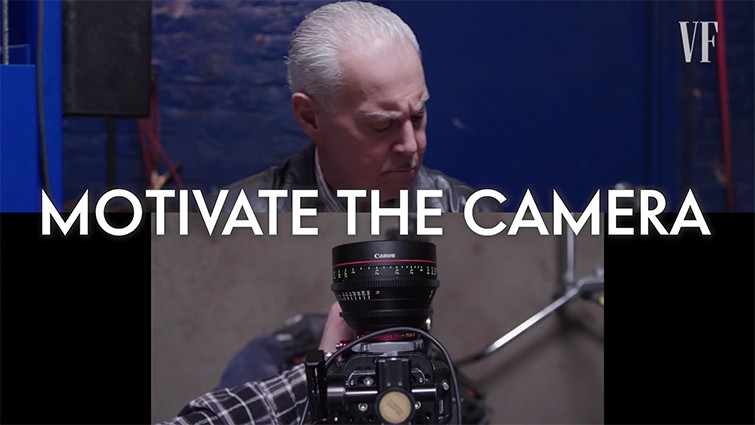
I like how this video first gives us an example of what a scene would look like without a camera operator by showing us what it would look like if each shot was simply framed-up static with no motivation. The term motivation is a perfect way to describe how every camera operator should view his or her job, as it’s motivation that drives movement — not the other way around.
Cary goes on to give some of the basic essential camera moves — like pans, tilts, and dollies — as examples of how one can begin to bring motivation into the role.
- Roundup: Back to Basics with Essential Camera Movements
- The 5 Most Powerful Camera Movements in Cinema History
- Which Camera Movement Should You Use — and When and Why?
Camera Angles
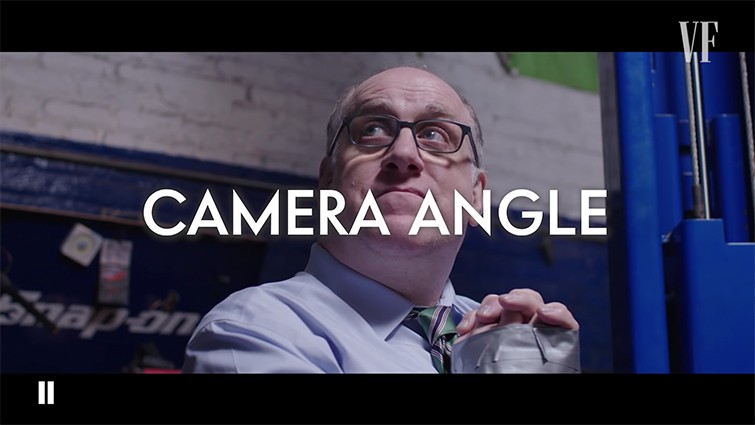
After basic movements, Cary dives into the fundamentals of camera angles and how your framing choices can be a critical part of your storytelling arsenal. His basic examples include how shooting down on a subject makes them look weak, while shooting up puts them in a position of power. These decisions won’t always just be up to the cam op; the DP and director will usually be calling these shots, likely guided by storyboards. But, as a cam op, you should still understand the psychology behind your work.
Here are a few more in-depth breakdowns covering basic and advanced shots:
- 7 Standard Filmmaking Shots Every Cinematographer Must Know
- Camera Angles: Over The Shoulder or Single Shot?
- A Practical Guide to Dutch Angles and Tilted Framing
Tripod vs. Handheld
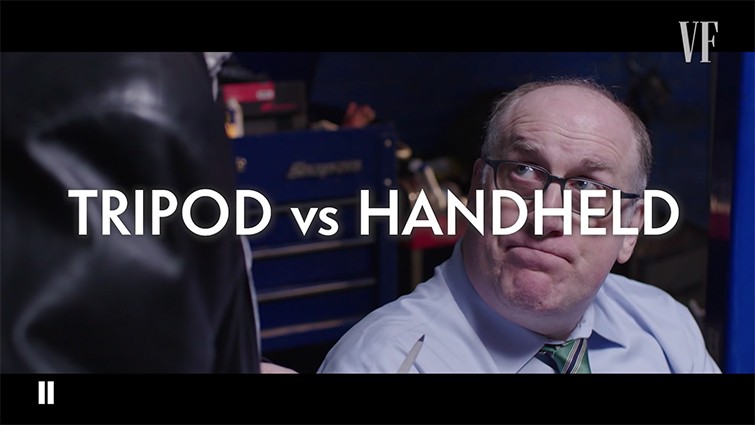
Cary demonstrates just how much drama can be added to a scene by switching between steady tripod framing and rocky handheld shots. However, this is a rather over-the-top representation of how different these two can be, as it quickly glosses over the use of much more reliable gimbals and steadicams in favor of the shoulder mount option, which we see the cam op use in the video.
But, the example works. It shows off both the flexibility, as well as the thematic unreliableness that dropping a tripod can bring to your compositions. Here are some more related tips and tricks:
- Tips for Getting the Smoothest Handheld Footage
- The Whys and Hows of Tracking: Handheld vs. Stabilized
- 15 FREE Camera Shake Presets for After Effects and Premiere Pro
Zooms and Dolly Moves
Cary briefly goes over both rack focuses and whip pans before really diving more in-depth into zooms and dolly shots and the large and subtle differences between the two. So far in our film-within-a-video narrative, the captive lawyer has noticed the nail file on the floor and Cary’s camera is faced with a decision as to how to convey this information to the audience.
It’s fun to see the different shots play back in real time, as each option is unique in how it visually shares information with the audience and tells the story. If you’re interested in reading more about camera zooms and dollies, check out these resources:
- Mastering the Subtle Techniques of the Zoom and the Punch In
- 6 Affordable Ways to Capture Great Dolly Shots
- How to Create Digital Zooms with 4K Footage in Premiere Pro
Lens Choices
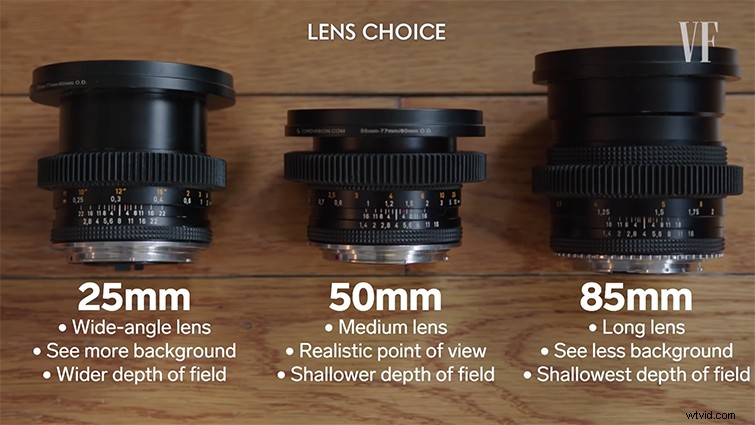
I was grateful, at this point, to hear Cary concede that it’s normally the director or DP’s job to make the lens selections for any shot, but I do agree with his assertion that the cam op should be just as knowledgeable on the lenses. Plus, you never know, a director or DP could always ask you for your input too — so be ready!
In this video, Cary shows us options between the wide, medium, and long with 25mm, 50mm, and 85mm options, while explaining the basic principles for choosing between the three. However, as you might suspect, there’s a lot more to unpack in terms of lens selection. Here are some additional articles to go along with these basics:
- Video Tutorial: Determining The Best Lens for Your Project
- Lenses Every Cinematographer Should Own
- 5 Documentary-Style Lenses for 5 Different Budgets
Advanced Techniques
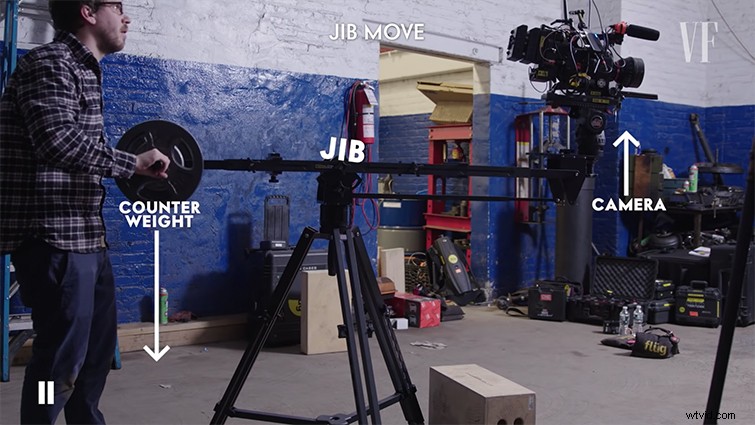
Finally, to round out our ten-minute camera operator class, we get to see Cary bring all these basic principles together for the climax of our short film, as the lawyer takes down the hitman with the nail file. We see how the different camera moves and angles can help change the perspective the narrative dictates and how the different handheld and lens choices can best engage the audience.
We get a few more advanced moves to finish things out, with the camera jib move as a nice final shot. If you’d like to learn more about the jib, and any other advanced camera op techniques, well, you’re in luck:
- Awesome Cinematography: Achieving a Jib Shot with a Slider
- Breaking Down Individual Roles in a Video Production Company
- Traditional Camera Moves Made Easy With DJI Drones
- Here’s What Your Camera Assistant Wants You to Know
- Cinematography Manual: The Ultimate Guide to Becoming a Director of Photography