
The Oscar-winning editor behind Whiplash and La La Land describes cutting First Man like a documentary.
If you’ve seen First Man, you know there are a few scenes that were so unbearably tense and perfectly executed that you’d be thinking about them for weeks. For example, the undocking scene from the Agena is one of the most well-executed, chaotically beautiful moments in film history. So, taking a step back, we should ask what makes a scene like this so good? Is it the sound design, the acting, the cinematography? The answer is yes. All of these art forms collide in one seamless sequence, pieced together by someone who, frankly, rarely gets the credit they deserve. Tom Cross is that someone with First Man.
Cross’s past work already speaks for itself — between winning an Oscar for Whiplash and receiving a second nomination for his collaboration with Damien Chazelle, La La Land, the Los Angeles-based editor is far from slowing down from 2017’s, The Greatest Showman, which pushed him into the stratosphere. Which brings us to 2018’s First Man.
One of the key technical aspects of First Man is the visual aesthetic chosen by Chazelle and Director of Photography Linus Sandgren. Shot (mostly) on handheld 16mm and 35mm, the scenes are just as rough and lived-in as they are polished and detailed. The result is a film that eloquently mirrors the real events of the Apollo 11 mission — and the lives it affected. I recently had the opportunity to speak with Tom Cross about his process for tackling something as daunting as the moon landing, and what led to some of the decisions he made in the cutting room.
Preparing for Launch
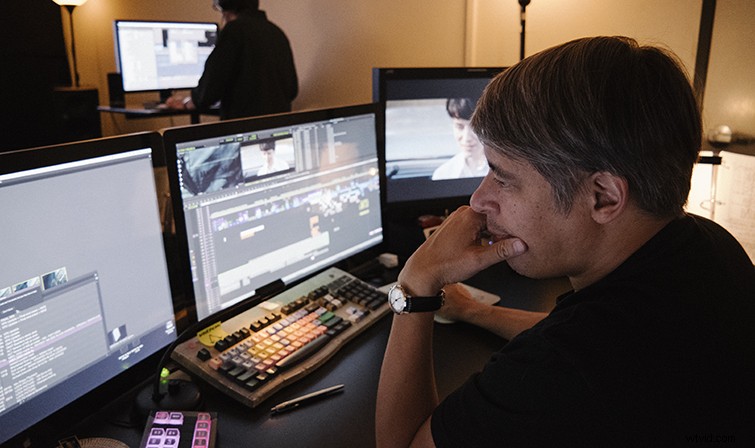
Cross’s and Chazelle’s collaborations always involve narratives with driven characters striving for greatness. However, First Man’s distinct style is a combination of creative and stylistic decisions, both during shooting and in the cutting room. I asked Cross how he approached this new project and what discussions he made with Chazelle prior to shooting.
The structure of First Man is linear for the most part (with the exception of a few important flashbacks, but more on that later). There’s trial-and-error, heartache, and many tense space sequences filled throughout the film’s 141 minute runtime. For the scenes on earth, specifically in the Armstrong household, the scenes are beautiful, Malickian vignettes of family life — all shot in a way that feels like we’re watching an actual family live day to day. This was no accident. Cross details the planning and shooting methods Linus used for these scenes:
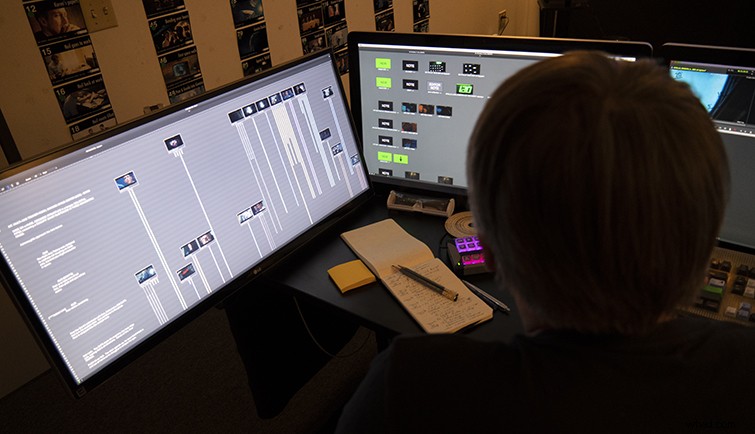
So First Man was already off to a uniquely collaborative start. Directorial decisions to stage the rehearsal, Linus’s eye for the scenes at play, and Tom with the foresight to see the bigger picture about how these shots would play into the larger narrative. The fact these scenes were shot at the beginning of production gave Tom and company an idea of what type of film First Man would become along the way.
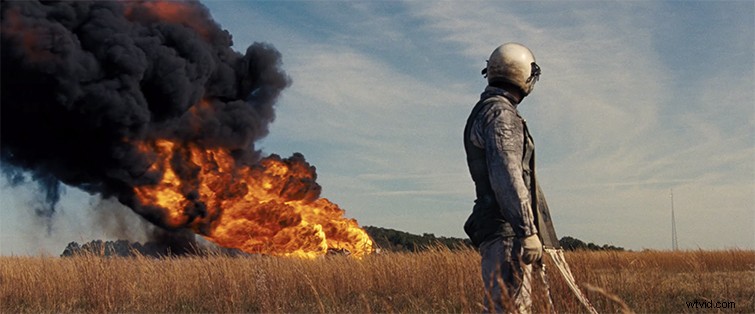
This visual storytelling going on in First Man is crucial to the time period and the characters. Every department head is essential on a project like this. I asked Cross how he and Sandgren communicated prior to and after shooting.
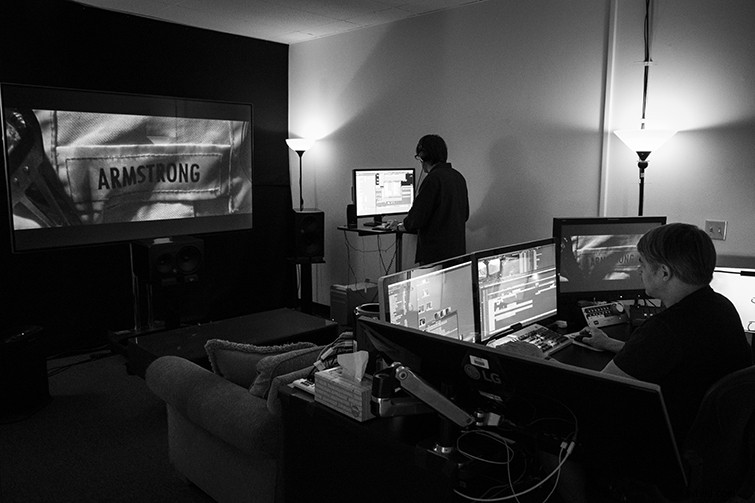
I asked Tom if there were any particular scenes that needed this documentary-style cutting.
Cross’s past work includes everything from documentaries to commercials. This range of storytelling means his technical skills are well above most editors. Cutting documentaries and cutting narrative films are different animals, but he finds a balance between the two, crafting an experience that feels like something entirely new. Combined with Linus’s way of shooting, both auteurs found themselves looking at their crafts in new ways.
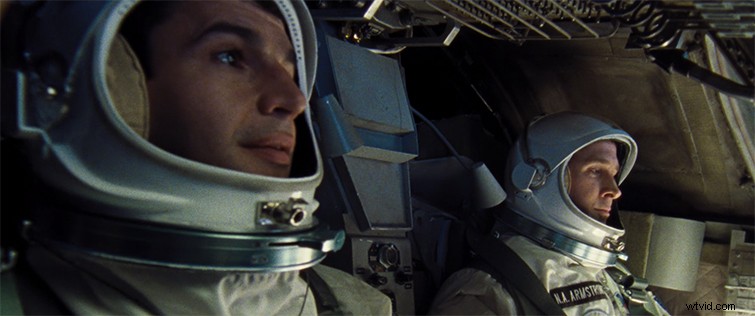
There are a few scenes in the film that involve some pretty significant visual effects, so I wondered how Cross worked with these sequences. Given Damien’s extensive planning and research, were there any pieces of footage or storyboards for him to use as he built the sequences in the edit?
I asked Cross if any of the actual archival shots ended up in the final cut.
There’s a reason First Man‘s VFX team has been nominated for an Oscar (in addition to the film’s many other well-deserved accolades).
Cutting the IMAX Sequence
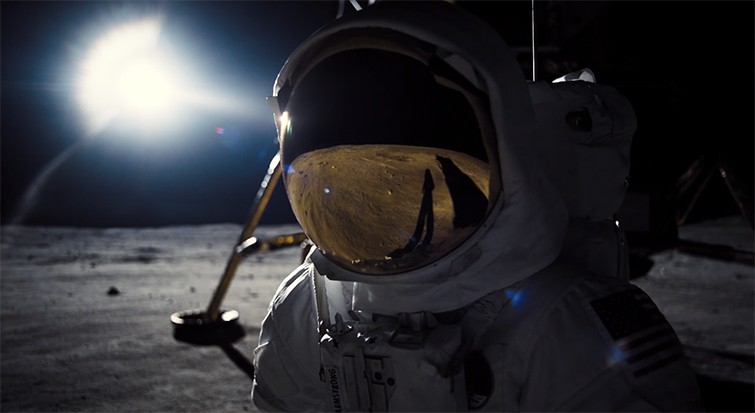
A good storyteller knows how to take the audience in any direction they want. If the story takes a turn, everything you’ve done prior has prepared the audience to go with the flow willingly. First Man‘s pivotal moment is the IMAX sequence. Cross told me he’s never cut a film in IMAX before, but like any historically great artist, he thrives on tackling bigger and bolder projects.
The IMAX sequence was shot on 15-perf 65mm IMAX with Kodak 5219 using Hasselblad and Zeiss lenses in a quarry outside of Atlanta. The gravel looked similar to the lunar surface, lit by a 200k Soft Sun light attached to a crane 500 feet in the air. The shift from 16mm to IMAX literally expands the screen to 1.43 — most noticeable if you saw the film in IMAX. Cross explains why and how they pulled off this transition:
It worked. The images, the audio, and the familiarity in certain shots puts the viewer in Armstrong’s shoes. Part of Damien, Tom, and Linus’s approach with First Man was subjective, POV shots with Neil scattered throughout the missions. This forethought is another example of how you shoot can tell a story. By the time we get to the moon, we feel as if we are Armstrong himself. We’re in the suit, and the stakes are just as high for us.
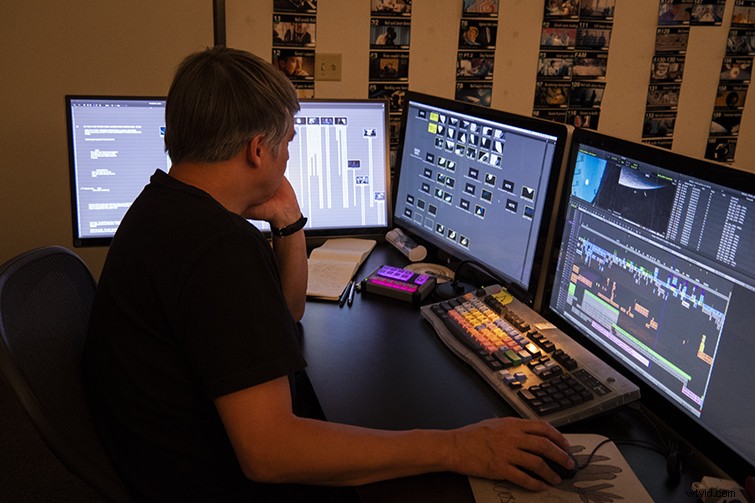
Cross’s edit summons emotions through pacing. The contrast between editing styles is so visceral you can’t help but feel a different way once that style switches up. This filmic instinct is proof that a good filmmaker can sway emotions however they want.
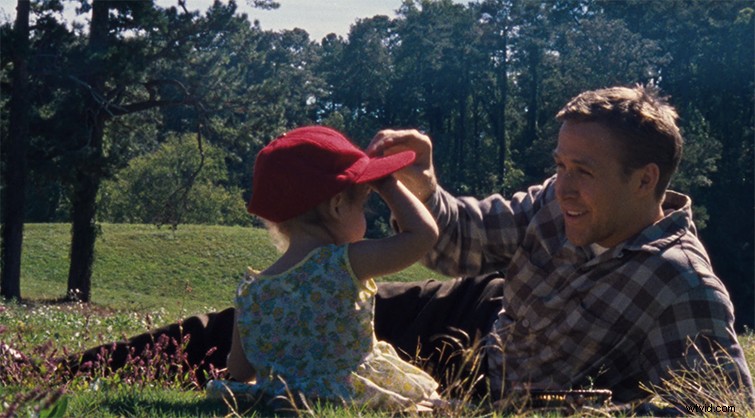
Once we’re on the moon, Chazelle and company tug at our heartstrings in a number of different ways. The journey has brought so much pain to our hero, both at work and at home. It’s in these moments that Cross cuts to flashbacks of Neil, Janet, and Karen — before Karen passed. There’s literally no audio except the haunting score from Justin Hurwitz as we see Neil walk, alone, across the surface of the moon. Cross explained why the flashbacks he used were crucial to crossing the finish line with Neil as he looks back at his life across a sea of darkness towards home.
Those moments in rehearsal came back several times throughout the film, and each appearance hits harder than the one before as we live with these characters as the film progresses. Damien and Tom’s relationship shines with their openness to going off script in service of the story. That openness didn’t just help enhance the moon sequence — it also improved several other moments throughout the film.
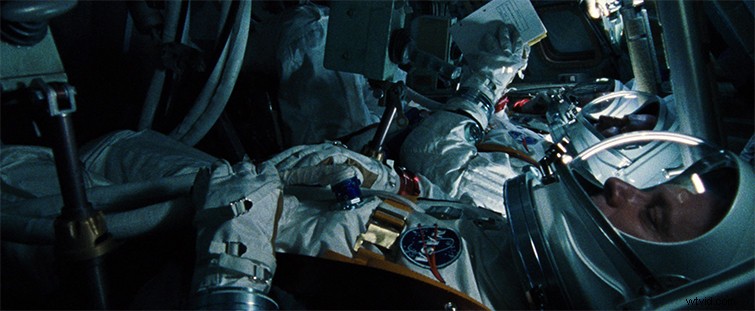
Hearing Cross say that blew me away. As you’re watching the film, you have little to no time to stop and think about the narrative in this way. The film plays out in a seamless thread from point A to B. It’s only after the film — or even once Neil is looking out over the crater — that you realize what just happened. Between the vérité style, the intentional cutting, and every technical aspect of the film, the First Man team kept the story grounded with a simple message — that these momentous occasions and accomplishments can be taken by anybody, even you.
You Have to Start Somewhere
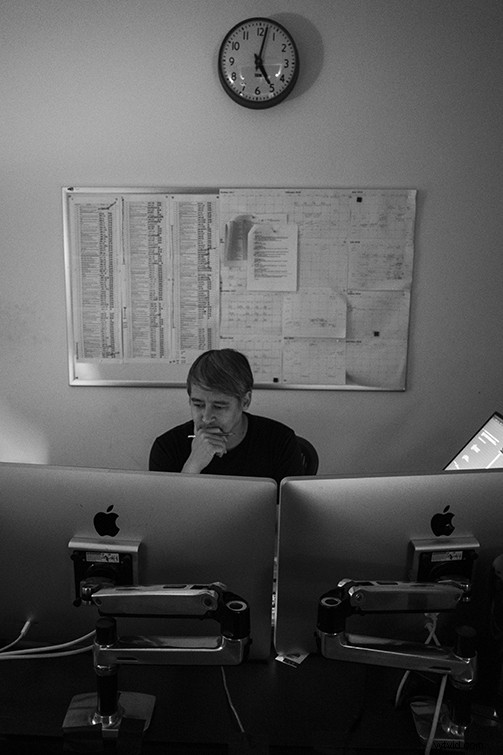
I asked Cross what advice he had for anybody starting out as a video editor, but his response could apply to anybody at any stage in any aspect of film production.
Finally, I asked Cross what type of work he started out on and how that work informed his take on something like First Man.
All images via Universal.