
Looking to fill the gaps in your documentary with archival footage? Here are 7 must-know tips for documentary filmmakers and video editors.
Whenever you are working on a documentary film that focuses on history, or features flashbacks to yesteryear, odds are you will need some archival footage. Prepare yourself to dig through the archives for countless hours to find the perfect shot. It’s a struggle every documentary filmmaker goes through, even the best.
For Ken Burns’s latest PBS documentary series The Vietnam War, Burns and his team dug through footage and image archives for years. In this excerpt from Burns’s interview with Rolling Stone, he has the following to say:
‘How did we get all that footage? The answer is 10 years,’ Burns says. ‘When you have that much time, you start digging up the outtakes.’ We don’t just see the Pulitzer-winning 1972 photograph of a young girl running away from a napalm attack; we also see shots of the attack itself, hear from the photographer about what he was thinking when he snapped it and a picture of the woman now. And because so much of the footage was silent, they had to add sound effects themselves. ‘Our editors were out with M-16s and AK-47s in the woods of New Hampshire,’ he says. ‘What does it sound like to hit a tree or a pumpkin as human flesh?’ We found out.’
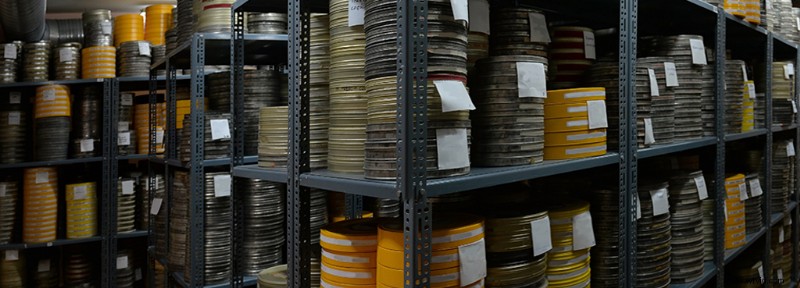 Image by contributor kaband.
In another interview with realscreen, Burns went on to say the following:
‘I treat the footage as if it is coverage. I feel obligated to not just illustrate, but [also] to find some artful way of combining the various footages to do something more,’ Burns tells realscreen. ‘You want to make sure to use the stills and the footage in a way that you are looking for something more, a condition in which the words you’re hearing or the sounds that you’re hearing and the picture that you are seeing just don’t add up to one and one equals two, but you’re looking for some odd catalyst where one and one equals three.’
So how can you find archival footage for your documentary? I’m guessing you don’t have the luxury of 10 years of research, so here are a few tips for looking for and working with archival footage.
1. Get help to dig through archives.
Don’t know where to start looking for footage? Ask around. The trick to finding great archival footage is asking for help. Sure, you can start by digging trough catalogs in libraries and online, but the best place to really start is by talking to family and friends of your documentary subjects.
Ask anyone for family archives of footage or video. From there, you can piece together a trail of information that will lead you to footage and photos you may have never found. Then, supplement that content with footage from libraries and collections, like those on Shutterstock.
2. Get licenses for footage early.
Before you fall in love with footage, make sure you can get the rights to use it. The worst thing you can do is find the perfect shot and then realize you have to cut it from your documentary because you don’t have the proper licensing.
There are a few key things to determine with archival footage licenses, including whether the clips are rights-managed, royalty-free, or for editorial use only. The cost of archival footage can also fluctuate based on your documentary’s distribution and the territory where it will screen.
Here on Shutterstock, you’ll find plenty of royalty-free and editorial archival footage. Just make sure you pay attention to the available licenses because you cannot use many editorial clips in non-editorial films.
3. Watch the entire clip or reel.
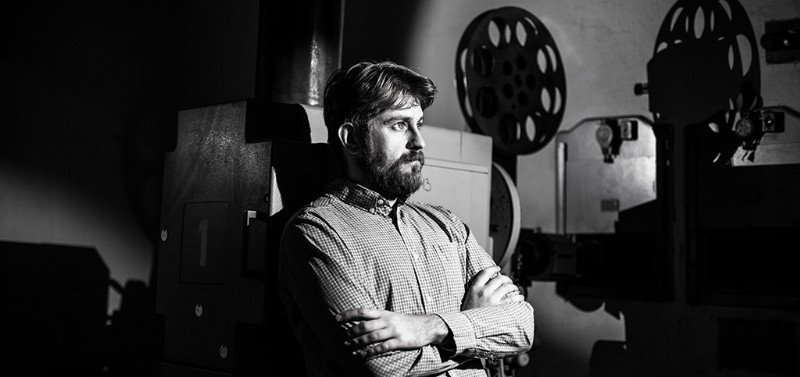
The trouble with finding the right archival footage is that not only do you need to dig through every reel, you also need to watch every second. You never know when a shot will cut away to another location or time.
You need to watch every clip completely; a thumbnail preview isn’t going to give you any type of accurate information to determine if the clip works or not.
In an interview with IndieWire, documentary filmmakers discussed many of the challenges they faced when digging through archives.
‘Even in a major news archive, you have to be prepared to do some digging and view quite a lot of footage. Just because something isn’t listed doesn’t mean that it may not be somewhere in the footage.’ —Scott Norman, NBC News Archive Content Manager
‘You’d be amazed by how many stories are shelved on tape that will never see the light of day unless someone is willing to go through them.’ —Tom Jennings, Documentary Filmmaker
4. Keep footage archives organized.
As you find the footage you want to license, make sure you keep everything properly organized. This isn’t as simple as just keeping footage in its own folder — you need to make sure that you can find a clip and the license and source associated with it.
If you need some tips on organizing your project, check out this article that includes free apps for organizing your video projects.
5. Back up all footage, licenses, and project files.
This is a tip for any new documentary filmmaker or video editor: always back up projects. Not backing up a project is a mistake you’ll only make once, when you realize how impossible it is to recover the lost data and time. The best practice is to have two backups: one on location and one remote (preferably stored online if possible). That way, in the worst case scenario, if your office burns down, you still have a backup copy elsewhere.
In an interview with PBS, Food, Inc. editor Kim Roberts says,
‘Come up with a really consistent naming strategy … If you are using a ton of archival, keywords become really important. On [American Revolutionary], I think it was organized by decade.’
6. Mixed formats can cause editing troubles.
Be aware that working with archival footage can cause many headaches. Whether you have to convert film or tapes to digital, or are using older formats, mixing different media doesn’t always work smoothly when you start editing in your non-linear editor. The same goes for integrating different resolutions.
If you want a bit more on this, check out this article for a few ways to work with different media when editing. There are a few tips for cohesively making your footage work together.
7. Turn to archival photos and print sources if footage doesn’t exist.
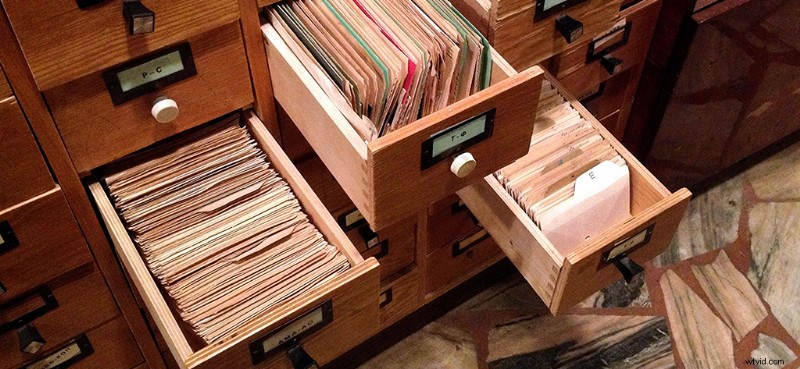
If you can’t find any footage for your project, don’t give up — especially for documentaries covering time periods before film cameras existed. You can still incorporate plenty of other types of media, from archival photos, handwritten letters, and paintings.
Also, look to other historical resources on your topic for additional leads. You can potentially find a lead on your project by digging through newspapers, magazines, journals, and more.
Explore the entire Shutterstock library for archival footage and images. We may have the perfect clip for your documentary.
Want even more on documentaries? These articles are full of helpful tips.
- 12 Video Editing Tips for Cutting a Documentary
- Free Templates, Forms, and Resources for Documentary Filmmakers
- Enhance The Stills In Your Documentary With These Tips
- 9 Easy-to-Avoid Mistakes When Shooting a Documentary Interview
- Cutting Mixed Media Projects with Various Formats and Resolutions
- Tips for Documentary Interview Camera Setups