
Documentaries come in all shapes in sizes. Some explore grand themes and major events, while others address intimate issues and personal stories. As such, depending on your story, documentary interview setups will range in size.
To prepare for any scenario, let’s explore these tips and best practices for different documentary interview setups.
Single-Camera Setup
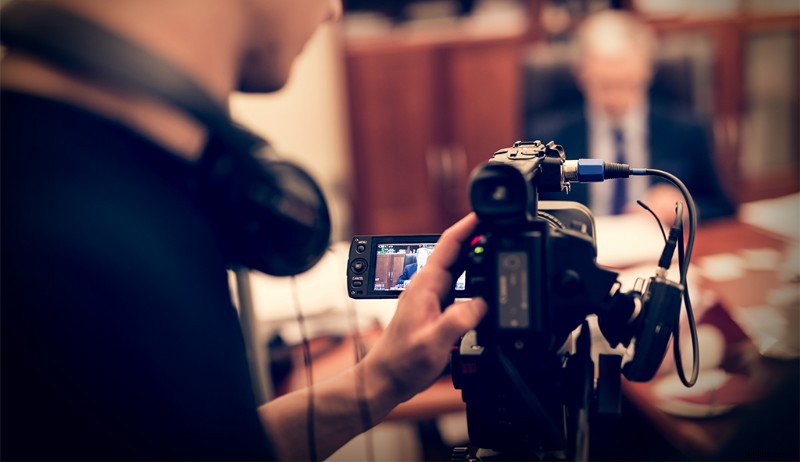
When you’re working on small or personal projects, you’ll often find yourself in the perilous position of shooting interviews with only one camera. This can be tricky because you are limiting your angles of coverage and your ability to hide edits.
Without a true second angle, if you’re going to cut the interview between talking points (and remove pauses, stutters, and “um”s), you’ll have to find creative cutaways or B-roll to cover. Here are some tips to help you out.
Change Compositions
If you’re shooting in 4k or in RAW, you may want to consider shooting the interview wide then creating cuts by zooming in in post (more than 30 percent or so) to create the illusion of a second close-up shot. Depending on the final format of your documentary, you may be able to get away with this on some 1080 or 720 exports if you’re in a controlled environment and your camera is capturing its best footage.
Find Inserts
Another trick is to create inserts from the interview that don’t show the subject’s face or mouth moving. You can do these before or after, but some popular ones you’ve probably seen include insert shots of hands, clothing, or personal belongings. You can also show “production shots” from behind or an extreme wide angle that reveals the interview setup.
Fake a Second Camera
Similar to finding inserts, you can also fake a second camera by shooting the interview twice. This isn’t ideal for syncing, which may take awhile, but if the interview is tightly controlled, short, and mostly scripted, having the interviewee repeat the answers while you shoot from a side angle can create a few “faked” second angles to throw in.
Use B-Roll
Perhaps your best option (and what would a documentary be without it?), is to cover your edits with B-roll. Ideally, you can just pull from your documentary footage, but if you’re in a pinch, you can always use stock footage or images to fill in gaps.
Two-Camera Setup
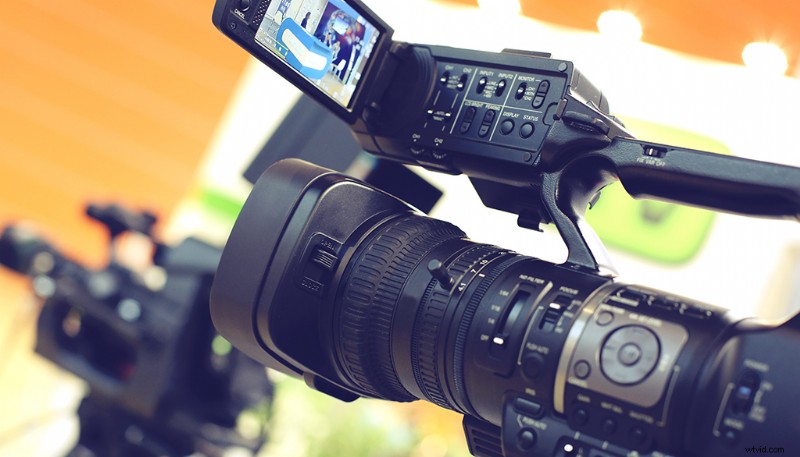
This setup is ideal for most projects. A second camera gives you many options for different angles as well as a backup in case anything goes wrong with your main camera. (Trust me, it happens to the best of us.)
Some angles to consider for a second camera include 45-degrees to either side of the main camera. You can experiment with a wide angle or a close-up (or you can switch in and out of both), but the idea is to create a range of coverage to use in the edit to emphasize your subject in his or her best light.
Three-Camera Setup
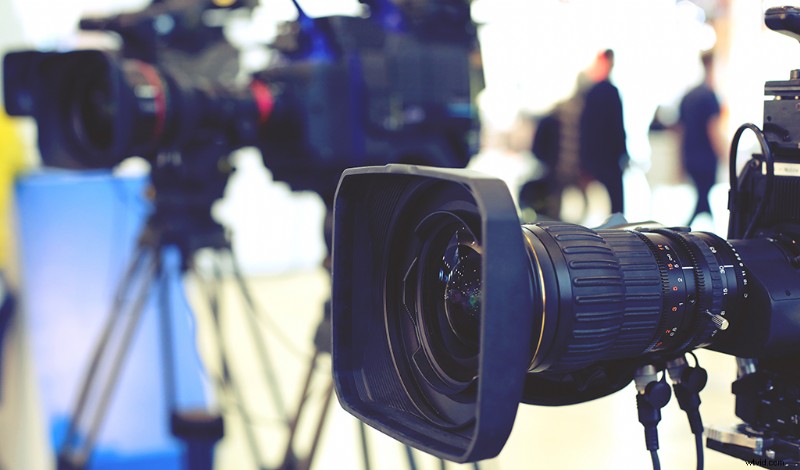
If you’re fortunate enough to shoot your documentary with three or more cameras, good for you. You’re ensuring maximum coverage with the flexibility of many angles and creative compositions.
You can set up your two main two cameras in front of your subject and at a 45-degree angle, while your third is free to pick up everything from inserts, production shots, or any other creative compositions.
Here’s an article with some more on a third camera to consider. For more resources on documentary interview setups and tips and tricks, check out some of these links.
- How to Shoot Gorgeous Documentary Interviews
- Interview Tips Every Documentary Filmmaker Should Know
- A Complete Guide to Documentary Filmmaking
Top image by Chekunov Aleksandr.