
Explore the influential careers of early women film editors and how their legacies shaped the modern landscape of cinema.
As a feminist and female editor, you can imagine my awe to hear, from a male coworker, that some of the most revolutionary films in the early days of cinema were edited by women.
How did I not know this? My jaw was on the floor. Up to this point, I had spent over a decade of my career in post-production. But, when it came to the ladies who broke ground editing blockbuster and historically relevant films, I knew nothing. That sent me on an a mission. A mission to learn where I came from, so to speak. A mission to learn who paved the way for me.
I knew of the renegades fighting for my right to exist in American society as an equal. But, how was I not more familiar with the trail blazers who laid the groundwork for me to be accepted as an equal on the post-production team? So, I knew I had to learn their stories and what it all means for us today.
A Brief History
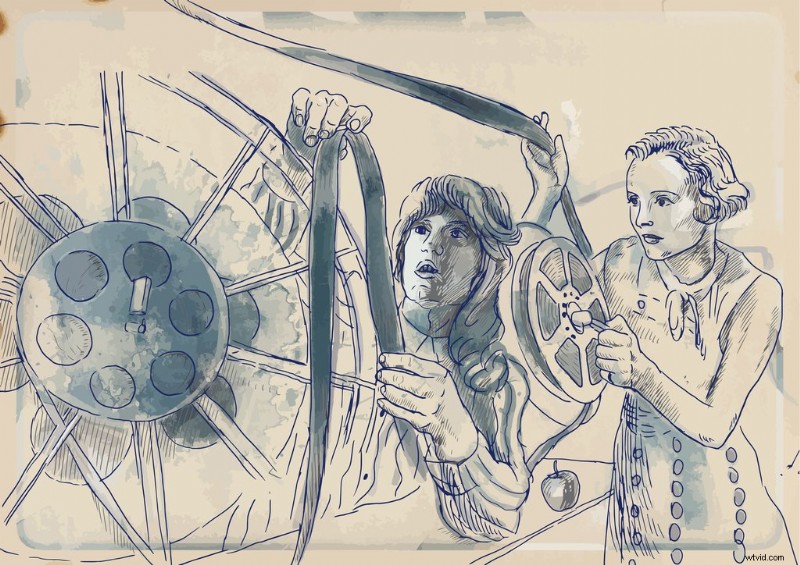
In the 1920’s studio system, women held the majority of editing positions. The early days of film editing held many similarities to sewing and crafting, which was seen as feminine work.
Renegade editors like Margaret Booth, Verna Fields, and Dede Allen started experimenting creatively with the editing process and soon revealed the power that a good edit holds. It wasn’t long after that, in the 1950s, editing was seen as “important work,” and men started to dominate the cutting room.
This quote from editing legend Anne V. Coates, in an interview with fellow editor Walter Murch, provides insight on this shift:
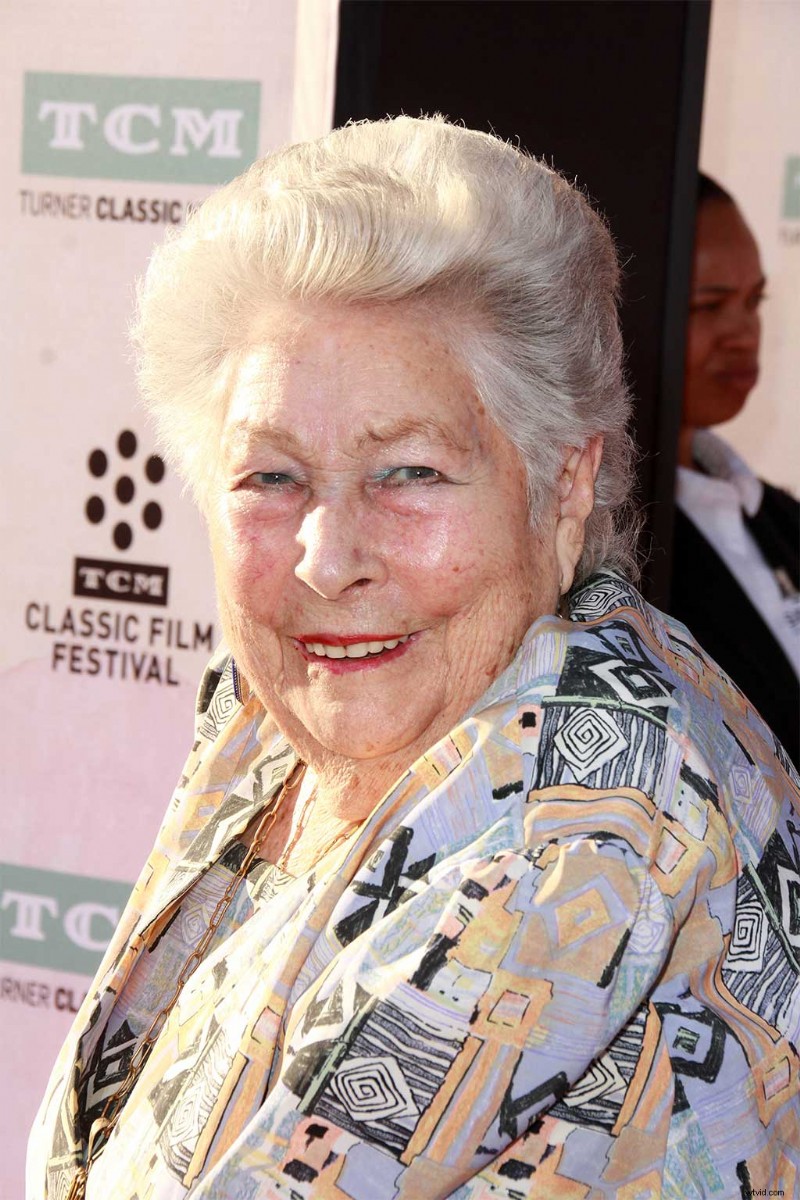
From Anne V. Coats to Thelma Schoonmaker to Verna Fields and many more, let’s take a moment to further explore these early pioneer women editors and see how their legacies have helped shape the modern landscape of cinema.
Groundbreaking Films by Women
In doing research for this article, it’s clear that you can’t sum up the vastness of women’s contributions to cinema history in one piece. And, while we’re going to focus on editing, there have been plenty of courageous and awesome women who have worked in film in every role from writers to directors to DPs and more.
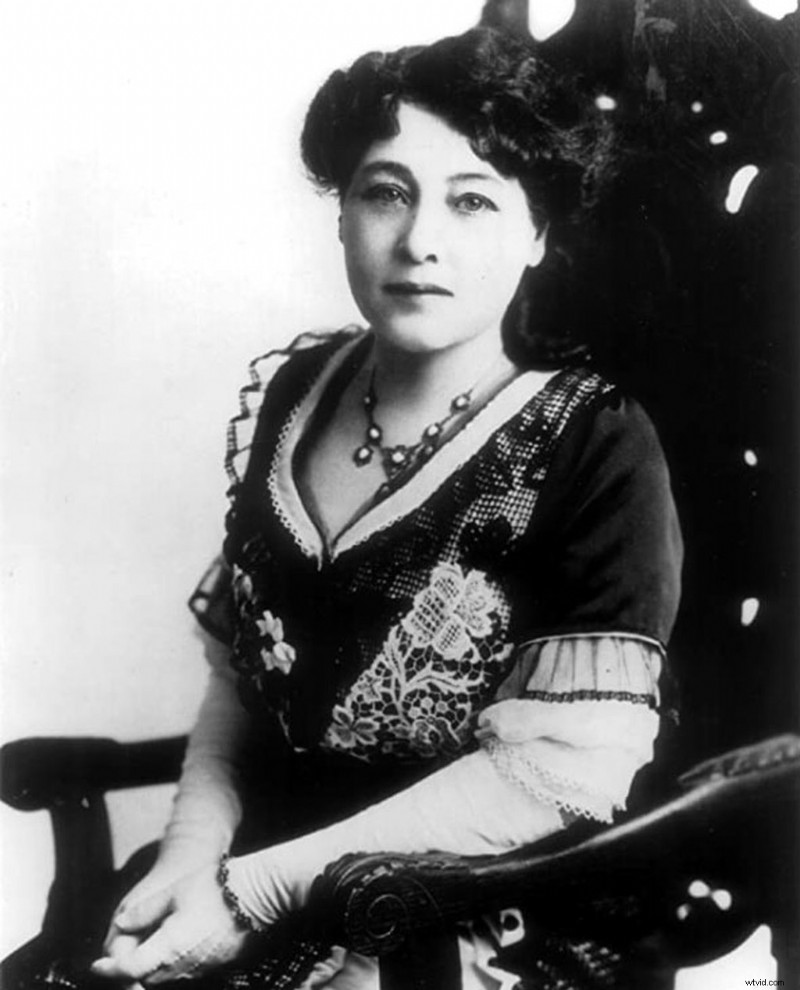
Women like Alice Guy-Blaché come to mind. She’s regarded as the first female director with her 1912 film A Fool and His Money (which is also notable for being one of the first films with an all African-American cast). Lois Weber is another famous woman director, notable for technological breakthroughs like introducing the split screen effect in her 1913 film Suspense. After making her way into the industry as an editor, Dorthy Arzner became one of the most prolific women directors of her time, with twenty-one directorial credits to her name including the 1930 film Sarah and Son.
However, while these early pioneers were true boundary breakers with their tireless work ethic, crafty vision, and unique voices in the industry, women were still limited mostly to behind-the-scenes work, cutting together the films and stories shot by their male counterparts. Let’s take a look at some of the biggest names and most famous female editors and some of their post-production technical breakthroughs.
Verna Fields and the Wipe By Cut
One of the more famous women in post-production history is the legendary Verna Fields. Fields is notable for being the driving force in cutting together the films for many famous names in New Hollywood, such as Steven Spielberg, George Lucas, and Peter Bogdanovich. Among the many styles and techniques, which Fields pioneered during these important formative years for modern Hollywood and cinema alike, perhaps her greatest contribution was the simple, yet jarring, “wipe by cut” technique, made famous in her film Jaws.
You can see an example of the cut above, as well as a testament for just how powerful and evocative these groundbreaking editing feats were. Fields received an Academy Award for her work, then ultimately cemented herself as one of the pillars for women in film by eventually moving into upper-level management in the industry.
Anne V. Coates and the Match Cut
Along with Fields, Anne V. Coates was another notable woman in film who cut together many of the most famous films and scenes in cinematic history. While she may be credited for the behind-the-scenes force in editing films like Becket (1964), The Elephant Man (1980), In the Line of Fire (1993), and Out of Sight (1998), Coates will always be perhaps best known for cutting together the famous match cut scene in Lawrence of Arabia.
This single cut, as outlined above, is a perfect example of how a woman can revolutionize an entire industry for generations to come with one creative thought and innovative technique. Coates would go on to have an esteemed career, winning numerous awards and achievements, as well as being one of the few recipients of the Academy Awards Lifetime Achievement Oscar in 2016.
Thelma Schoonmaker and the Visible Cut
Perhaps the most well-known working film editor in the business, Thelma Schoonmaker broke into the industry in the 1960s and has now enjoyed almost five decades of notoriety and success. Serving mostly as the exclusive editing partner to Martin Scorsese, Schoonmaker has long been synonymous with the famous filmmaker. She is also a true creative collaborator who has helped to shape some of the most notorious films in cinema history.
She’s also been distinctive in how she changed the expectations and landscape of film editing overall. Schoonmaker still fights back against the old adage of “a good edit is one that you don’t notice,” instead striving for editing to have a voice of its own.
Sally Menke and the Nonlinear Cut
Finally, moving forward from the earlier pioneers to one of the more modern masters in cinema, we have the legendary Sally Menke, most notable for cutting films for Oliver Stone, Billy Bob Thornton, and Quentin Tarantino, until her tragic passing in 2010.
As the editor for the earliest works of Tarantino, including Reservoir Dogs and Pulp Fiction, Menke received universal praise as the masterful artist tasked with putting together Tarantino’s bright—but jumbled—vision, often employing creative and innovative techniques for piecing together nonlinear narratives and concurrent timelines.
If you want to see how much Menke meant to Tarantino, the interview featurette above is a wonderful example of how much reverence and esteem Tarantino held for Menke. It’s also (in her own words) a testament to Menke’s own patience and understanding for wrangling in the young auteur.
Female Editors Today
However, despite the great strides of the female editor pioneers and titans above, there hasn’t been much progress on getting an equal number of women back in the editing suite. When I started my career, I was seeing the same percentages cited in so much data.
I was one of two female editors in the ten-person post department at my first gig out of film school. And, I was so thankful to have another woman on the team with me. She served to be an incredible mentor and gave me the confidence to keep editing when I would have felt out of place, otherwise. My second job, ironically enough, had the exact same percentage. I was one of five in a small trailer cutting department for an animation studio.
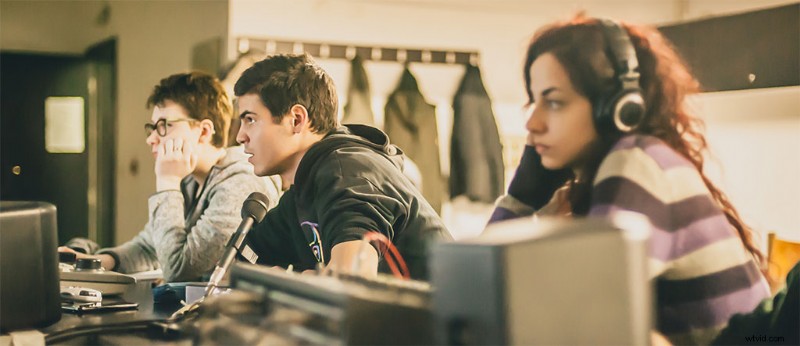
I have had the incredible fortune to work with some of the most welcoming and supportive men on my teams, but it doesn’t change the way it feels to be, sometimes, the only female in a room of men. There’s an intrinsic value in having other women around you. Different perspectives. Different types of feedback. A different way of looking at things. No matter how solid the team, that was something I always yearned for.
Still, female editors are continuing to lead the way in the industry as some of the most powerful and important voices in the space, if not the most well represented . . . yet.
A Hope for a Better Future
It’s no secret that the modest gains in equality we continue to see in post departments around the world are attributed to women lifting women up. That is the key.
At the job I mentioned above, where I was one of five at the animation studio, we did eventually get a vacancy on the team. Our boss asked for referrals and, of course, I had an incredibly well-qualified candidate, who happened to be female, I was able to refer. After interviews with several other candidates (all male), she was eventually hired to fill the position. She did nothing but benefit our team in every way possible.
Overall, when I look back at the sparse beginnings and few opportunities for females in the industry, I think of those early pioneers who fought the good fight and broke through to land those early jobs as writers, directors, and editors. I realize that this is our power, as women, to lift up the others around us. We all know other women, People of Color, and people of different sexualities who are amazing at what they do. It’s our job, as statistically low margins of the filmmaking industry, to lift each other up.
Cover image via Gorodenkoff.
For more articles on inspiring women in film, check out these articles:
- LGBTQ+ Films and Filmmakers That Are Making History
- Take Back the Power: Cinematography with Charlotte Christensen
- A Retrospective of LGBTQ+ Filmmaker and Activist Lilli Vincenz’s Work
- The Precise and Expressive Cinematography of Rachel Morrison
- How Reed Morano’s Cinematography Turns the Camera into a Character