
When Shutterstock reached 100 million images we asked ourselves: What will the next billion look like? Our curiosity was sparked and we began exploring the trends that are shaping The Future Of Imagery. As part of our investigation we’ll be speaking to leading experts in the field, learning how changes in technology, community, and aesthetics are pioneering a new visual era.
Get all of the interviews and insights here, and share your ideas with us on Twitter with the hashtag #TheFutureOfImagery
2016 will go down as the biggest year in the history of drones. Led by major technological advancements and the legalization of commercial drone use by the FAA, this year will truly shape the future of drones in the photo and video industries.
How Did We Get Here?
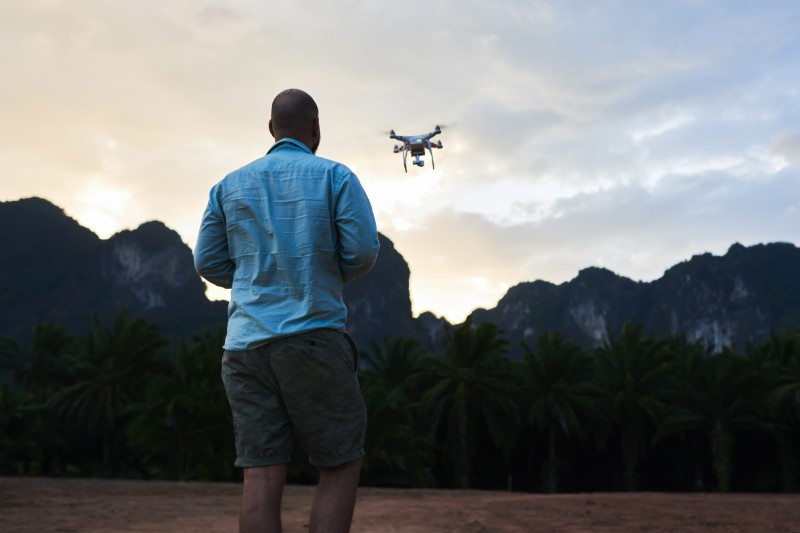
Aerial photography and video are certainly nothing new. Plenty of films, television shows, and commercials have used helicopters and planes. We’ve come a long way from the days of live satellite views from the Goodyear blimp. Now those aerial shots of downtown skylines during sports broadcasts are often live streams sent directly from drones.
It’s not just the cutaways that use drones. Select sporting events themselves are now shot by drones. They were all over the 2016 Rio Olympic Games, as well as major events like the PGA U.S. Open and X Games. It’s not even just on air, as NFL teams have started filming practices with drones. Outside of sports, drones are put to the test chasing vehicles in car commercials and capturing astounding footage in films.
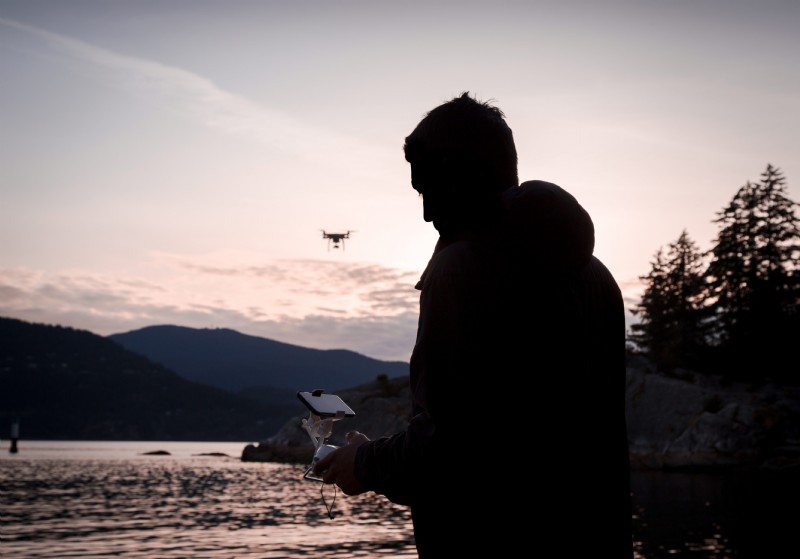
In the late 1990s, small unmanned aircraft systems (sUAS) were slowly making their way to the masses. Back then they resembled miniature helicopters, like the ones Flying-Cam developed to shoot aerials for films like Starship Troopers, The Legend of Bagger Vance, and later on the James Bond films Skyfall and Spectre. (Flying-Cam actually received two Oscars for their work — a Technical Achievement for the Invention of the Flying-Cam Technology in 1995 and a Scientific and Engineering Award in 2014).
These aircraft were certainly viable options for photographers and filmmakers, but they came with a hefty rental fee. And unless you were an engineer or hardcore hobbyist, you couldn’t really build one on your own.
The Chinese Robotics Revolution
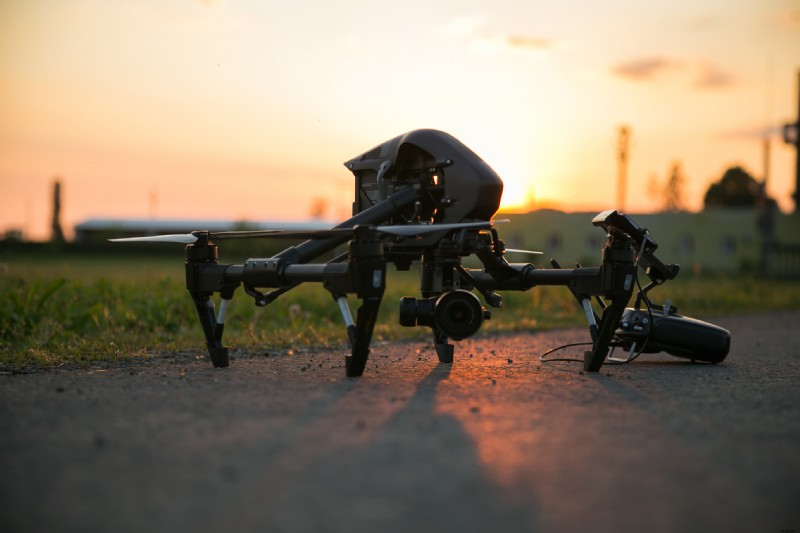
In 2006, engineering student Frank Wang Tao started a company built around his passion for remote-controlled helicopters: Da-Jiang Innovations Science and Technology Corporation — DJI. He began creating flight controllers for hobbyists and enthusiasts that built aircraft to shoot photos and video.
Meanwhile in France, the first consumer product deemed a “drone” debuted in 2010 — the Parrot AR Drone. It opened the market for fully assembled aircraft.
By 2012, DJI released the Flamewheel, a bare piece of metal that served as the frame or drone body. In December of the same year, DJI decided to release a fully assembled UAV to compete with the likes of Parrot. This drone quickly gained the attention of beginners and hobbyists alike. Thus, the first DJI Phantom took flight.
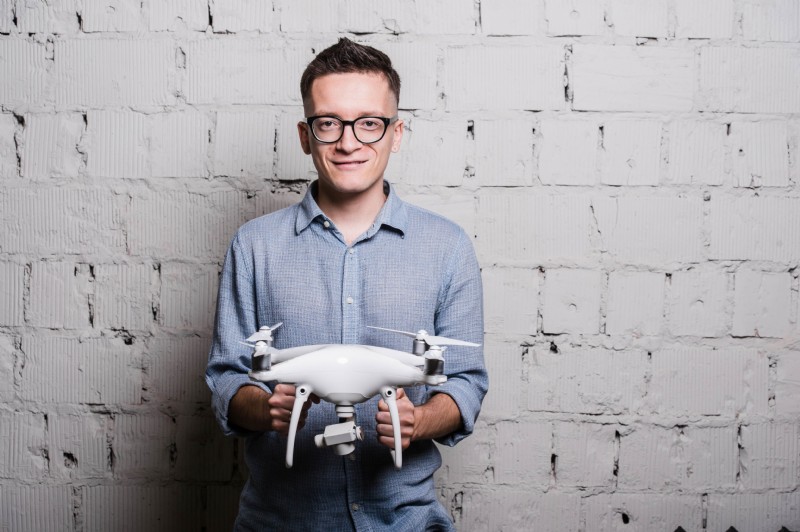
The DJI Phantom was an absolutely massive success, quickly giving DJI a 70% share of the consumer drone market. By 2014, DJI made $500 million in sales, doubling to $1 billion in 2015.
Today DJI owns around 50% of the consumer drone market. (The second largest market share belongs to fellow Chinese aircraft manufacturer Yuneec, with less than 5%.) DJI is expected to nearly double sales again in 2016, coming in around $1.8 billion in sales. As for Frank Wang Tao, he ranks at #57 for wealthiest people in tech. He is credited as the world’s first drone billionaire. In May of 2016, DJI’s valuation came in at $8 billion and may hit $10 billion following the next round of funding.
The State of the Drone Industry
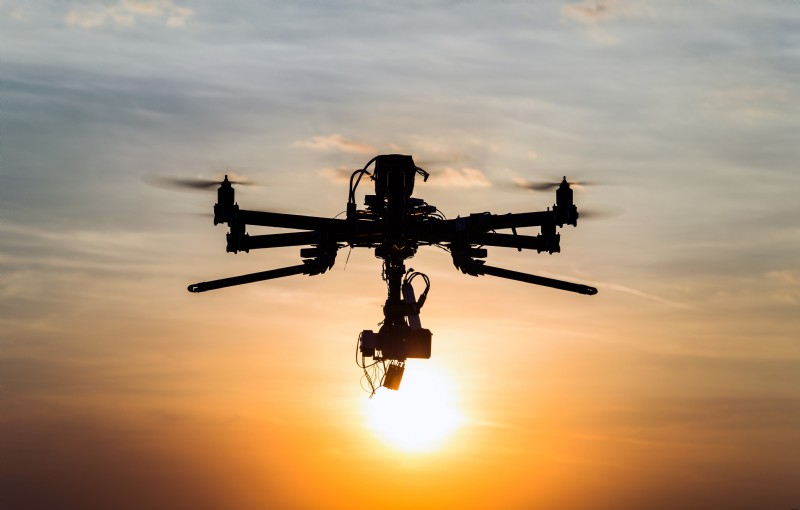
It really can’t be emphasized enough — 2016 was a massive year for drones, and it may end up being one of the biggest turning points in commercial drone history.
The year started off strong when DJI announced the latest version of its flagship drone, the Phantom 4. It introduced an array of new features, most notably obstacle avoidance. The new drone could sense surrounding objects and halt flight if it calculated that a crash was imminent. The Phantom 4 could even fly on its own with a simple tap on a phone or tablet. It was by far the fastest and smartest Phantom built to date.
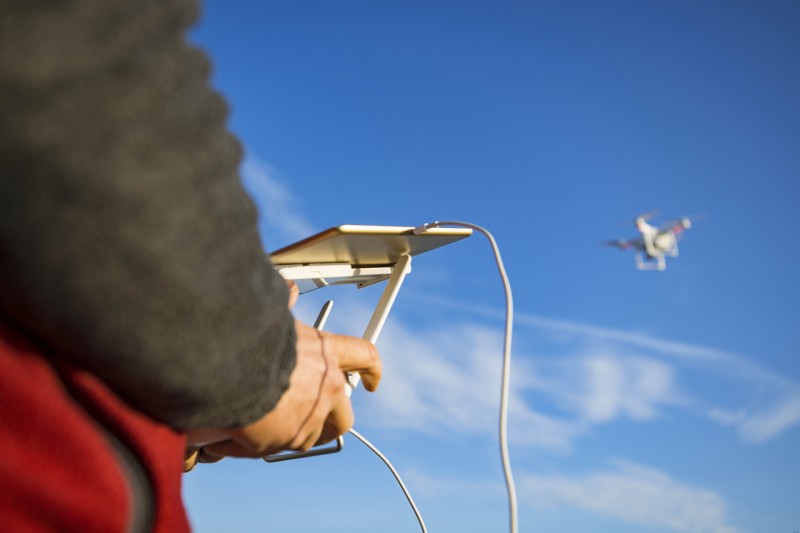
Here’s when things really started to take off. In August of 2016, the Federal Aviation Administration announced the legalization of commercial drone use. Photographers and videographers could now fly drones for work without having to apply for a Section 333 Exemption. The FAA wanted to make the process as simple as possible.
Hobbyists who want to share their photos and videos online (including putting them on YouTube) only have to register aircraft weighing between 0.55 lbs and 55 lbs. There is a $5 application fee and a handful of regulations, but that’s how simple it is for regular hobby flights.
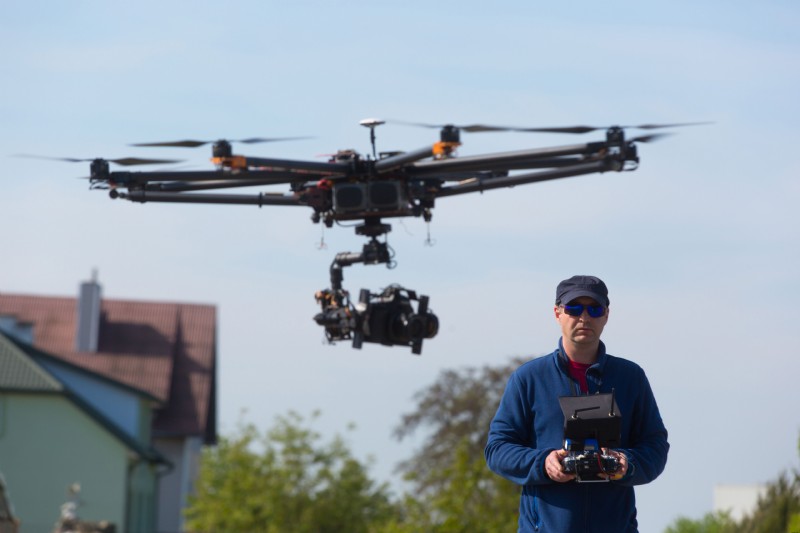
For commercial flight, users must earn a Remote Pilot Certification. (You can learn about the entire process here.) Essentially you have to pass an FAA pilot’s test at an approved testing center. It’s not as easy as just signing up and getting approved; the test requires thorough aeronautical knowledge. That said, it’s a much simpler process than earning a pilot’s license. The small UAS Remote Pilot Certification lasts for two years, requiring drone users to retest once their certificate expires.
This move will change the future of drones. While a huge benefit for photographers and videographers, the new laws cover all commercial drone use — like employing them to spray crops on farms, map remote areas, and (eventually) deliver parcels for companies like Amazon.
In September of 2016, the world witnessed the latest manufacturer moves in the race to conquer the drone market. GoPro finally announced their much anticipated drone — the Karma. It took the media by storm, as this was an incredibly portable drone designed for those on the go. The propellers collapse into the body, and the entire drone fits into an easy-to-carry backpack. The Karma also includes a stabilizer that can be removed from the drone for handheld use or clipped to the carrying case to capture a first-person view.
Not to be outdone, one week later DJI announced their own portable and foldable drone — the DJI Mavic. The aircraft is smaller and faster than the GoPro machine and includes advanced features like gesture control. Users can literally put the Mavic in the sky, wave their hands in the air, and the Mavic will follow them without having to use any type of tracking device.
American drone manufacturers like GoPro and 3D Robotics have quickly learned how difficult it is to compete with the likes of Chinese manufacturers like DJI. In the time each of those companies released one drone, DJI released four. This has to do with the fact that DJI is based in the Shenzhen province, where technology is advanced and labor is much cheaper. Additionally, DJI looks for the best talent by hosting the popular RoboMasters tournament, which is like BattleBots on steroids. The tournament has given DJI a competitive advantage in finding the latest tech and developers, which they then use to create their latest drones.
That doesn’t mean American manufacturers aren’t having any success. In fact, they thrive in niche markets. The Alta line from Freefly Systems has become the go-to drone for Hollywood and television commercial productions. (The company recently showed the power of the drone by creating dronesurfing — a water surfer pulled by a drone).
As for the overall industry, it continues to skyrocket in value. The latest estimates from PricewaterhouseCoopers suggest the drone industry will grow to more than $125 billion by 2020. Which leads me to my final thoughts.
The Future of Drones
We are beginning to see a split in the industry. As the consumer market aims to create smaller and faster drones that shoot 4K video and beyond, we will continue to see more portable aircraft. Essentially, imagine wearing a drone instead of carrying it in a backpack — just like the Falcon’s Redwing in Marvel’s Captain America: Civil War.
While that is certainly where a majority of the market is headed, there is still the need for large aircraft for feature films and commercial production. There will also need to be larger drones with bigger payloads to carry parcels, equipment, and people.
If you really want to go James Bond futuristic, personal drones already exist — and I’m not even referring to the single passenger autonomous helicopters released by EHang earlier this year. There are also developments in real-life tech inspired by the Back to the Future Part II hoverboard.
Zapata Racing is already known for the Flyboard, a water-powered hoverboard that works over lakes and large water bodies. Well, in April of 2016, they announced the Flyboard Air, a flying device that no longer requires water propulsion. This is literally like surfing on a drone in the sky. The Flyboard Air uses four 250 Horsepower engines to elevate riders. There’s only one device built (still being tested over water for safety), though the company believes it will be ready for ground transport in the near future. You can see the Flyboard Air in action here.
While devices like that will certainly exist, we are still quite a long way from seeing photographers and camera operators flying around without a harness, though it’s not a farfetched idea. You’ll run into future laws and insurance regulations that will aim to keep users out of the sky, making sure any potential crashes only hurt the equipment.
Perhaps the biggest hurdle to come will be managing air traffic for all of these devices. As the consumer market grows exponentially, and with the commercial industry already testing deliveries, there will be plenty of drones in the sky. Keeping them all in the sky will be a major obstacle.
As for the near future, expect to see more astonishing devices from the likes of companies like DJI, Yuneec, and even GoPro. While 2016 brought major steps forward in drone technology, this is still just the starting point.
Have you been active in the drone community and have photos and footage to share? Shutterstock wants to see them. With our ever expanding catalog of aerial images, we are always looking for more from shooters like you. Visit submit.shutterstock.com for more.
Top Image by Valentin Valkov