
Eyelines direct your audience’s attention. Learn how to align expectations with the people and objects in your next video project.
When you’re working in film and video, whether that means documentaries, corporate videos, or narrative features, it’s important to understand what eyelines are and how they affect your production. It may seem innocuous when you’re filming, but once you get into your edit, you may find that eyelines can be inconsistent, awkward, and even obtrusive. Let’s go over some ways to keep your eyes in line.
Interview Eyelines
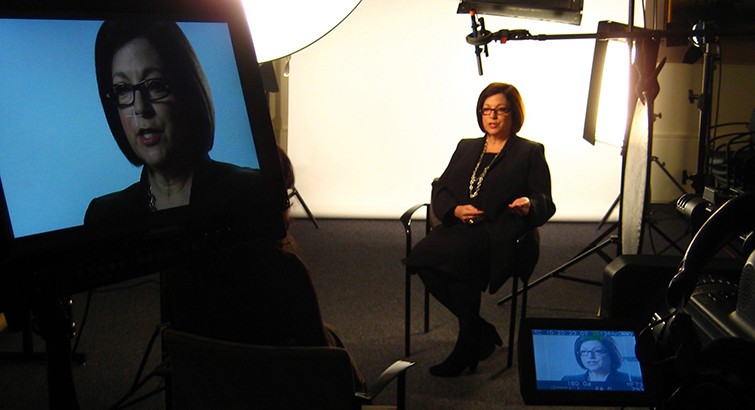
If you look at many of your favorite documentaries (or even brand or corporate videos), you’ll often notice that the interview subjects do not look directly into the camera. If they do, it seems like they’re speaking directly to you, which can be awkward.
Instead, it’s usually better to angle interview subjects anywhere between 15-45-degrees away from the camera. If you’re actively interviewing the subject, try setting your interviewer or producer (or yourself if you have to) on that angle to give them someone steady and consistent to look at. Here are some good interview setup resources to check out.
- Interview Tips Every Documentary Filmmaker Should Know
- Production Tips: Making Interviewees Comfortable
- How to Shoot Gorgeous Documentary Interviews
- 15 Tips for Shooting Dynamic Video Interviews
Eyelines Directly into the Camera
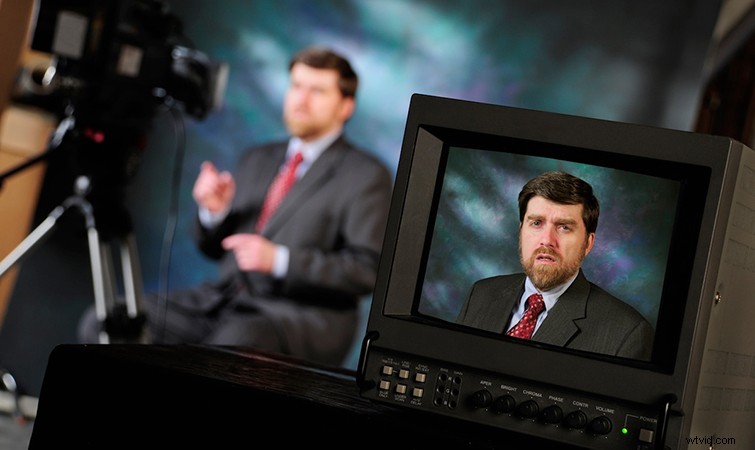
Another hallmark of many corporate and commercial video productions is a subject or character who speaks directly into the camera. While this seems simple in terms of eyelines, it can get tricky once you start introducing elements like teleprompters or cue cards.
Teleprompters are ideal if your subject needs cues or lines to work from — although you should always check in your viewfinder to make sure the eyeline looks straight and that the teleprompter is balanced properly. If you don’t have a teleprompter, you may be tempted to make cue cards for your subject. This can get tricky because while it may make sense to put those cards as close to the camera as possible, if you don’t thoroughly review the eyeline you may find once you get into the edit that your subject is obviously looking a few inches above or to the side of the camera, which is quite awkward.
If this is your only option, it’s best to coach your subject to keep their eyes focused on the camera and to try and to read the cues with their peripheral vision (much the same way as a news anchor who doesn’t let their eyes follow teleprompter lines).
- 7 Tips for Working with Teleprompters on Video Shoots
Eyeline Match
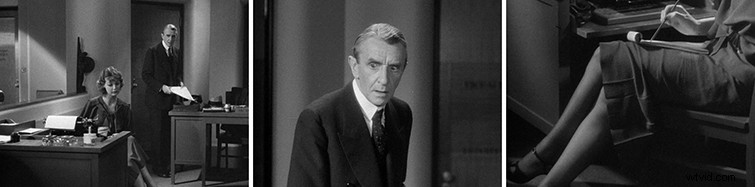
Narrative films often rely on the concept of eyeline match, which is as much an associative psychological concept as a continuity editing one. Basically, when you show a character on-screen and their eyeline focuses on something off-screen, whatever you cut to next, the audience will perceive it as the object of the character’s attention. The often-cited example of this comes from cinema master Alfred Hitchcock and his use of eyeline matching in Rear Window.
It also follows that when you’re shooting scenes with multiple characters, once you establish where people and objects are in the scene, eyelines in close ups need to properly align with points of focus. (If a sitting character is talking to a standing character, the sitting character’s eyeline needs to be directed upwards.)
Mistakes in eyeline matching in narratives, interviews, or directly on-camera can quickly disconnect your viewers and make your production look sloppy. Here are some more resources and tips to keep your productions clean and professional.
- 8 Essential Cuts Every Editor Should Know
- Understanding (and Occasionally Ignoring) the 180-Degree Rule
- 9 Common Filmmaking Mistakes to Avoid
- How to Compose a Cinematic Shot Reverse Shot