
Sam Erickson, a Brooklyn-based filmmaker and the founder of 44 Pictures, got his start working with his friends in the Dave Matthews Band as they made their way from small-town fixtures to multi-platinum superstars. Though he started as a photographer, Sam made the transition to directing and shooting video in 1998 when he turned his archival shots of the band’s seminal “Before These Crowded Streets” into an MTV special called “Dave Matthews Band: Open Wide.”
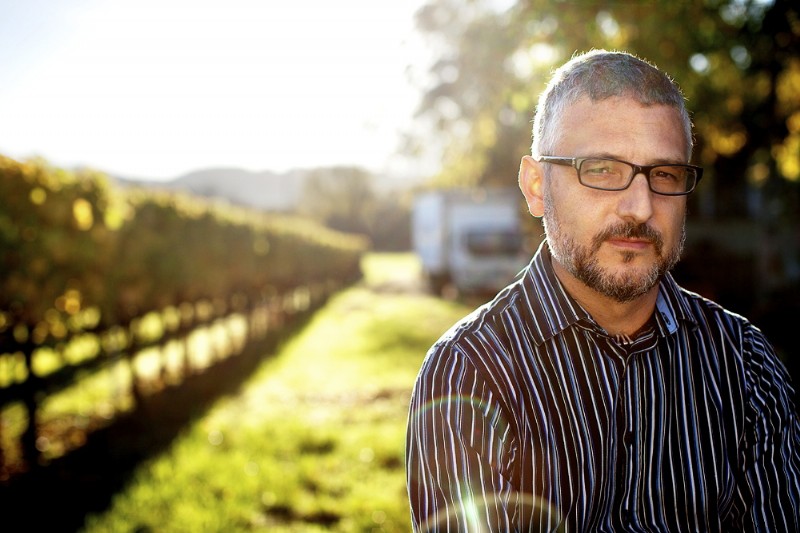
Since those early years, he’s gone on to work with a diverse group of performers, including Bob Dylan, John Mayer, and My Morning Jacket, as well as such Nashville fixtures as Kris Kristofferson, Keith Urban, and Brooks & Dunn. He took the time to chat with us about his past and current endeavors.
Shutterstock: How did you get started taking pictures and shooting video?
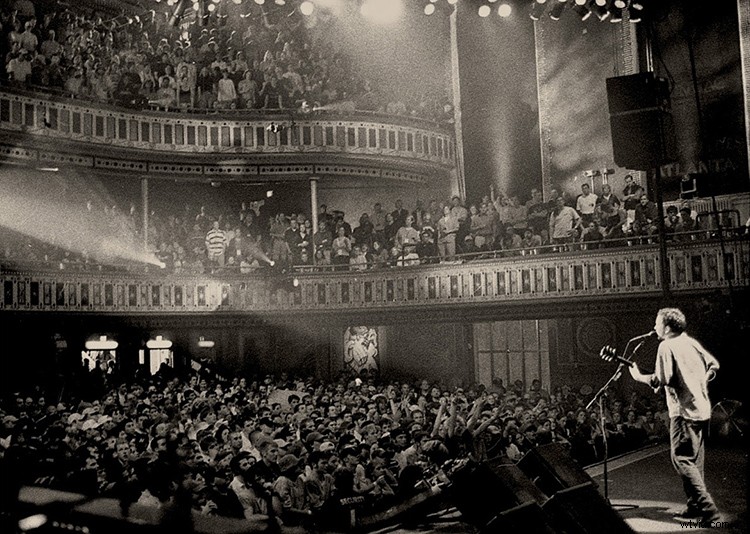
Sam Erickson: I was always deeply interested in photography as a means for self-expression, beginning in high school. In college, though I wasn’t formally studying it, I was the guy who always had his camera out. I would photograph my friends, I would photograph industrial decay in Philadelphia, and whatever else interested me. My professional career began with a nice break in the form of my fellow Charlottesvillians Dave Matthews Band needing somebody to do some photos for them before they got their record deal. I had known various members of that band since my high school days, and as they began to draw attention, they needed photos and other kinds of documentation and I was (one of) the guys in the right place at the right time. I toured with those guys and went in the studio with them a lot throughout the 1990s, and that was really my entrée into the world of music photography; a whole career opened up in front of me.
Do you think there were advantages to getting your feet wet and learning your craft in Charlottesville, as opposed to a bigger city?
I actually didn’t learn my craft in Charlottesville. I moved away from Charlottesville in 1984 to go to college at Swarthmore outside Philly and, though I visited Virginia often, I never lived there again. So all of my learning of the craft of photography happened in Philadelphia and later in NYC, where I moved in 1992 and began working as a photographer in earnest. Charlottesville these days would be a great place to learn and begin to practice all kinds of artistic pursuits, as it’s a thriving little city with a bunch of talented people in it, but I can’t say I learned my craft there.
After working with Dave Matthews Band extensively, you branched out and began shooting other bands and artists. How well do you think working with DMB prepared you, in the context of the wider industry
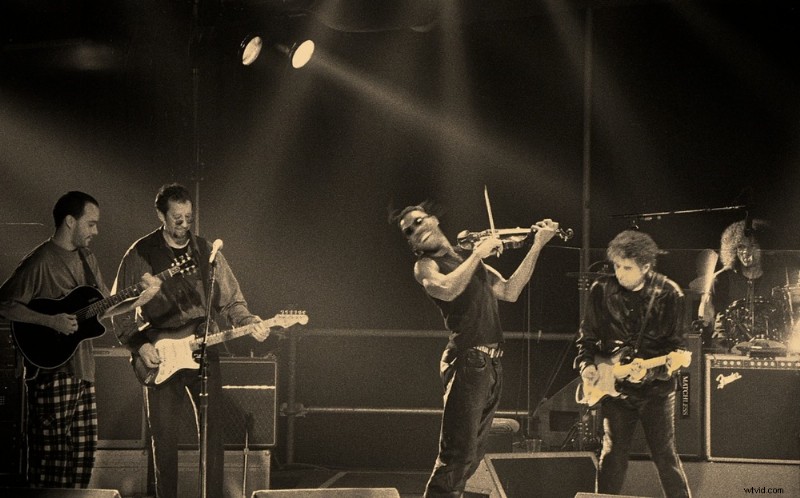
I think the DMB experience was a great preparation for the music business in general, because those guys were successful in all of the spheres of the business. They weren’t just a successful touring band, though that was their ultimate calling card. They were also a big success at radio, at album sales, even at MTV to an extent, so the opportunities for me to see every side of the business were incredible. Because of DMB, I got to go on tour in Europe as they opened for Neil Young and Bob Dylan; I got to go the Grammys; I saw huge headlining stadium shows from the inside; I stood on the stage at Woodstock 99; I shot behind-the-scenes on music videos; and I took pictures in some of the most legendary recording studios. It was a great, invaluable education. And it kind of spoiled me because, since they were the first band I worked with and I watched them go from an unknown bar band to the biggest thing in America, I expected all the bands I worked with to do something similar!
Are there any interesting behind-the-scenes stories from your time working closely with DMB that you’d like to share?
One of the best things about working with DMB when they were on the way up was all the amazing people I got to meet as a result. One story I will never forget is the time I was touring with DMB in Europe and they were opening for Bob Dylan for a few nights. We had been prepped by Bob’s advance team that we weren’t supposed to really try to talk to him or interact with him, so we were surprised when Bob ambles into the dressing room and introduces himself. He says to Dave, “Hey Dave, you gonna play that ‘eat too much drink too much’ song? I like that one.” At which point I ask if I can take a picture of Dave and Bob together, which I do. The following day, Bob’s road manager comes up to me and says, “Bob wants you to come to his dressing room and take some pictures of him.”
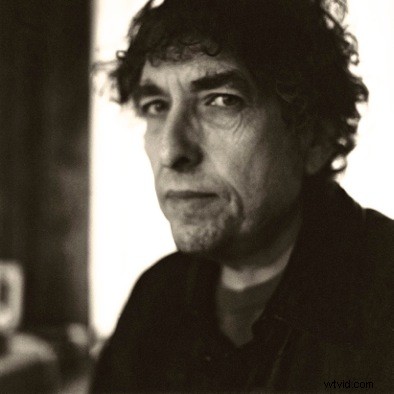 I was so excited and nervous, because I have always been a big, big fan of Dylan’s. Anyway, I get to the dressing room and it’s practically pitch black, with one little lamp on. I have no lighting of my own, so I ask Bob if he would mind going outside to do the picture, but no dice. So I have my dream opportunity in front of me, with no real way to pull it off. I have only an old Mamiya C330 box camera, which you look down into the top to focus, and I have to shoot at something like 1/4 of a second. The upshot of the story is that I got one good picture of Bob (shared here), and a once-in-a-lifetime chance to spend a little one-on-one time chatting with one of the all-time greats. Those kinds of chances don’t come up very often. I don’t know what the moral of the story is, but I guess it would be “always be ready,” because you never know when the chance of a lifetime will hit you in the face.
“Dave Matthews and Tim Reynolds: Live at Radio City” is regularly described as one of the must-see live concert videos of the past decade. How did you go about capturing the intimacy of the performance on such a big stage?
Intimacy was never the problem with this shoot. Dave and Tim sitting on stools and shooting the shit and playing great songs is intimate by nature. Turn the cameras on and shoot, and you will have an intimate show. The real challenge was to make sure that they weren’t visually swallowed up by the giant Radio City stage. Luckily, my co-director and longtime friend Fenton Williams (DMB’s lighting and live-video director) had a relationship with an amazing set designer (Bruce Rogers) who had some ins with the folks at Radio City. They allowed us to go through the storage areas in the basement of the hall and pick whatever we wanted to put on the stage.
So we ended up placing a mixture of both practical elements (ladders, scaffolds, road cases, etc.) and old decorative items from past shows (a 1930s-era moon for instance) around them and shooting through these elements to give the performance more texture and presence. We also projected a bunch of amazing photos (some of which I took and some of which were provided by Filament, Fenton’s company) behind Dave and Tim on the bare brick wall of the venue, so the whole effect was sort of industrial with a dreamy visual element. It ended up being a really great set for the show, and that DVD is one of the things I am most proud of in my career.
What have been some of the more challenging live shows to film, so far?
The hardest live shows to film are the ones of artists who are just starting to get big and therefore don’t have some of the experienced crew and lighting setups that more established artists have. I faced this in 2002 when I directed John Mayer’s “Any Given Thursday” concert film. John had really just burst onto the scene, and his touring apparatus hadn’t quite caught up to his popularity. So it was up to us to provide a lot of extra lighting and stage decor to make the show look cool. It was a scramble, but I think the end result was a really nice snapshot of an artist on the rise.
Can you tell us about how you first started working with My Morning Jacket?
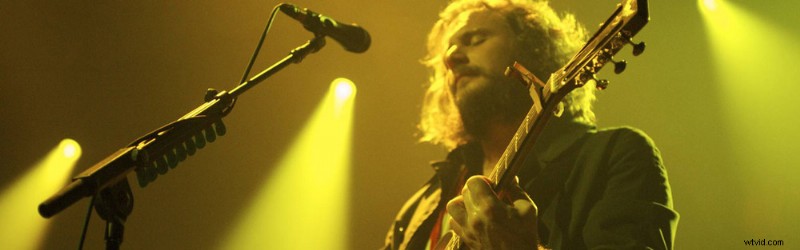
I first started working with MMJ because my good friend Mike Martinovich told me about this band he had discovered in a record store in Louisville and he asked me to be his wingman at a show of theirs at Mercury Lounge in NYC. (This was some time in 2002.) Mike’s plan was to go to the show and tell the band that they really needed him as his manager. I thought it was a longshot, but I agreed to come along and I brought my camera. I shot some live pictures and then accompanied Mike to meet with the band. To my surprise they pretty much agreed to Mike’s offer on the spot!
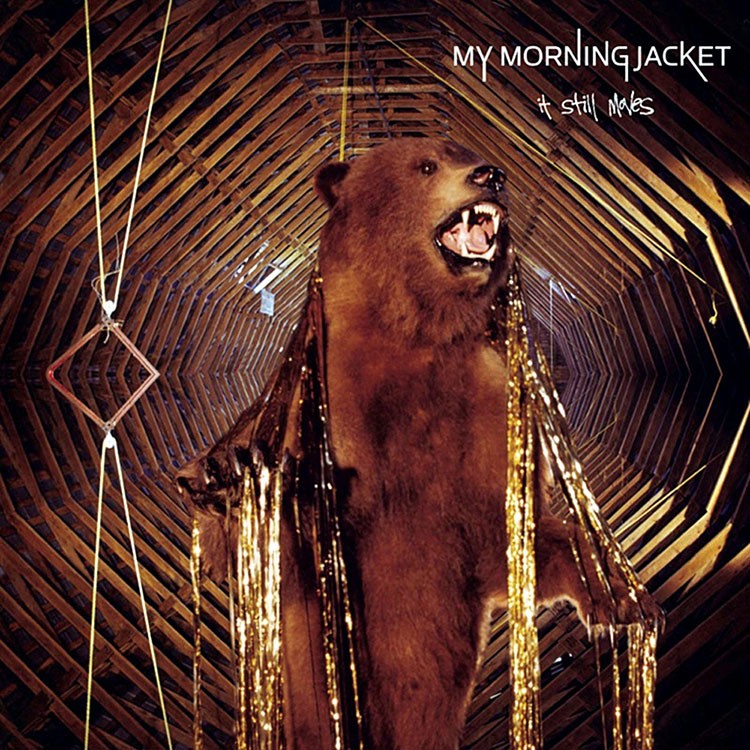
The next time I worked with them, Mike had actually become their manager and asked me to come down to DC with him (for no pay — I don’t do that for many people, but bands as great as MMJ are rare), crash on his friends couch, and do a quick pro-bono photo shoot of the band. I mention all this because, in the end, my willingness to do whatever it took to work with this band that blew my mind led me to a long, lucrative, and professionally fulfilling relationship. Sometimes you just have to take flyers on things you believe in. I ended up directly going into the studio and directing documentaries about the recording of three albums for them (“It Still Moves”, “Z,” and “Evil Urges”). I shot the “It Still Moves” cover with the bear, and, most importantly, I directed their concert film “Okonokos” which I am proud to say has reached legendary status in the world of concert films.
In that case, Jim James, the leader of MMJ, asked me to create a forest on the stage of the Fillmore in San Francisco, to recreate a stage that they played at the Fuji Rock Festival in Japan. The stage was called the “Field of Heaven,” and Jim wanted his concert film to be set in a magical environment like that. So I hired an incredible set designer (Ethan Tobman) to design a forest of fiberglass trees, painted backdrops, and actual leaves and branches. We also hired Marc Brickman, Pink Floyd’s main lighting designer, to create an otherworldly side-lit look (which MMJ still employs today, I am proud to say). We had to build all this on the same day as the show! It was a scramble, but the results speak for themselves. It’s easily the coolest-looking thing I have ever been a part of.
If you had to list your top 3 tips or tricks for someone just getting started shooting live music, what would they be?
1. Find musicians whose music you admire and do whatever you can to get to photograph or film them. Find their management companies, send them the photos, do whatever you can do to get in with them, because if you are lucky, it will pay off big-time
2. Make sure in photography that you have the right lenses for the gig — scout the venue, know the sight lines and what angles you will be shooting from, and know the distances, so you can have the right gear to get the shot.
3. Always have fun. If you are not having fun shooting live music, you are in the wrong gig.
The music industry has changed dramatically since you started shooting — what have been the most challenging adjustments?
The most challenging thing that has changed is the existence of the Internet and its effect on the way people consume live music. The internet simultaneously creates untold numbers of new opportunities for someone like myself and crushes budgets for said opportunities. People these days want live music to be something they experience via a stream: immediate and free. This is great if you want to follow your favorite band on tour from the comfort of your home but it really cuts down the artistry of the whole business. Nobody these days would spend $250,000 building a forest on the stage at the Fillmore and then filming it and taking three months to edit and mix it so it looks and sounds as great as it can.
Now people watch concerts on livestreams, where all the live mistakes and shaky audio are amplified. Artists like Jim James of My Morning Jacket would rather have their teeth pulled out than have their live performances (warts and all) streamed around the globe, but that is the world we live in. And because nobody wants to spend money doing cool artistic things, the pay for people who shoot live music is going down and down. Everybody with a phone thinks they are a photographer, and blogs routinely run photos taken by fans with phones. So being a photographer or filmmaker who predominantly works in the music business is becoming next to impossible. I hate to sound bleak, but that is the way it is, and I cherish the fact that I caught the tail end of what turned out to be the golden age of music documentation.
What new pieces of gear/software have you found most exciting over the last few years? Is there anything on the horizon you can’t wait to check out?
Since I was pretty late on the uptake with digital photography (I still weep for the days of film), I am just now getting proficient at the amazing new software available for photo processing. I’m learning to love the immediacy of digital photography and the incredible latitude one has with adjusting the look and feel of the photos. I’m now proficient in Aperture, which is an amazing program. I have learned — to my delight — to use HDR photography for some things (one other tip I would give people is not to overuse this trick), and I process HDR with a program called Photomatix, which I highly recommend. I’m interested to check out the cameras that can change the focus point of your images after the fact, as well. But really, I’m a bit of a luddite and not a first adapter to photo technology, so this question is a bit wasted on me!
Much more of Sam’s work is available at www.44pictures.com.