
Take a look at the lighting cinematographer Roger Deakins designed to capture the visually stunning footage in Blade Runner 2049.
In this article, we are going to take a quick look back at Roger Deakins’s previous work with ring lights — and how he built a massive lighting rig for Blade Runner 2049. Then we will take a look at how Deakins shot the film, as well as a few new tutorials you can check out to create your own looks inspired by Blade Runner 2049.
Roger Deakins Ring Lights
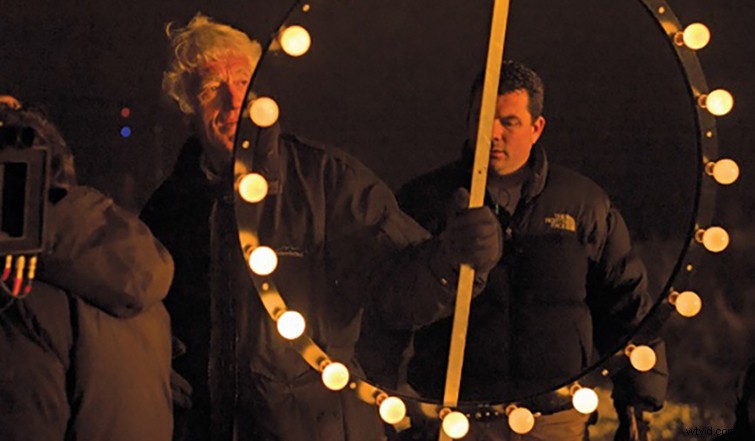
In a previous article, 5 DIY Tutorials and Gear Hacks for Filmmakers, we covered building a Roger Deakins-style ring light. Ring lights have become one of Deakins’s signature tools, and on each film, the rings get bigger and bigger. Before talking about the lighting of Blade Runner 2049, let’s look back at Deakins talking about ring lights:
When we last talked about these ring lights, Deakins had shared the following on the massive ring light that his grips and gaffers built for A Serious Man…
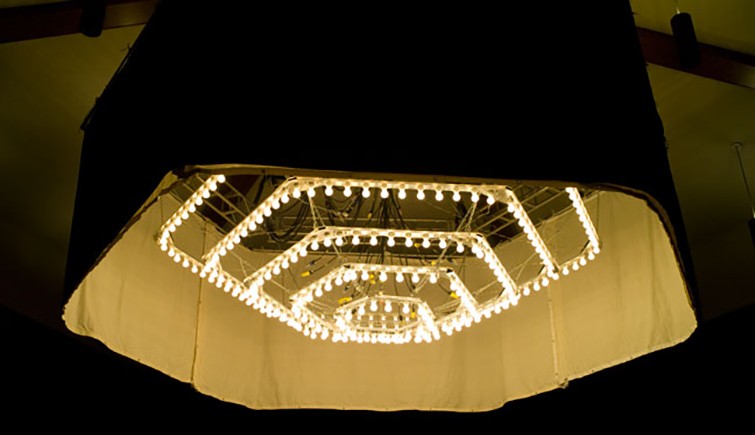
Image A Serious Man… via Roger Deakins.
Lighting Blade Runner 2049
When it came to the look of Blade Runner 2049, Denis Villeneuve and Roger Deakins spent quite a bit of time deciding the right atmosphere. In an interview with IndieWire, Deakins recalls the following:
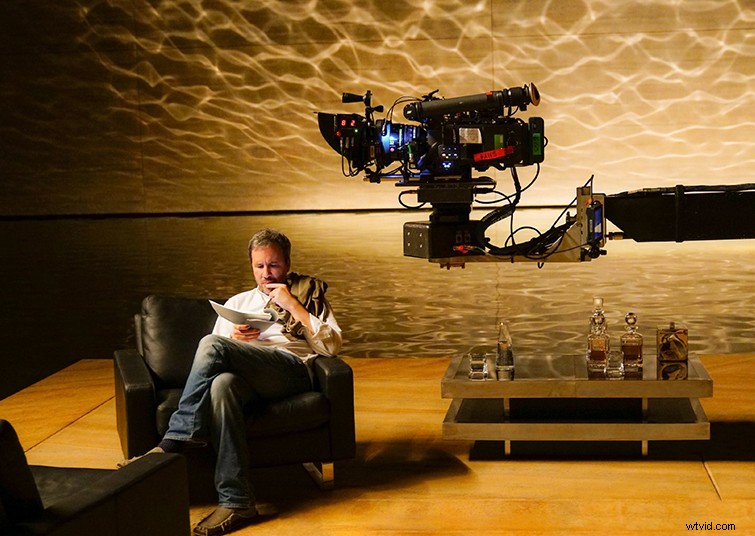
Image Denis Villeneuve via Columbia Pictures.
In an interview with ARRI, gaffer Bill O’Leary talked about the naturalistic look of Blade Runner 2049. His team of 20 crew members assembled massive ring lights on multiple locations:
Here is a look at one of the lighting packages: 256 ARRI 300-watt Fresnels connected to two rings to simulate the sun and the sun’s shadows.

Image Blade Runner 2049 Ring Light via ARRI.
This light ring was used in the office of Niander Wallace, played by Jared Leto. It lit the actors on the platform — designed to look like the sun shining through a skylight. O’Leary explained the setup:
Here is a look of the light in action on set.
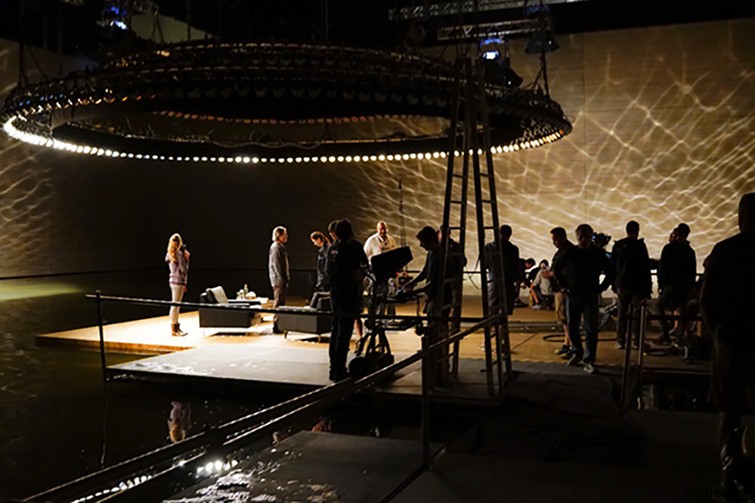
Roger Deakins elaborated on this setup over on his forum.
As for the beautiful water reflections on the surrounding walls, Deakins explained as follows:
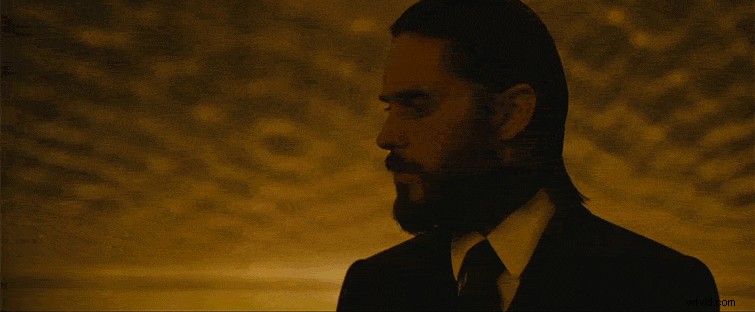
In another thread, Deakins elaborated a bit more on the two scenes shot on this set:
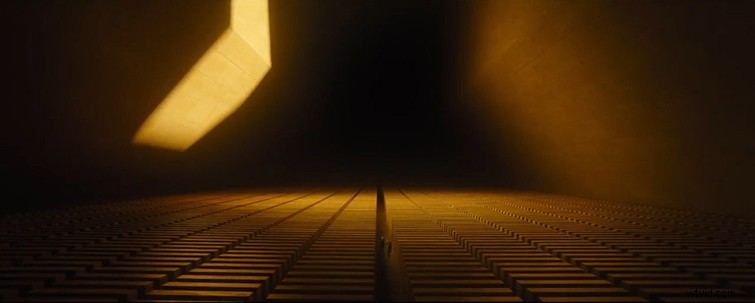
The library scene Deakins is referring to was entirely lit by ARRI SkyPanels. Bill O’Leary talks more about that setup:
In the ARRI interview, O’Leary was asked how the interiors we kept so soft and warm with atmospheric colors:
Shooting Blade Runner 2049
As for shooting the film, Deakins went with an all ARRI package with ALEXA XT Studio cameras with Master Prime lenses. The sets mentioned before, and many other major scenes, were shot on sound stages in Budapest.
As for the scale of the sets, Ryan Gosling recalled in an interview with Entertainment Weekly that “It’s really incredible… I was so overwhelmed by the scale of them and how specific and, although, beautiful they are.”
As for working with Deakins:
In this “making of” video from Vice, you’ll go on set to see Deakins and Villeneuve at work, with the cast and crew — and even get a glimpse at some of the set pieces and props.
Recreating Blade Runner 2049
If you are looking to recreate some of the looks of Blade Runner 2049 yourself, check out these tutorials.
First, Film Riot shows you how to create the look of the desert in Blade Runner 2049 in After Effects.
In this tutorial from RocketStock, you can learn to track your character’s eyes. You’ll learn how to create the original red replicant eyes from the first film as well as Niander Wallace’s white eyes from the sequel. It also includes free project files and assets, so be sure to download the free project on RocketStock.
A Little More Deakins
It should be no surprise that we love writing about Roger Deakins. Here are a few more pieces you may really enjoy.
- How to Frame a Medium Shot Like a Master Cinematographer
- 10 Tips from Master Cinematographer Roger Deakins
- Cinematography Tips from The Best In The Business
To mark ARRI’s 100th anniversary, the company put together a series of interviews with legendary DPs, cinematographers, lighting technicians, and more. Here is the interview they conducted with Roger Deakins on the art of cinematography.