
In which we explore everything from the brainstorming to the post-production behind Netflix’s acclaimed series “Mindhunter.”
David Fincher, the director of films such as Gone Girl and Se7en, is one of the undisputed legends of dark thrillers. He first began his relationship with Netflix as the executive producer of House of Cards, one of the company’s flagship shows. In his new television release, Mindhunter, he explores the inner-workings of serial killers’ minds — and how the FBI began classifying these killers through interviews and studies. Let’s take a look at how Fincher brings his trademark visual aesthetics to life, from original concept to the final edit.
The Idea and Concept
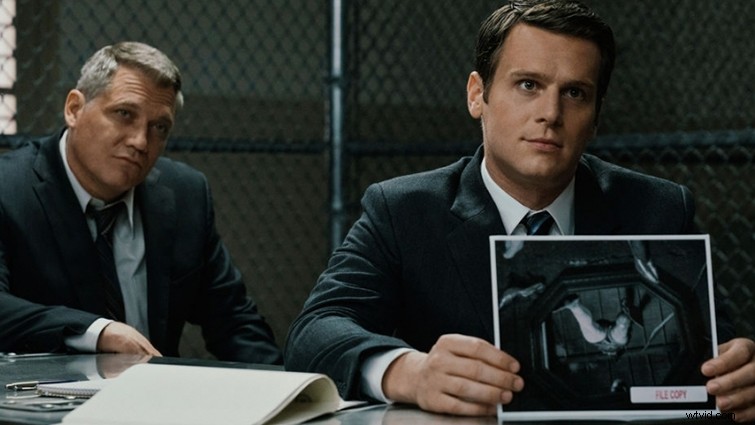
Fincher has always always been fixated on creating dark stories about people who live even darker lives. In an interview with Esquire, he explains that he has always been fascinated with the sinister since he was a kid:
This interest paved the way for his curiosity with the FBI and its beginnings. He explained to TIME that when the FBI started, there was so much new ground to cover in the criminal human psyche:
Fincher took his interest and combined it with the bestselling book that inspired the show, Mind Hunter: Inside the FBI’s Elite Serial Crime Unit. Though he did take a good amount of creative license to make his show more dramatic, most of the source material stems from the book.
Production
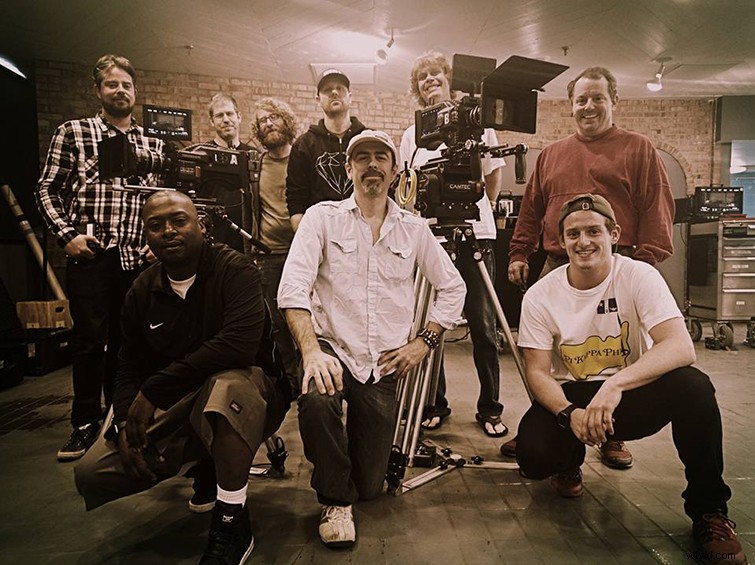
For the cinematography, Fincher trusted Eric Messerschmidt to lead the team. Having previously been a gaffer on Gone Girl, this was Eric’s first time as a cinematographer, but thankfully he and Fincher saw eye-to-eye on their vision for the show:
The production team for Mindhunter actually commissioned RED Cameras for a custom camera called the RED Xenomorph.
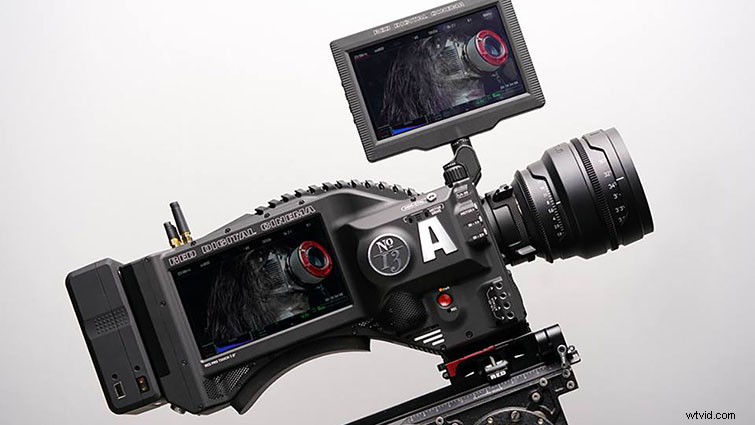
Image via Cinema5d.
It is a RED Dragon camera with all of the attachments that a cinematographer needs inside the camera instead of hanging off the side. Messerschmidt explained to Variety how easy this new camera set up was to use:
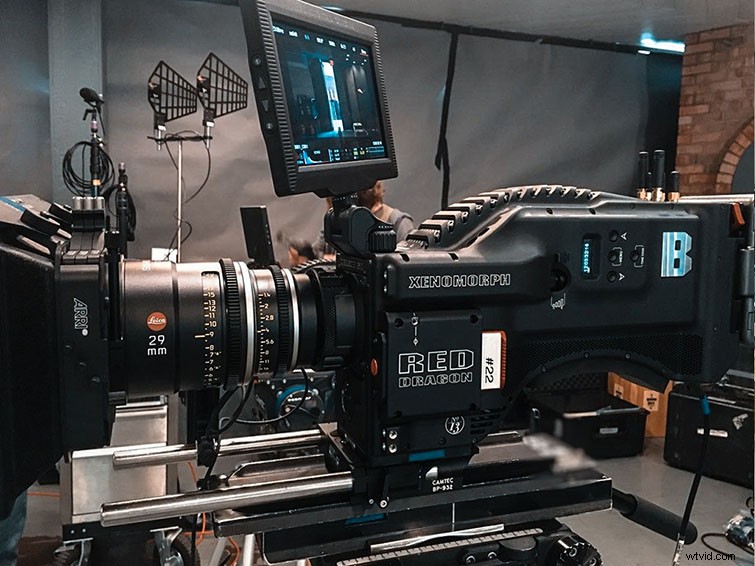
Image via Cinema5d.
If you are interested, here are all of the integrated specs the camera:
- RED Weapon Dragon 6K sensor technology
- 7.0″ LCD touch
- Paralinx wireless video
- Extended WiFi/Foolcontrol antenna array
- RT motion lens motor control
- Zaxcom wireless audio and timecode
- Anton Bauer gold mount
- Shoulder mount
- Xenomorph-inspired brain design
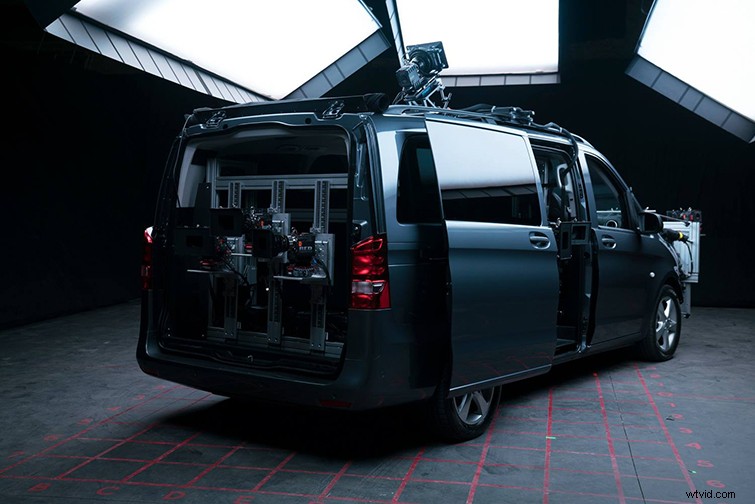
The crew also used RED to create a one-of-a-kind camera vehicle, outfitted with RED cameras in all possible directions to capture many of the road scenes inside Mindhunter.
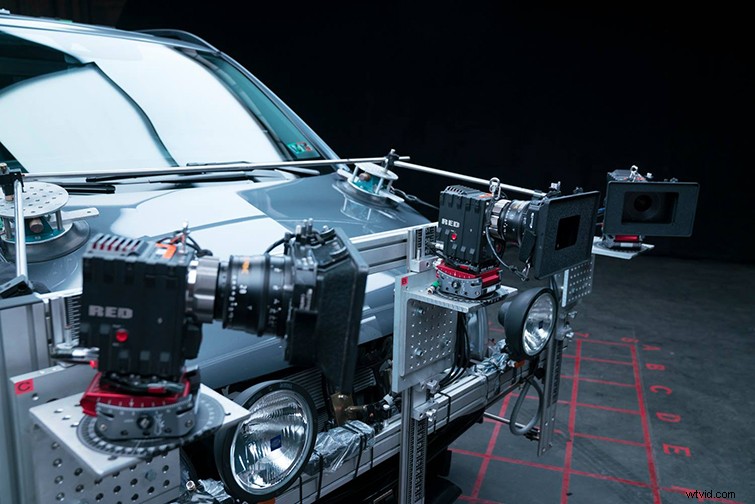
Images via Jarred Land.
The Editing Process
As you can see in the video above, the Mindhunter post-production team worked tirelessly to bring Fincher’s vision to life. The editors had almost the same dedication to their craft as the FBI workers presented in the show.
A crew of Fincher’s veteran editors from his previous movies comprised the editing team, including Tyler Nelson, one of the primary editors for this series. In this interview with Creative Planet Network, he explains his professional relationship with David Fincher:
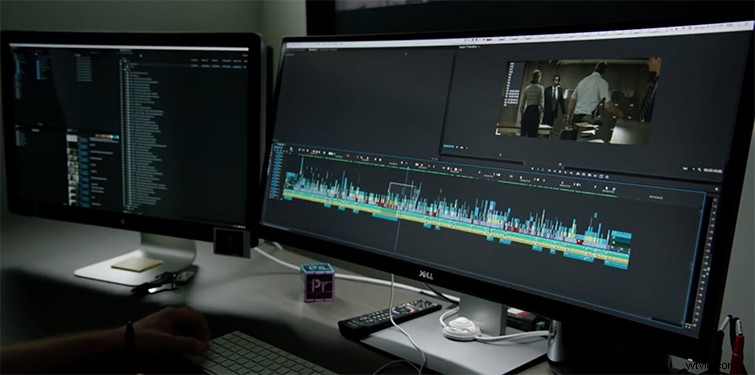
The editing team decided to use the Adobe suite for their editing workflow. Here is Tyler Nelson on why they chose Adobe Premiere:
Since this was a typical Netflix Original show that would be released all at once, they had the unique opportunity to present a story not only as an episodic drama but also as a 10-hour feature film.
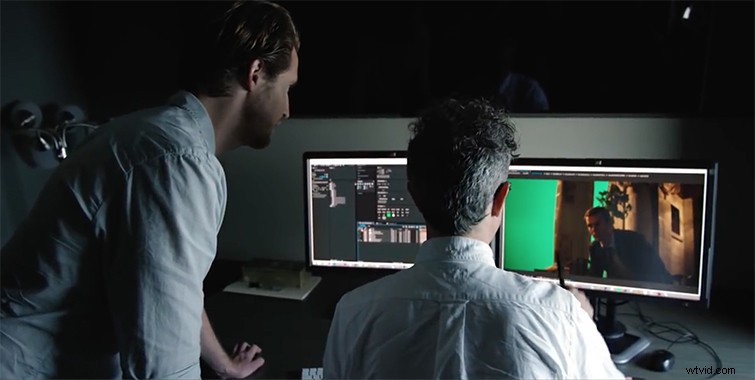
One major thing that improved the team’s workflow was bringing the VFX in-house to create a closed-loop style of editing. Since the VFX artist was using After Effects, the the Editorial and VFX teams could work seamlessly together through Adobe Creative Cloud. That way, if the editorial team needed some visual effects, they could send it to VFX, where they would have a turnaround time of a few hours — compared to a few days if they sent it to an external team.
The editors on this team learned a lot about cutting together the vision of a very well-known director while editing this show. Tyler Nelson describes it here best:
Overall, Mindhunter is a enthralling TV series that dives into a world of depravity, but it captivates the audience in a way that leaves them oddly empathetic with the serial killers they see on screen. Mindhunter is currently streaming on Netflix.