
HBO’s “Spielberg” is more than a biography, it’s a mini masterclass detailing some of the most influential scenes in the history of American cinema.
Warning: contains spoilers!
The opening scenes of HBO’s newest documentary, Spielberg, might leave you at a loss of words. You aren’t expecting the iconic, creeping sunrise of the entrance into the desert sequence from David Lean’s Lawrence of Arabia. Even more, you don’t expect to hear Spielberg say that it was Lean’s masterpiece that “set the bar too high” for the sixteen-year-old filmmaker — and that he no longer wanted to make movies.
Fortunately, he didn’t quit.
In fact, Lawrence of Arabia was a catalyst for the young filmmaker, who would return each week to watch, analyze, and dissect the film.
It’s the question “Who am I” that defines the arc of Spielberg’s career and serves as a focal point in Susan Lacy‘s newest documentary on one of American cinema’s greatest filmmakers.
Video via HBO.
What Can Aspiring Filmmakers Learn from Spielberg?
The documentary is epic in scope: a veritable 2.5 hours of Spielberg unpacking pivotal scenes from films like Munich, Schindler’s List, Close Encounters of the Third Kind, as well as several of his lesser-known early films and flops.
Aspiring directors, screenwriters, and cinematographers can glean strategies and approaches for creating memorable and relatable characters, crafting visual stories using the tools of the cinema, and how Spielberg thrived in uncertain situations.
But perhaps more importantly, we see the man behind the movies. And for those of us who grew up watching those movies, it’s a dose of inspiration on par with rapture.
On Visual Storytelling
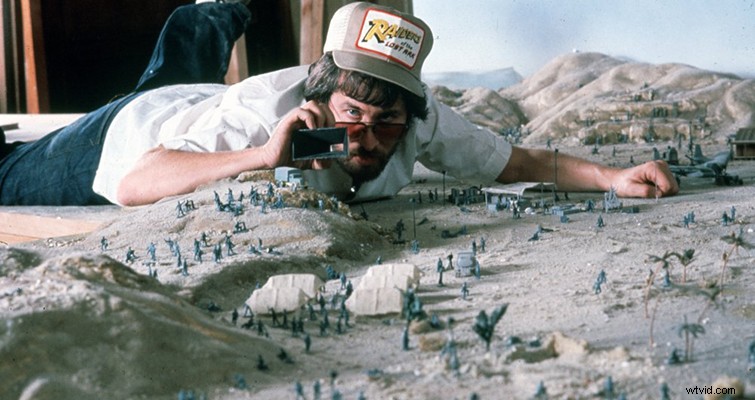
It’s evident, even in his earliest films, that Spielberg understands the medium; he just gets “camera work,” as he calls it. Moreover, he doesn’t rely on dialogue, music, or any sound effects to tell a story. In other words, he uses the visual nature of moving pictures and images to propel the narrative forward.
To demonstrate this, turn off your sound, and watch this nail-biting scene from Munich.
Video via YouTube.
Without hearing a single line of dialogue, or swell in music, we know the following about the scene:
- The scenario (or location).
- The players involved.
- The stakes.
- The ticking clock.
All of the things necessary for creating suspense.
“Geography is one of the most important things to me,” says Spielberg, “so the audience isn’t thrown into chaos trying to figure out the story that you’re telling.”
In this scene from Munich, Spielberg made deliberate choices about subject, camera placement, and movement. Not a single shot appears unless it earned its way into the reel — and thus propels the story forward. As audience members, we get a clear picture of who and where the players are — and in this case what would happen if the clock runs out.
This is an excellent scene for directors and cinematographers to study.
On Lighting
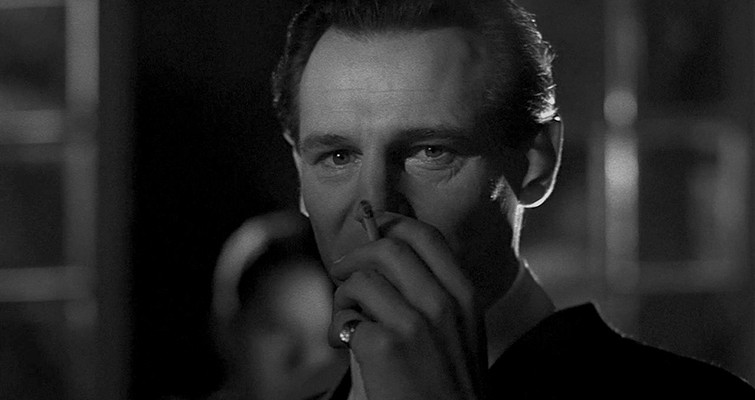
Good lighting makes your actors look pretty; great lighting tells a story. Schindler’s List is an excellent example of this. Spielberg, working alongside his long-time friend and go-to cinematographer, Janusz Kaminski, crafted lighting setups that emphasized the personality and emotions of the characters at different stages of the story.
Let’s examine the approach taken to light Amon Goethe and Oskar Schindler, the story’s main antagonist and protagonist, respectively.
Amon Goethe, played by Ralph Fiennes, is a Nazi officer who is inhumane and unapologetically cruel in his treatment of Jews. Although he’s an extremely nasty fellow, he is never conflicted by his actions. You’ll notice in the film that he’s always lit beautifully from the front, with very minimal shadows — his character (and conscience for that matter) was very clear.
In contrast, Oskar Schindler was a conflicted individual. Beginning the story as a shrewd businessman and member of the Nazi party, he slowly begins to question the morality of his by-standing. During this time of inner conflict, his lighting is directional and from the side, creating shadows on his face (see picture above). However, as the film progresses, his inner conflict subsides, and he’s lit with more frontal, softer light, because he’s learning who he is.
Find opportunities to use light as a storytelling device — not only a means to expose your shot.
On Uncertainty and Failure
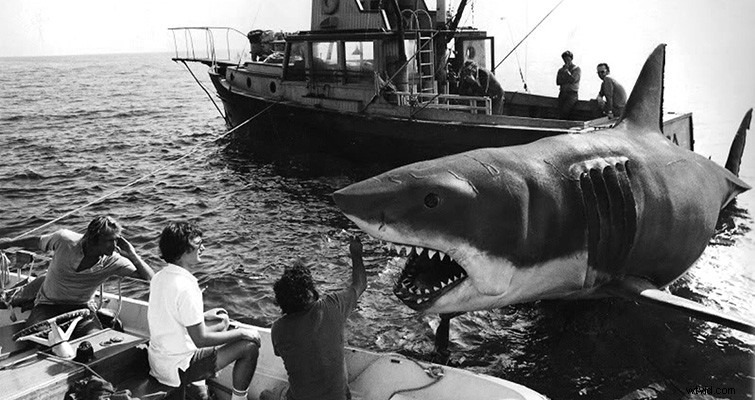
Failure is not optional — at least not for filmmakers. What Spielberg teaches us is that, with a little creativity, failure can lead to great success. There’s no better film that demonstrates this than Jaws.
You may have heard the stories of the shark breaking down and sinking … all of it’s true.
The original script for Jaws featured the shark everywhere, and it called for the great white to be on-screen far more often than what we saw in the finished film. However, due to frequent breakdowns and mechanical failures, the shark was in repair for a majority of the 100+ day shoot.
Therefore, Spielberg and his team had to get creative. How could they employ a device that suggested the shark was near without actually showing the shark on-screen?
“The yellow barrels were a godsend,” says Spielberg, who used the props to indicate that the shark was near and ready to attack. Paired with John Williams‘s, unforgettable score, the audience knew exactly when the shark was about to strike … and we were terrified.
“If the shark had been available visually,” says Williams, “it would’ve changed the whole psychology of the experience.”

Spielberg premiered on HBO on October 7.
Looking for more filmmaking inspiration? Check out these articles.
- Navigating the Challenges of the One-Take Short Film
- A Look Inside the Post-Production Process Behind “It”
- Interview: Director of Photography Jake Swantko of Netflix’s Icarus
- “Five Came Back” — Lessons from Famous Directors During WWII
- The Power of Shooting with a Shallow Depth of Field