
We may earn revenue from the products listed on this page and participate in affiliate programs. Learn more ›
Telephoto lenses let you capture distant subjects with clarity and isolation, whether you’re shooting wildlife, sports, portraits, or weddings. Nikon’s lineup offers a range of options that balance reach, image quality, and budget, making them essential tools for both seasoned professionals and dedicated enthusiasts.
Best Telephoto Lenses for Nikon Mirrorless Cameras
- Best overall: Nikon NIKKOR Z 70‑200mm f/2.8 VR S
- Best for wildlife: Nikon NIKKOR Z 400mm f/4.5 VR S
- Best value: Nikon NIKKOR Z 100‑400mm f/4.5‑5.6 VR S
- Best for portraits: Nikon NIKKOR Z 85mm f/1.2 S
- Best budget: Tamron 70‑300mm f/4.5‑6.3 Di III RXD
Best Telephoto Lenses for Nikon DSLRs
- Best overall: Nikon AF‑S NIKKOR 200‑500mm f/5.6E ED VR
- Best for wildlife: Nikon AF‑S NIKKOR 500mm f/5.6E PF ED VR
- Best value: Nikon AF‑S NIKKOR 200‑400mm f/4G ED VR II
- Best third‑party: Sigma 150‑600mm f/5‑6.3 DG OS HSM Sports
- Best on a budget: Tamron 70‑210mm f/4 Di VC
How We Selected the Best Telephoto Lenses
Our evaluation weighed several key factors: mount compatibility, optical performance, ergonomics, and cost‑effectiveness. Nikon’s Z‑mount range has grown rapidly, yet the F‑mount library still delivers unmatched versatility—especially when paired with the FTZ adapter, which extends legacy lenses to Z‑mount bodies. We also considered the impact of weather sealing, image stabilization, and autofocus speed, all of which are critical for on‑the‑go wildlife and sports shooting.
Mirrorless Lens Reviews
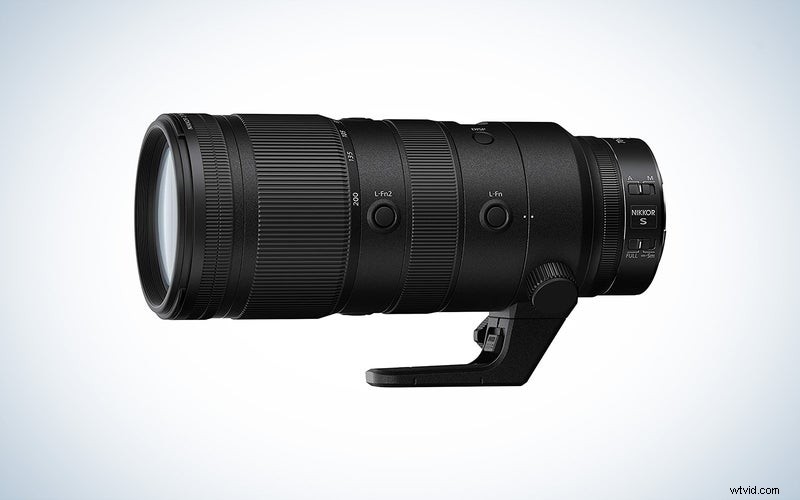
Best Overall: Nikon NIKKOR Z 70‑200mm f/2.8 VR S
Specs
- Mount: Z‑mount, full‑frame
- Aperture: f/2.8 – f/22
- Image stabilization: Yes (5‑stop VR)
- Filter size: 77 mm
- Minimum focus: 1.64 ft
- Weight: 2.99 lb
- Dimensions: 3.5 × 8.66 in
Pros
- Exceptional image quality across the zoom range
- Fast, quiet autofocus with dual motors
- Compatible with teleconverters for extra reach
- Solid build with weather sealing
Cons
- Tripod foot is not Arca‑compatible
- Premium price point
This lens delivers the classic 70‑200mm versatility that many photographers rely on, from weddings to wildlife. Its constant f/2.8 aperture and advanced optical design—six ED elements, a fluorite element, and a short‑wave refractive index element—provide sharp, high‑contrast images with beautiful bokeh. The integrated vibration reduction and internal focusing keep the balance consistent, making it ideal for handheld work and dynamic shooting scenarios.
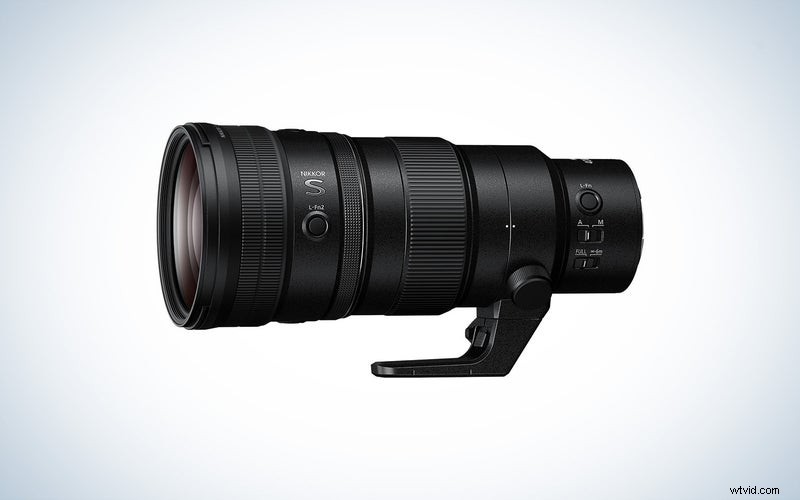
Best for Wildlife: Nikon NIKKOR Z 400mm f/4.5 VR S
Specs
- Mount: Z‑mount, full‑frame
- Aperture: f/4.5 – f/32
- Image stabilization: Yes (5.5‑stop VR)
- Filter size: 95 mm
- Minimum focus: 8.2 ft
- Weight: 2.7 lb
- Dimensions: 4.1 × 9.2 in
Pros
- Compact and lightweight for a 400mm prime
- Excellent sharpness throughout the aperture range
- Robust weather sealing
- Strong VR system for handheld shooting
Cons
- Tripod foot is not Arca‑compatible
- Higher price relative to other 400mm options
Despite its f/4.5 aperture, the 400mm prime delivers razor‑sharp images with minimal distortion. Its built‑in 1.4× teleconverter extends reach to 560mm, and the 5.5‑stop VR makes it one of the most capable handheld telephotos on the market. The lens’s compact form factor is a significant advantage for field work, especially when paired with Nikon’s lightweight body lineup.
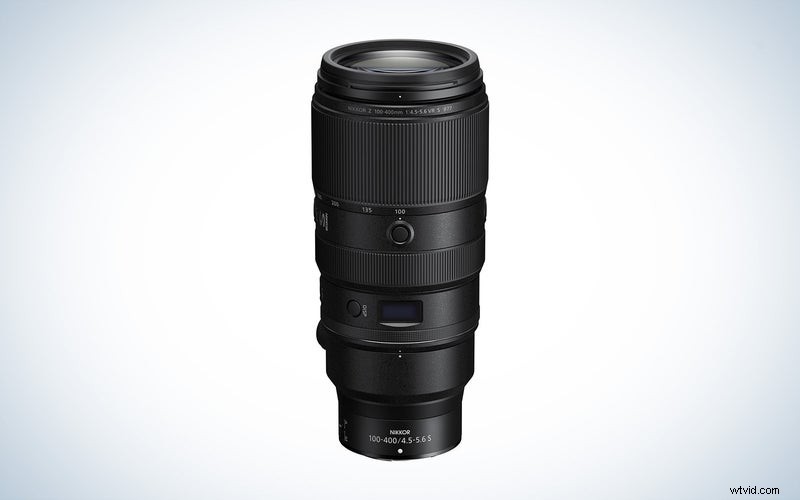
Best Value: Nikon NIKKOR Z 100‑400mm f/4.5‑5.6 VR S
Specs
- Mount: Z‑mount, full‑frame
- Aperture: f/4.5‑5.6 – f/32‑40
- Image stabilization: Yes (5.5‑stop VR)
- Filter size: 77 mm
- Minimum focus: 2.5 ft
- Weight: 3.2 lb
- Dimensions: 3.9 × 8.7 in
Pros
- Versatile focal range for sports, wildlife, and portraits
- Weather‑sealed construction
- Excellent optical performance across the zoom
- Fast autofocus with full‑time manual focus override
Cons
- Relatively heavy compared to entry‑level options
As Nikon’s first Z‑mount telephoto zoom, this lens offers a broad 100‑400mm range that covers most shooting scenarios. Its “Inner Balance” design keeps the center of gravity stable across focal lengths, making it a natural choice for gimbal or tripod use. The lens delivers sharp, high‑contrast images even at the longest focal length, and the VR system mitigates hand‑shake for low‑light situations.
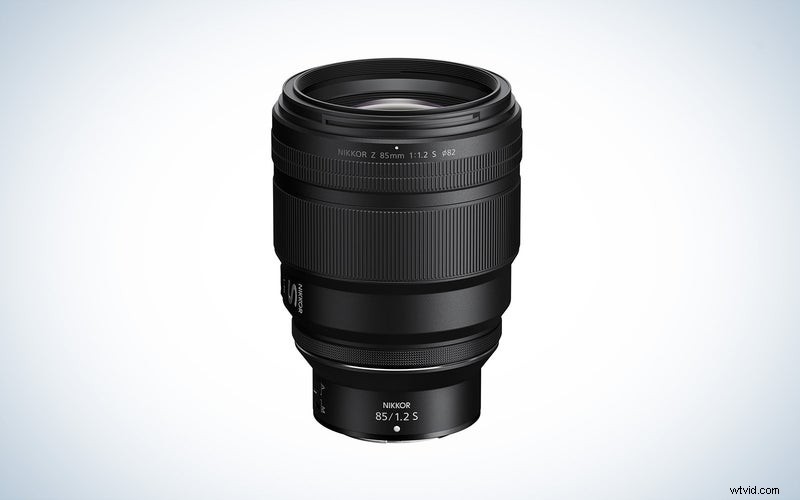
Best for Portraits: Nikon NIKKOR Z 85mm f/1.2 S
Specs
- Mount: Z‑mount, full‑frame
- Aperture: f/1.2 – f/16
- Image stabilization: No
- Filter size: 82 mm
- Minimum focus: 33.46 in
- Weight: 2.6 lb
- Dimensions: 4 × 5.6 in
Pros
- Outstanding image quality with stunning bokeh
- Weather‑sealed for outdoor work
- Quiet, fast autofocus with STM motors
Cons
- Bulkier and more expensive than most primes
For portrait photographers, the 85mm f/1.2 delivers superb shallow‑depth‑of‑field performance and impressive sharpness even at f/1.2. The 11‑blade diaphragm produces round, buttery bokeh, while the STM focus system keeps autofocus virtually silent—an essential feature for video work. Though it’s a premium lens, its exceptional optical quality makes it a worthwhile investment for studio and on‑location portraiture.
Best Budget: Tamron 70‑300mm f/4.5‑6.3 Di III RXD
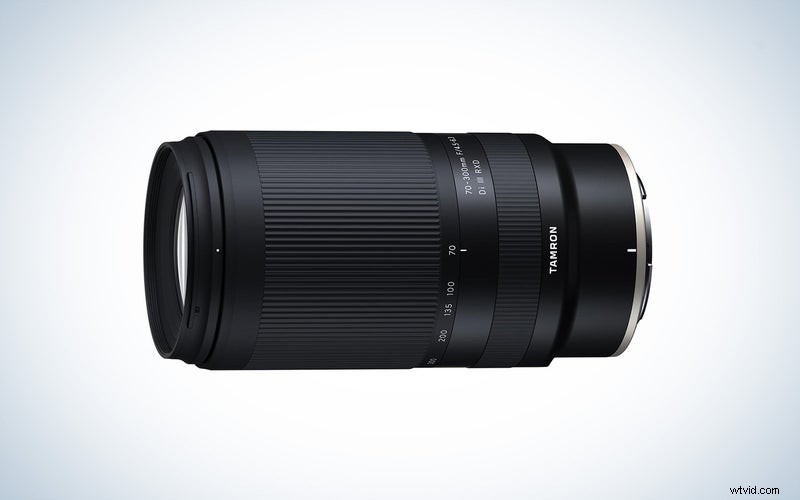
Specs
- Mount: Z‑mount, full‑frame
- Aperture: f/4.5‑6.3 – f/22‑32
- Image stabilization: No
- Filter size: 67 mm
- Minimum focus: 31.5 in
- Weight: 1.2 lb
- Dimensions: 3 × 5.8 – 8.5 in
Pros
- Lightweight and compact
- Excellent close‑focus ability
- Highly affordable
- Good overall image quality
Cons
- Lacks image stabilization
Priced at around $700, this Tamron offers a versatile zoom range that covers many everyday needs. Its fast, quiet autofocus and solid build make it a strong contender for hobbyists and travel shooters. While the absence of VR can limit handheld use at longer focal lengths, most mirrorless bodies now feature in‑body stabilization, mitigating this drawback.
DSLR Lens Reviews
Best Overall: Nikon AF‑S NIKKOR 200‑500mm f/5.6E ED VR
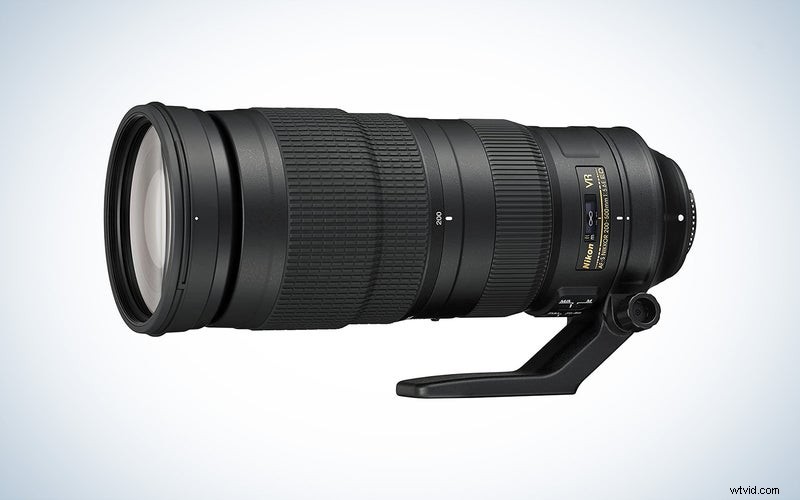
Specs
- Mount: F‑mount, full‑frame
- Aperture: f/5.6 – f/32
- Image stabilization: Yes (4‑stop VR)
- Filter size: 95 mm
- Minimum focus: 7.22 ft
- Weight: 5.07 lb
- Dimensions: 4.25 × 10.53 – 13.5 in
Pros
- Wide zoom range for diverse subjects
- Constant f/5.6 aperture
- Excellent sharpness
- Competitive price for a super‑telephoto
Cons
- Heavy and bulky
- Partial weather sealing
Since its 2015 debut, the 200‑500mm has been a staple for wildlife and sports photographers. Its sharp optics, robust VR system, and relatively affordable price set it apart from higher‑end super‑telephoto options. When paired with an APS‑C body, the effective reach expands to 300‑750mm, further extending its versatility.
Best for Wildlife: Nikon AF‑S NIKKOR 500mm f/5.6E PF ED VR
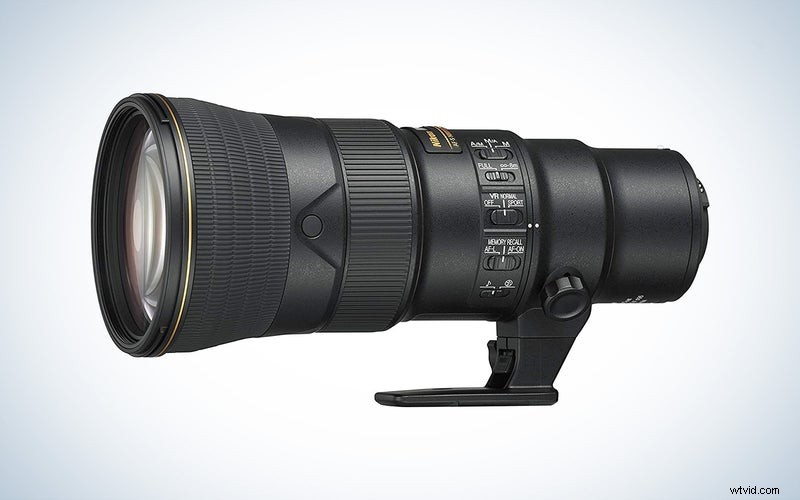
Specs
- Mount: F‑mount, full‑frame
- Aperture: f/5.6 – f/32
- Image stabilization: Yes (5‑stop VR)
- Filter size: 95 mm
- Minimum focus: 9.84 in
- Weight: 3.21 lb
- Dimensions: 4.17 × 9.33 in
Pros
- Lightweight and compact for a 500mm
- Fully weather‑sealed
- Excellent optics and VR
- Fast autofocus
Cons
- Higher price point
- Limited focal‑range versatility
The Phase‑Fresnel design shrinks a 500mm lens without sacrificing performance, offering a powerful tool for long‑distance wildlife photography. Its 5‑stop VR, fast focus, and compact size make it a top choice for handheld work in challenging conditions.
Best Value: Nikon AF‑S NIKKOR 200‑400mm f/4G ED VR II
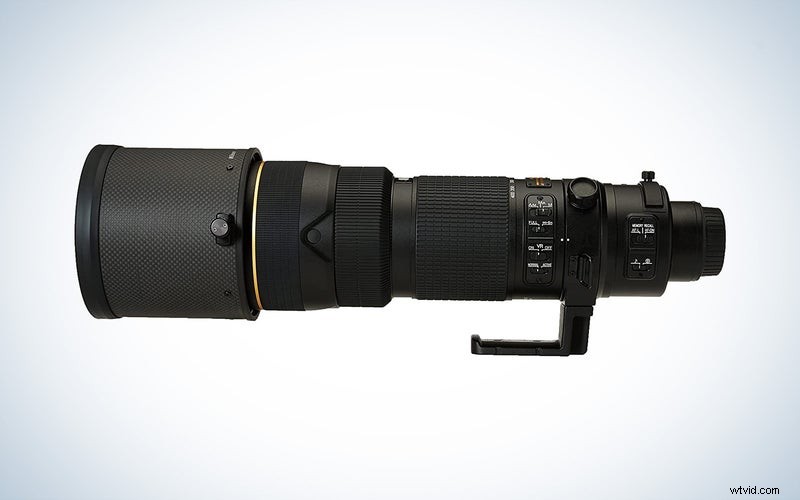
Specs
- Mount: F‑mount, full‑frame
- Aperture: f/4 – f/32
- Image stabilization: Yes (4‑stop VR)
- Filter size: 42 mm
- Minimum focus: 6.6 ft
- Weight: 7.41 lb
- Dimensions: 4.88 × 14.41 in
Pros
- Extremely sharp at all focal lengths
- Constant f/4 aperture
- Fully internal zoom
- Works well with teleconverters
Cons
- Heavier than most zooms
- Sharpness can dip at extreme distances
Despite its age, this 200‑400mm remains a benchmark for quality and affordability. When combined with a 1.4× teleconverter, it can rival larger 500mm lenses without a significant loss in autofocus speed or image quality.
Best Third‑Party: Sigma 150‑600mm f/5‑6.3 DG OS HSM Sports
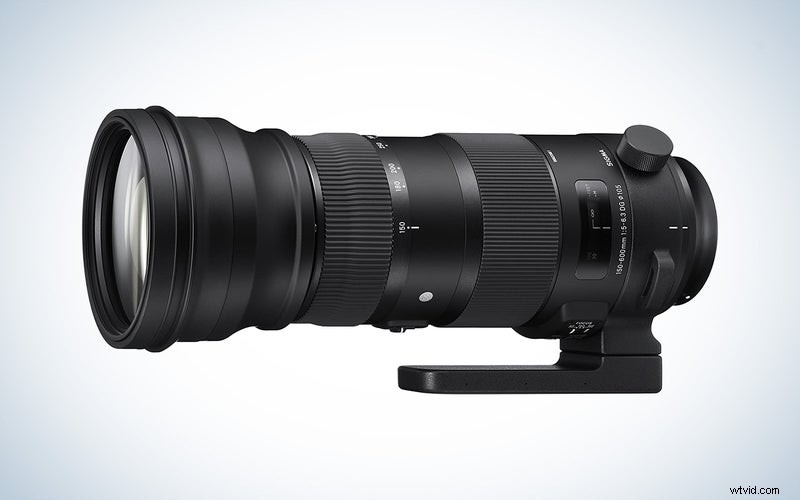
Specs
- Mount: F‑mount, full‑frame
- Aperture: f/5‑6.3 – f/32
- Image stabilization: Yes (4‑stop OS)
- Filter size: 95 mm
- Minimum focus: 9.19 ft
- Weight: 4.03 lb
- Dimensions: 4.13 × 10.24 – 13.3 in
Pros
- Massive 150‑600mm zoom range
- Rugged, dust‑sealed build
- Great value for a high‑end sports lens
- Superior optical performance
Cons
- Bulky and heavy for handheld use
- F/6.3 starts at roughly 320mm
Sigma’s Sports version offers a full‑size zoom that can be used as a push‑pull or twist‑zoom, giving photographers flexibility in the field. Its robust construction and excellent optics make it a worthwhile addition for those who need the widest reach without breaking the bank.
Best Budget: Nikon AF‑P NIKKOR 70‑300mm f/4.5‑5.6E ED VR
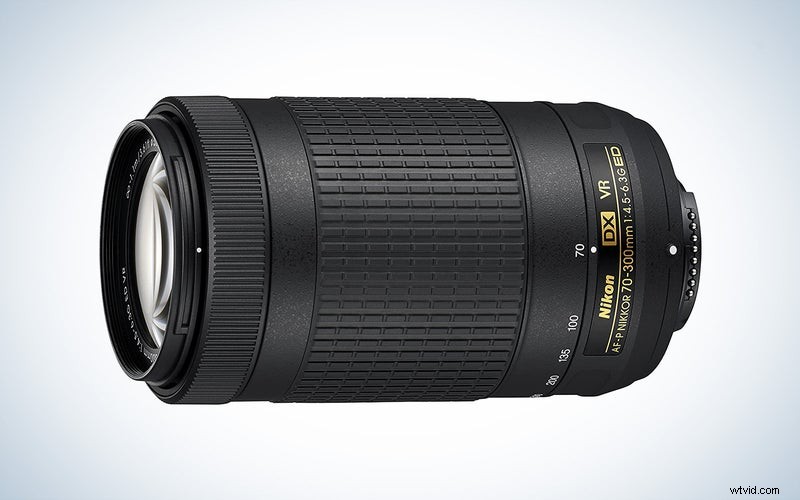
Specs
- Mount: F‑mount, full‑frame
- Aperture: f/4.5‑5.6 – f/32‑40
- Image stabilization: Yes (4‑stop VR)
- Filter size: 67 mm
- Minimum focus: 3.94 ft
- Weight: 1.5 lb
- Dimensions: 3.17 × 5.75 – 7.94 in
Pros
- Low price for a versatile zoom
- Four stops of VR for handheld stability
- Good overall image quality
- Fast autofocus
Cons
- No focus distance scale on the barrel
This 70‑300mm offers a solid balance of reach, speed, and price. The f/4.5 aperture keeps the lens lightweight, and the VR system ensures sharp handheld images even at longer focal lengths.
Additional Nikon Telephoto Options Worth Mentioning
Nikon NIKKOR Z 400mm f/2.8 TC VR S
The f/2.8 variant adds a built‑in 1.4× teleconverter, giving a 560mm effective focal length. With 5.5 stops of VR, a fast aperture, and a voice‑coil motor, it’s the most powerful 400mm available for the Z‑mount, though the price reflects its premium performance.
Nikon NIKKOR Z 600mm f/4 TC VR S
Released late 2022, this 600mm prime includes a 1.4× teleconverter for an 840mm reach. Its weather sealing, fast autofocus, and exceptional sharpness make it a top choice for serious wildlife shooters.
Nikon NIKKOR Z 800mm f/6.3 VR S
For the ultimate reach, the 800mm offers a 5‑stop VR system and a more manageable weight of 5.2 lb—half the heft of its F‑mount counterpart—while still delivering high‑quality images.
Frequently Asked Questions
How many times magnification is a 600mm lens?
A 600mm lens has a 12× magnification factor compared to the eye’s 50mm baseline (600 ÷ 50 = 12).
What are telephoto lenses best for?
Telephoto lenses excel at capturing distant subjects—wildlife, sports, or architectural details—while also providing a shallow depth of field that isolates the subject from the background.
Are all zoom lenses telephoto?
No. Telephoto lenses start around 70mm. Wide or standard zooms typically cover 11–40mm or 24–105mm, respectively, and do not qualify as telephoto.
Key Considerations Before Buying
- Budget: Telephoto lenses can be expensive; prioritize reach vs. aperture based on your shooting style.
- Mount: Z‑mount lenses benefit from the latest autofocus and stabilization tech, while F‑mount lenses—especially with the FTZ adapter—offer a vast legacy library.
- Prime vs. Zoom: Primes deliver superior optical quality and faster apertures but lack versatility; zooms provide a broader focal range at a moderate quality trade‑off.
- Weight: Heavy lenses strain your gear and can limit handheld shooting; consider tripods or gimbals for extended use.
Final Thoughts
Choosing the right telephoto lens hinges on your specific needs—whether you’re chasing fast wildlife, capturing intimate portraits, or shooting weddings. The mirrorless lineup offers unmatched speed and flexibility, while the DSLR collection remains a powerhouse for those who value the F‑mount ecosystem. Ultimately, a versatile zoom such as the 70‑300mm or 200‑500mm provides a solid foundation for most photographers, while higher‑end primes are reserved for specialized tasks.
Why Trust Our Recommendations
PopPhoto has reviewed cameras and lenses since 1937, drawing on decades of professional experience from our writers and editors. Our analyses combine hands‑on testing, industry insights, and real‑world use cases to give you trustworthy, actionable advice—so you can invest confidently in Nikon telephoto lenses that match your creative goals.