
Let’s explore the art of the telephoto lens, when it’s a good idea to use this lens, and how it can help you properly frame your subject.
A telephoto lens typically describes a lens with a focal length that enters into the 70 to 85mm range and onward. As to where exactly, there’s no specified number.
Different resources will tell you that 70mm lenses are a short telephoto length. Others will say that 85mm is the definitive start of the telephoto range. Either way, focal lengths beyond are classed as telephoto lenses.
I’m sure even the most novice of filmmakers don’t need explaining as to what a telephoto lens does. We often use the prefix tele in a combined form to denote a tool used with distance, such as telescope and telemeter.
A telephoto lens is a lens used to photograph and film faraway subjects. The lens will bring faraway subjects closer to the camera, resulting in the framing of the subject as if you were up close.
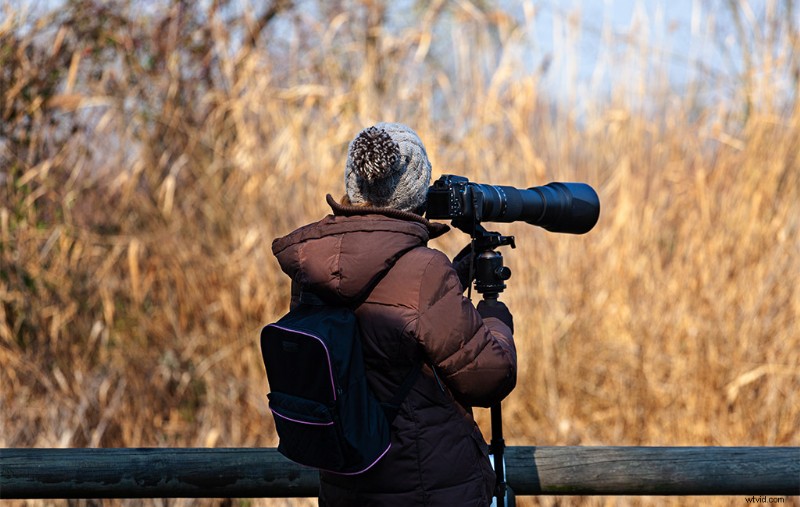
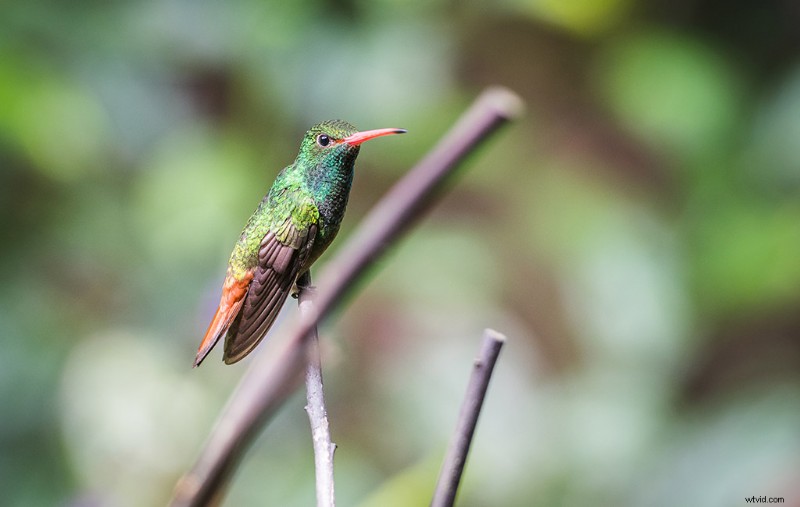
Typically, you’d use a telephoto lens for wildlife, sports, and photographing distant landscape structures.
It’s often regarded that a telephoto lens will compress the image, and that’s not entirely true. As many have pointed out in various videos, like the one below.
The concept that Fstoppers present is that you can take a photograph at two different focal lengths from the same position, and, if you highlight the same area within both images, the cropped area would appear the same in both photographs. Although the one from the wider focal length would of course be of less clarity.
We can see that in action within the still images below.
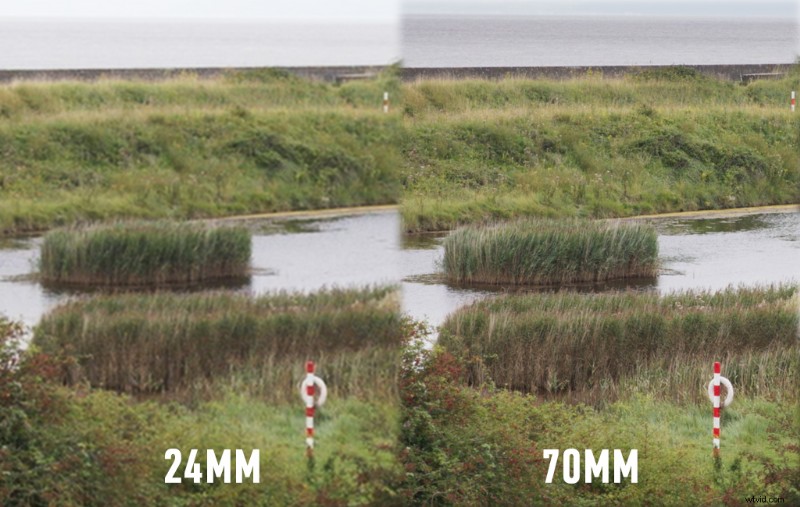
The lens doesn’t compress objects in the image, but the camera-to-subject distance will alter the perceived distance between the subject and the background.
This happens because the telephoto lens has a narrow angle of view. Meaning, unlike filming a subject up-close with a wide angle, which would emphasize the size of the subject in front and push the background away, a narrow-angle of view will have both the relative size and distance normalized when comparing near and far objects.
In the example below, because of the extreme field of view, both actors are relatively close to the camera. The subject at the front is most prominent, while the subject further away encompasses a small fraction of the field of view.
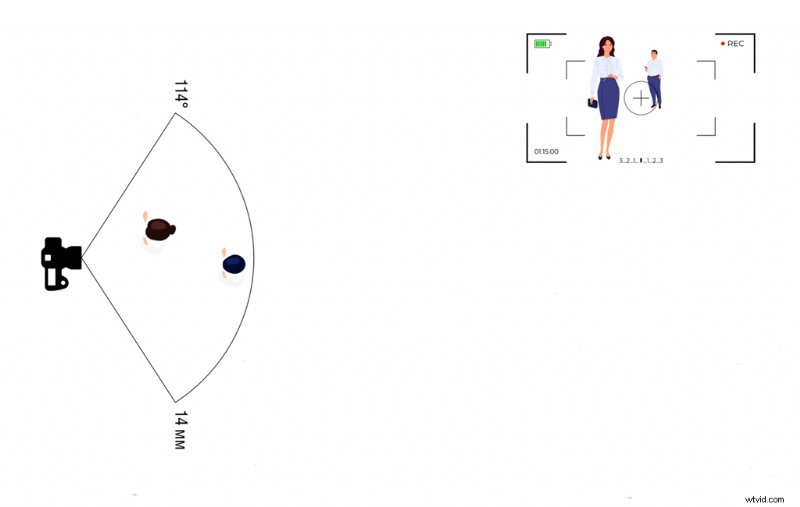
With a narrow field of view, both subjects have to stand further back in order to retain the compositional framing. However, as the subject behind now comprises a far greater area of the overall field of view, he now appears larger, and therefore closer to the subject at the front.
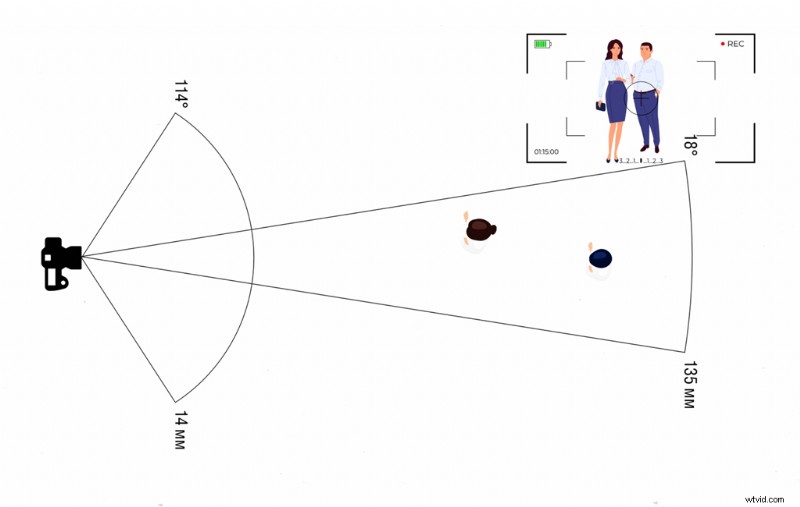
While telephoto lenses don’t compress objects, it does appear like that to the viewer. So, what about filming people?
Space Issues
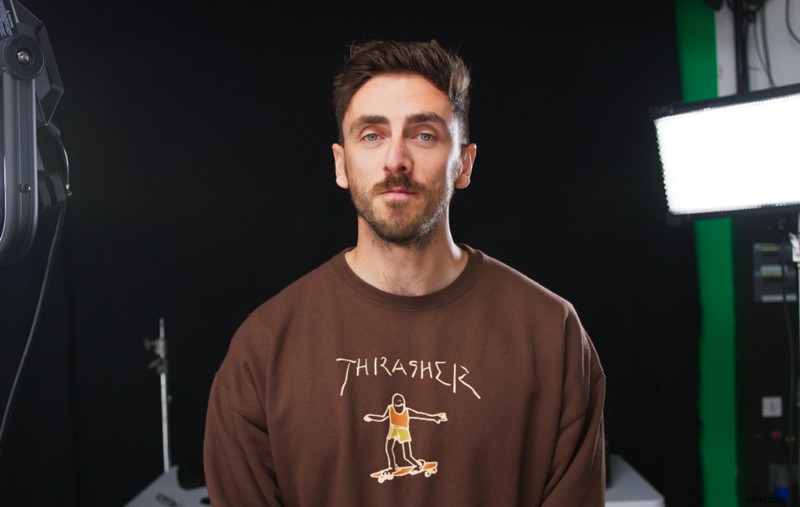
In a typical conversational circumstance, a telephoto often isn’t practical simply because of the minimum focus distance and field of view. For example, in the studio mid-shot below, we’re filming at 24mm.
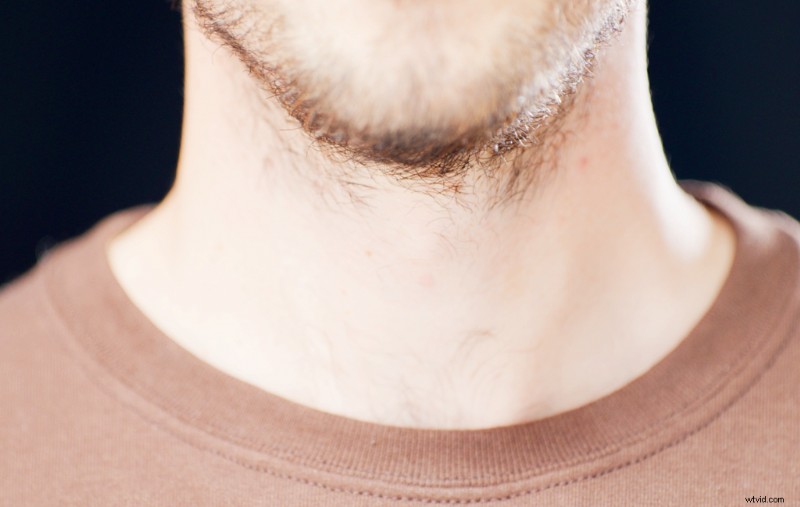
If we switch over the lens to 125mm, it’s way too close.
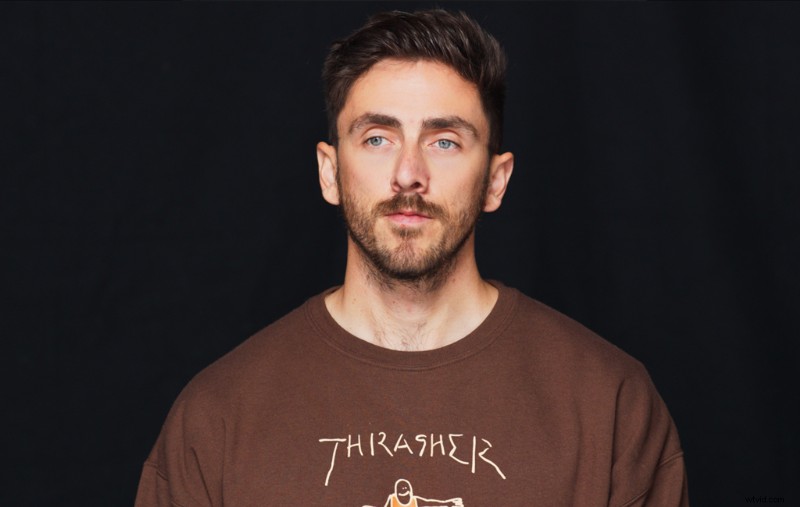
Both myself and the camera have to extend to either side of the room until we’re able to regain the composition of mid-shot framing, which is just impractical.
So, again, when is it a good time to use a telephoto lens when filming people? There are a few.
Easy Close-Ups
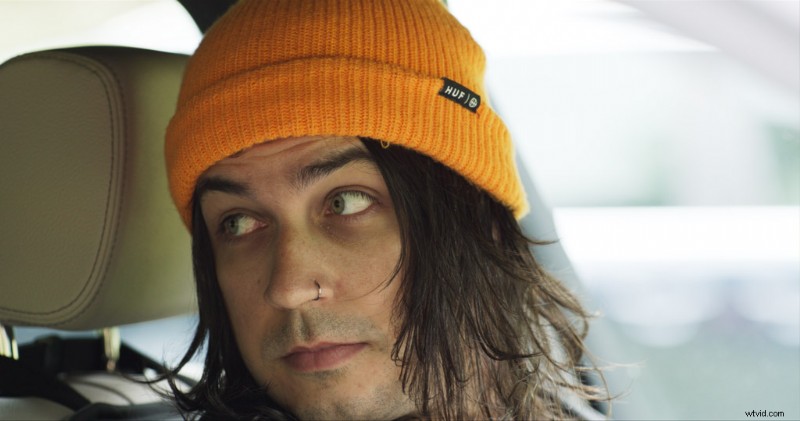
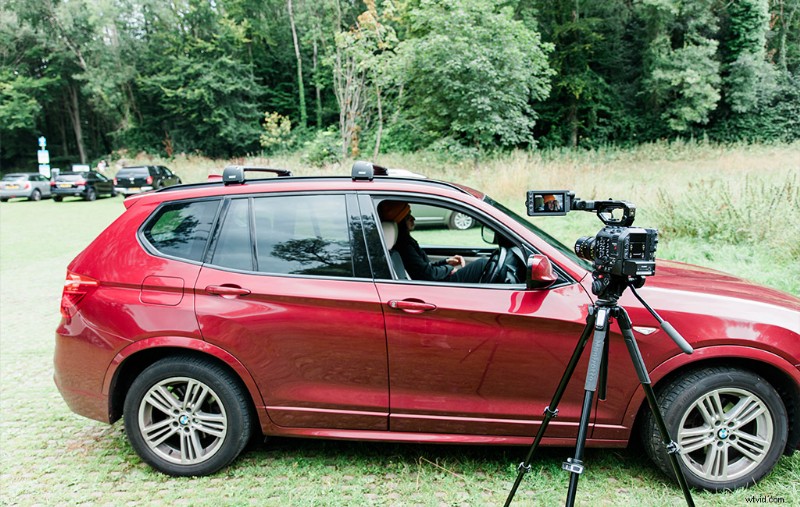
We, of course, have to acknowledge the fact that a telephoto allows you to get up close without actually being close. Therefore, when capturing closeups and extreme closeups, where the location wouldn’t permit you to get up close with the camera and tripod—let’s say inside a vehicle, for example—a telephoto is perfect.
This image teeters on the edge of the closeup classification.
And, we were able to film it in safe proximity outside of the vehicle.
Mid-Shots at Range
Let’s say that you have a shot of your character walking, and you specifically want the framing to be a mid or mid-closeup. With a 24mm or 35mm lens, you’d have to also move with the actor—either with a dolly or stabilizer—to keep that tight framing.
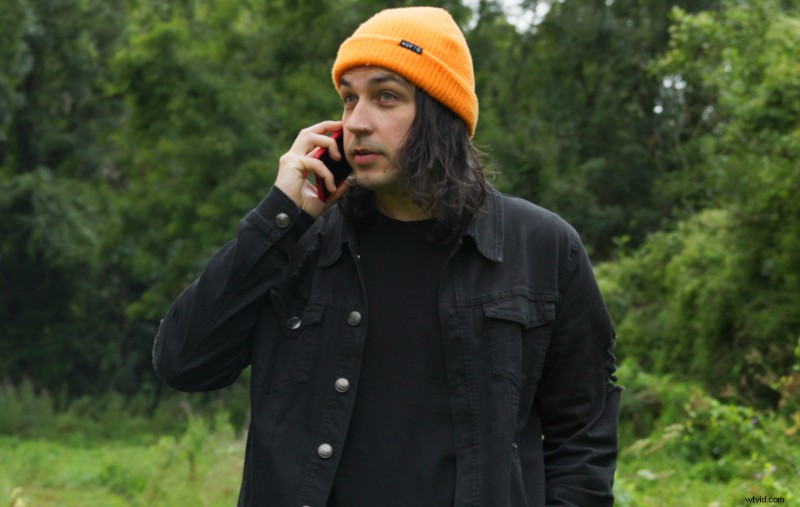
A telephoto lens allows you to pan and keep the tight framing across the entire duration of the move.
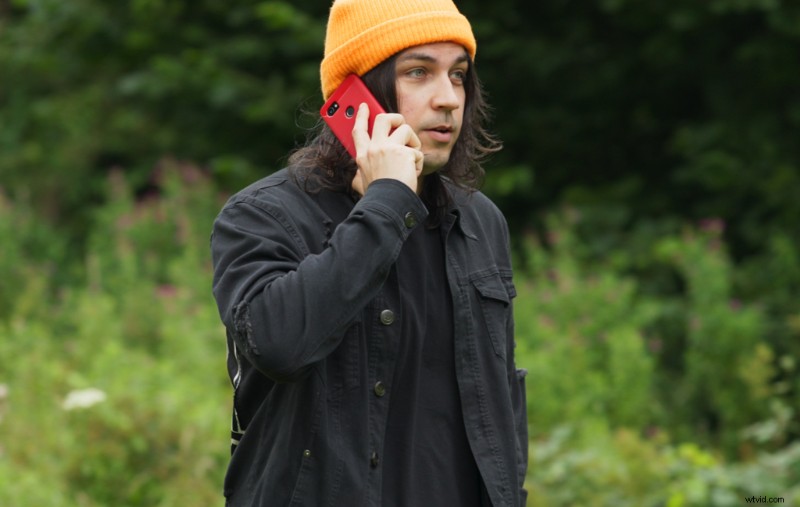
Of course, let’s get one thing out the way. Keeping a mid-shot during a pan and a tracking shot are two entirely different visual entities, and both will promote an equally unique feeling. However, you can maintain a tighter shot with a telephoto lens longer and further than you can with a standard focal length.
Creative Uses
Third, as noted earlier, a telephoto lens will compress the perceived distance between objects, allowing for several creative applications. One of the most famous is this scene from Tinker Tailor Soldier Spy.
Two characters are having a serious conversation while a plane approaches in the background, moving increasingly closer. For one character and the audience, there’s a sense of danger. But, because this shot was filmed on a 2000mm lens, the plane was considerably further down the runway than perceived.
You, too, can do something similar if you’re not entirely versed with stunts and action. Now, of course, if you intend on including any form of action, we recommend in consulting professionals. However, I also understand that as no-to-low budget filmmakers, it’s not always possible.
So, let’s say you want to have a shot of a character punching another character. Neither actors are stuntmen or trained fighters and, as a result, filming the scene with a 24mm lens doesn’t sell the effect, even if you’re filming over the shoulder.
However, when you switch to a telephoto lens, it allows both actors to be more creative. There’s more distance between the person swinging, allowing for a more engaging punch and equally allowing for the receiving actor to be well out the way of the line of action, and worry more about the performance than being hit.
Symbolic Suggestions
But, most importantly, what the telephoto lens does when filming people is more about the symbolic and thematic elements to the image, opposed to any form of technicalities.
For example, in this cinematic masterpiece, Kai receives a text that reads, “I know what you’ve done, and where you are.”
At 24mm, it’s almost as if we’re part of the conversation with the man. We are in his inner circle.
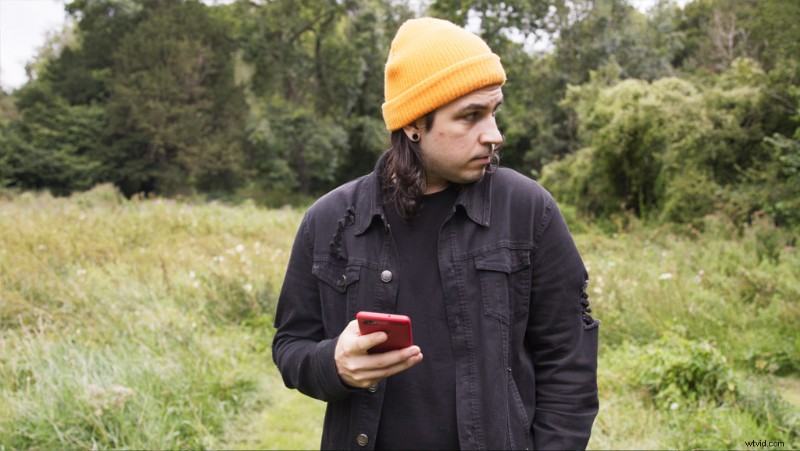
At 50mm, it’s still personal and inviting. We’re still in the character’s inner bubble, and perhaps we don’t feel as anxious as we should be.
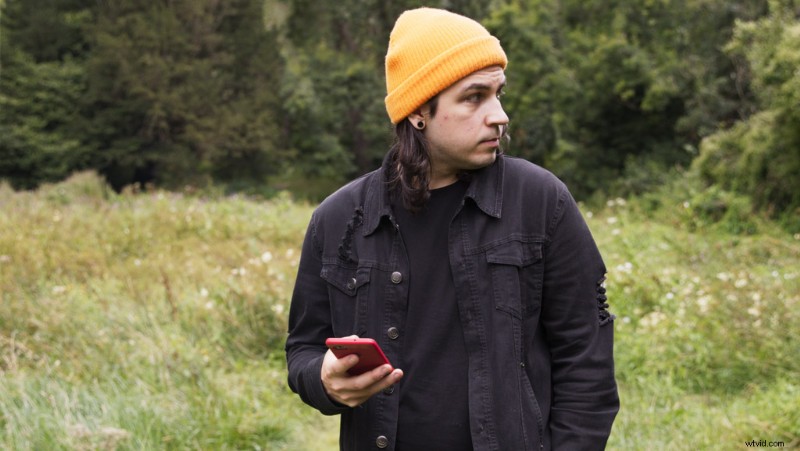
At 70mm, the background starts to lose its identity, and we’re no longer part of the man’s conversation. Suddenly, this text message has become more menacing.
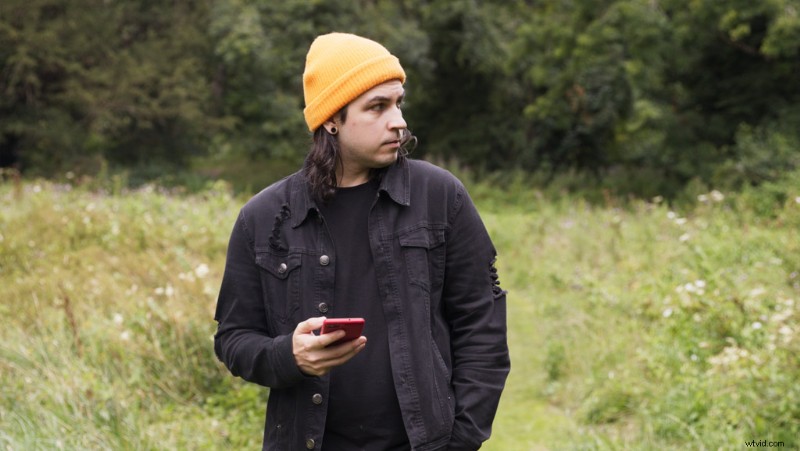
At 125mm, the man is isolated. Alone. We are completely cut us off as audience members. The backdrop has become an indistinguishable blur. The space around him has become claustrophobic. We can no longer see the surroundings or the location.
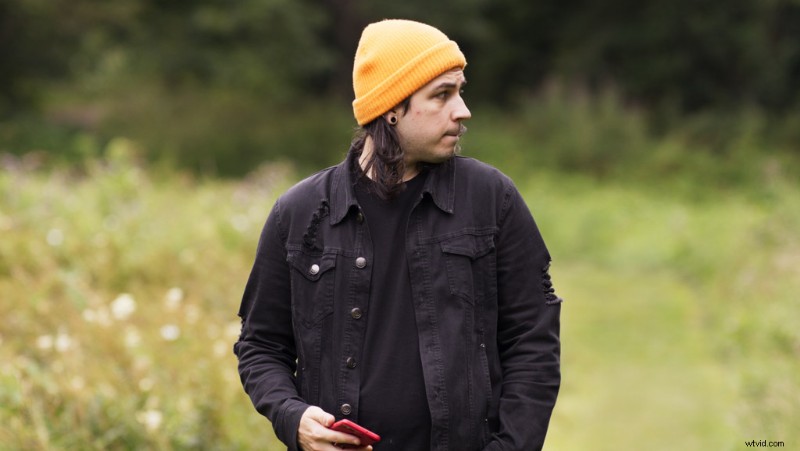
The change in the field of view has suddenly made this character seem alone, despite the fact that his size and placement has stayed the same throughout each image.
Therefore, think about the symbolic elements of how the telephoto lens can help isolate and frame your character in a different element.
For more on lenses, take a look at these articles:
- Old-School Looks: The 5 Best Vintage Lenses for Under $250
- The 5 Best Mobile Lenses for Under $150
- How To Mod Your Own Lenses on The Cheap (Anamorfake)
- The 5 Best Fresnel Lights, Lenses, and Attachments
- 5 Easy Ways to Keep Your Lenses from Fogging up
Cover image via Ground Picture.