
If your wide shots aren’t capturing the intimate conversation scenes you’re hoping for, consider some other lens options.
If you’ve ever worked with several different lenses, you know how overwhelming the options can be. This is especially true if you’re not sure what the images will look like. Each scene calls for a specific type of shot, and knowing how lenses work to produce that shot is fundamental to good filmmaking. Let’s take a look at why and how different lenses produce different images.
First off, understanding lenses means understanding focal length — because that’s how we measure lens size. The focal length of a lens is the length in millimeters from the optical center (or the focal point inside the lens) to the camera sensor. So, with wide lenses, you’re going to get a smaller focal length.
24mm
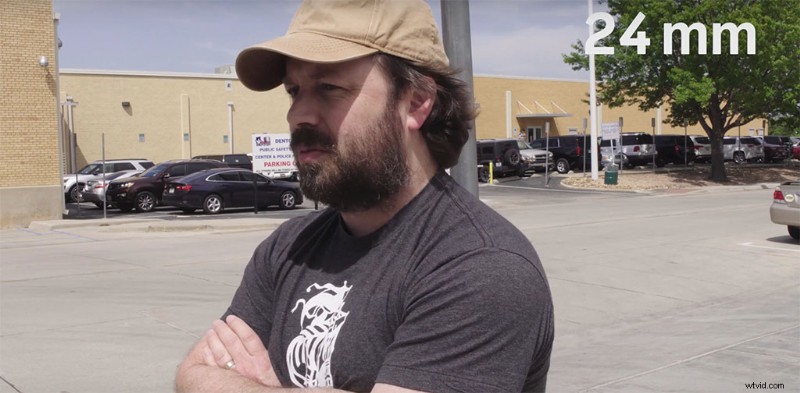
With the 24mm, you’re getting a wide focal length. There’s more information in this shot, and the subject is going to appear closer to the camera. The background appears further away, and you get more information about where everything is in relation to the camera. You can use these wide shots in action scenes, establishing shots, real estate shots, or any scene that needs to present a large area. A conversational scene, like the shot above, is not ideal because your perspective of the character is a bit warped, and wide lenses aren’t as similar to the human eye — which is what you want for conversations and dialogue.
85mm
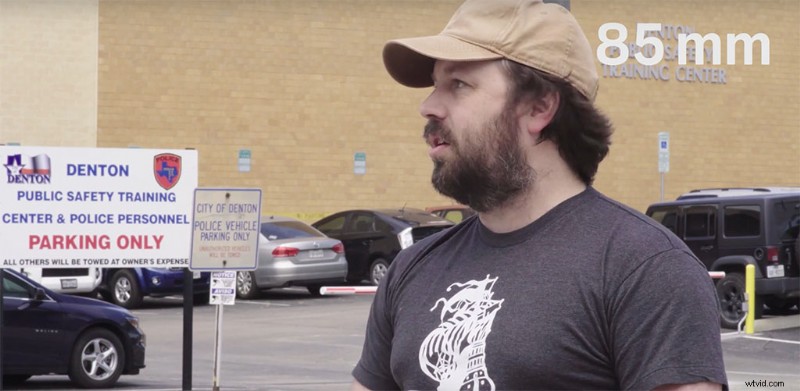
The 85mm is noticeably different from the 24mm based on the background. The shot almost looks green-screened, and it has a “man on the street being interviewed” type-of-feel. The long lens means a lot of lens compression. This means the background and subject get pulled together, and they each seem closer to each other than they actually are. For a conversation, this doesn’t work well because it’s hard to imagine whom he’s talking to.
50mm
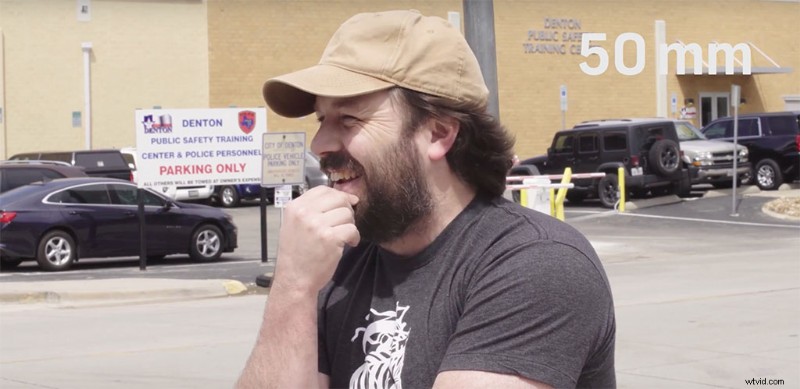
So here’s the good shot. We’re using this 50mm, which is a standard sized lens — meaning it most closely matches what the human eye sees, so it is perfect for a conversation. The subject is present in the space, and there’s still a comfortable distance between him and the background. A 35mm lens would also be perfect for a wide, informative angle while still remaining somewhat intimate and involved with whatever is playing out on screen.
For more info on lenses and understanding your camera, check out some of our past coverage:
- Understanding ISO
- What is Shutter Speed?
- How to Properly Expose an Image
- Shooting Wides and Close-Ups
- Filmmaking Tip: How to Capture the Perfect Tracking Shot
Cover image by Maridav.