
Professional travel photographer Jordan Dyck shares what’s in her camera bag, and why this equipment works for her travel photography.
As a travel and tourism photographer, my job is to photograph people, spaces, and places—finding connections between experiences and unique destinations. What’s in my camera bag is constantly changing depending on what I’m shooting, and where I’m shooting. In today’s article, I’m sharing a little bit about my go-to gear, why I have it, and what my dream gear would be. That is, if money was no object.
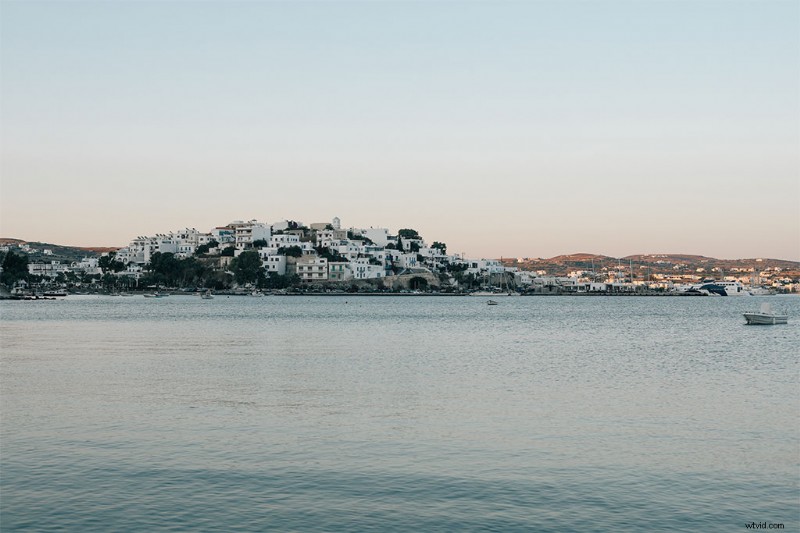
Travel Photographer Jordan Dyck
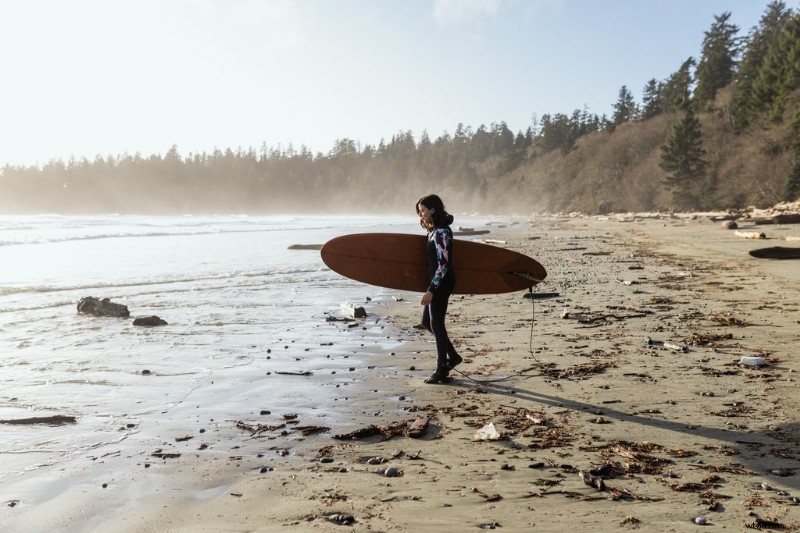
Before we get into my gear, a little bit about me. I’m based in Ucluelet on Vancouver Island, near Vancouver, British Columbia. I’ve spent the majority of my career on the road, capturing images for tourism destination organizations and companies that specialize in travel. The genre isn’t as specialized as say capturing food or portraiture, which means that, more often than not, I’m capturing everything to tell a cohesive story. That means capturing details of food and architecture, wide shots of interiors, the people behind businesses, the people exploring new destinations—essentially, everything you can imagine.
When it comes to my camera gear, that means being as flexible as possible to capture a lot of variety and high-quality photos quickly and efficiently. Here’s a small preview of what I shoot with, and why I’ve selected the gear I have to photograph travel and tourism imagery.
A Travel Photographer’s Camera Bag Breakdown
Cameras
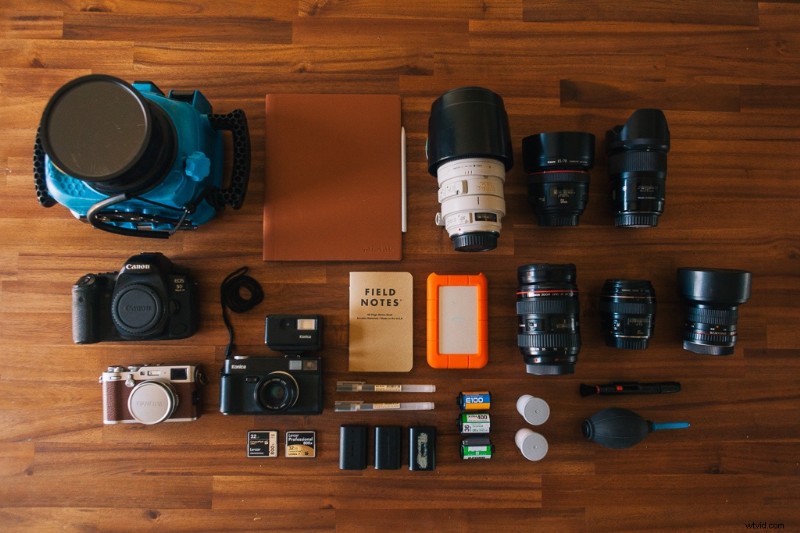
I primarily carry three different cameras at all times. I know that seems like a lot, but there’s a method to my madness.
Canon 5D Mark IV
This is my main go-to camera. I’ve always shot with Canon, starting with a Rebel, then a very bulky Canon EOS-1D Mark III, a Canon 5D Mark II, and now my Mark IV. I absolutely love shooting with Canon. I love the feel of an old-school style. It feels like I’m really capturing an image and hearing the shutter (my partner shoots with a Sony mirrorless, and it’s just not for me). The image quality is excellent for travel and tourism, with 30.4MP allowing for huge image sizes for my clients that use images for print advertising around the world.
Fujifilm X100F
I bought this camera to encourage myself to take my camera with me everywhere I go, rather than just on client jobs. What I was finding is that as I got busier with work, I stopped shooting for fun, which is so important for photographers.
This camera features 24.3MP and a fixed 23mm f/2 lens, which is surprisingly sharp for the price. I also use this camera when I want to be a bit more stealthy in commercial spaces or when capturing travel portraits, as it’s less intimidating than the Canon and almost looks like a film camera.
Konica Hexar AF
This is my everyday film camera and one of my favorite film cameras I’ve ever shot with. It’s a fixed lens autofocus, so super easy for travel and on-the-go. I love carrying it to capture memories with friends, but it’s also an excellent camera for portraiture and behind-the-scenes snaps on client shoots. My favorite film to shoot in it is Portra 400, but I also love the green tones in Fujifilm Superia X-TRA 400.
Camera Bag
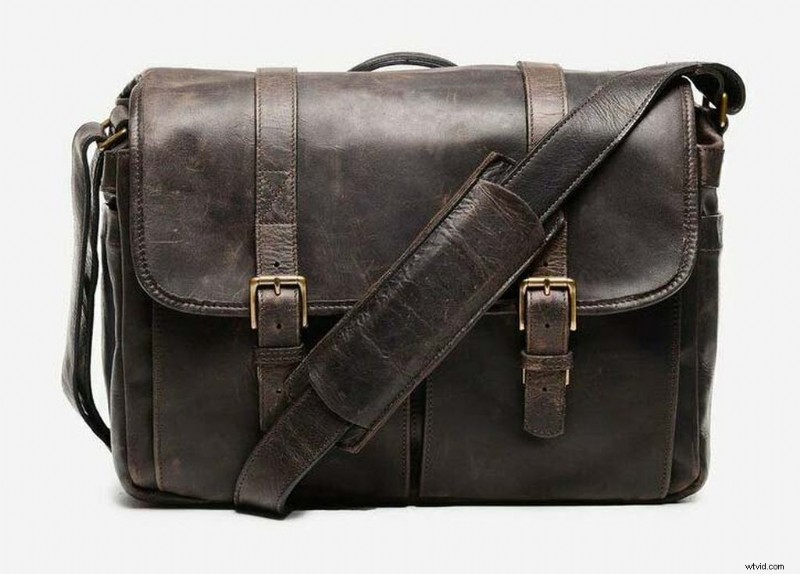
I’ve had the Ona Camps Bay camera backpack for five years now, and I can honestly say that it’s the best camera bag I’ve ever owned. I originally got it for a trip to Africa and loved the safari-esque look of the bag itself. The Camps Bay bag doesn’t look like a camera bag, which is super helpful for travel photography. I often find myself traveling alone—carrying quite a lot of expensive gear—so this bag helps me feel safe and secure. It helps that all the insides are completely adjustable, as well as several feature pockets, including a laptop storage area that holds my MacBook and notepads.
Lenses
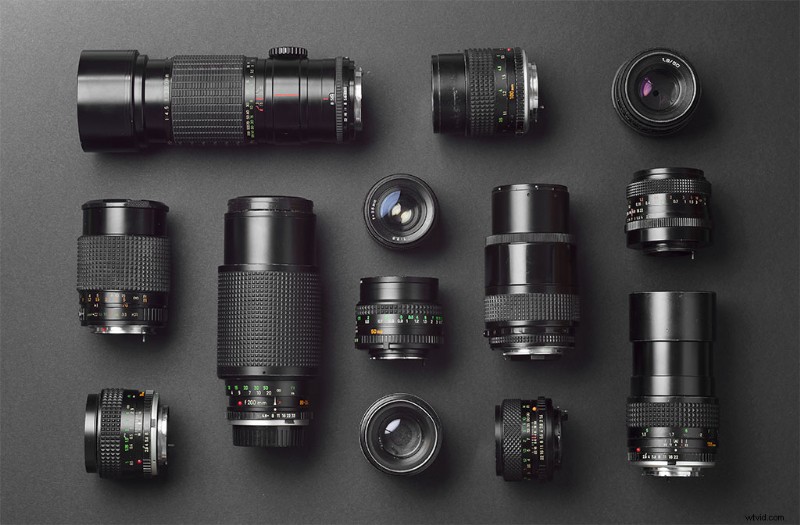
Investing in good lenses is something that I’ve prioritized over the past few years. While I have a long way to go (and a lot more money to spend), I truly believe that good quality lenses make a huge difference in the image quality you produce, more so than a camera body, in my opinion, although that helps, too. The following are some of the lenses I have and why I shoot with them (plus, what I wish I had if cost wasn’t a barrier).
Canon 50mm f/1.2L
This is the latest lens that I’ve invested in, and I absolutely love it. 50mm has always been my preferred focal length, moving between the Canon 50mm f/1.8, to the f/1.4, and now the f/1.2, which is renowned as one of the best 50mm lenses on the market, and best portrait lenses. I love the clean bokeh and crisp images it creates. 50mm is a bit close for many people’s go-to lens (the popular opinion being 35mm), however, I love that it gets me that much closer to my subject.
Canon 100-400mm f/4.5-5.6
Because I live near a popular surf destination and wildlife spotting location, I needed a telephoto lens. This one is pretty good for the majority of what I shoot, and does the job. However, it’s a bit soft and the chromatic aberration is pretty intense. If I could update it, I’d go with the Canon 70-200 f/2.8, which is more useable for the type of work I create.
Sigma 35mm f/1.4 Art Lens
This is another go-to lens for my client work. It’s pretty sharp and can capture anything easily. While my 50mm is a little tight for some spaces, this is wide enough and sharp enough to capture everything from food, portraiture, interiors, and landscape images.
Canon 24-70mm f/2.8 Mark I
This was one of the first lenses I ever purchased, and I still find I use it on nearly every client shoot I create. It’s pretty soft compared to the Mark II version (my dream zoom lens), however, it does the job. I don’t prefer to shoot with zoom lenses, although it would make sense for the type of work I create in tourism. However, the wide angle does come in handy from time to time.
Samyang 14mm f/2.8
This is a bit random, but one that I actually do love as a cheap wide-angle option. I primarily use this for interiors if I’m capturing images of BnB rooms or hotels and need an extra-wide option. But, the real reason it’s in my gear bag is for night photography. I went on a client trip to Iceland and needed a wide-angle lens to capture photographs of the aurora borealis, and this did the job. Other than that, I wouldn’t really recommend it as it’s a manual focus and not the greatest quality.
Canon 85mm f/1.8
I love this lens for portrait photography, and how close it gets me to my subject. I don’t take it out very often because I have the 50mm f/1.2, but it’s a good option if I ever want to get that much closer, without taking out my telephoto. In a dream world, I’d invest in the 85mm f/1.2 II.
Other Gear
Aquatech Reflex Waterhousing for Canon 5D Mark IV
As I live near the ocean, having a water housing is a must for a lot of the activities I capture. Whether it’s surfing, boating, fishing, or diving, investing in a water housing made sense for me. I only currently have one lens port that fits my 50mm f/1.2, but there are plenty you can purchase and invest in if you choose to specialize in this area.
ReMarkable II Tablet
I recently purchased this tablet for my work, and I absolutely love it. Rather than the distractions of an iPad, the focus on the ReMarkable II is on writing and some reading, with an almost paper-like feel. I use it to take notes in production calls, review PDFs of shot lists on set, and read news and culture articles (without ads) by downloading PDFs in advance.
Field Notes Notepad and Muji Pens
I always carry a notepad with me in my bag in case I have a quick thought. I find that doing this in an analog way keeps me more organized than the notes on my phone, which quickly get lost in a sea of other content. My favorite pens are my Muji 0.5 black pens, and I always have at least a few in any bag I carry.
Portable Hard Drive
I’m not attached to any particular hard drive at this point, but you can always expect to find at least one in my camera bag with my latest shoots. I find that a client sometimes wants an image and I’ll be traveling, so having some of my favorite and latest shoots easily accessible makes sense for me as I’m on the go a lot. That being said, when any hard drive is in your bag, there’s always a risk of damaging it. So, I always make sure I have at least one or two backups somewhere at home.
Extra Batteries and Memory Cards
I fill up memory cards and go through batteries pretty easily on set—it doesn’t take much to whip through them. I always ensure I have extras in my bag in case I run out of space, or don’t have time to back them up. Plus, I like keeping my memory cards full until I get home in case my on-the-go hard drive fails (which has happened before).
35mm Film
I always carry a few different rolls of film, in case inspiration strikes. While my go-to film is Portra 400, there’s other film that I also love shooting with. Fujifilm Superia X-TRA 400 is an excellent option for a more affordable and easier-to-find version of Portra. Kodak Gold 200 is my go-to for capturing family memories, as it’s a relatively cheap and easy to find film. For professional shoots, I sometimes use Ektachrome E100, although it can be difficult/impossible to develop on Vancouver Island, so it’s rare that I use this nowadays.
By no means is my camera bag complete or exactly where I want it to be, but there’s a reason behind everything in it. The most important thing is to find what works for you, because chances are your bag looks completely different than anyone else’s. If we all shot with the same equipment, wouldn’t that be kind of boring?
Looking for more inspiration? Check out these articles:
- The 10 Best YouTube Channels for Photographers in 2021
- Ultimate Guide to Shooting Videos and Photos Underwater
- 11 Tips for Successfully Shooting Your First Client Job
- How the Travel Industry Is Visually Marketing Travel During COVID
- How to Get Your Photos Published Digitally or in Print
Cover image provided by Nejron Photo.