
The key to an efficient product shoot is knowing which lights and what camera movement will deliver on your client’s expectations.
The number one rule in product photography (video or photo) is making whatever you’re shooting aesthetically appealing — no matter what it is. That’s a lot of pressure. But let’s be real — it’s important to make clients happy and to keep getting gigs. So, how should you approach shooting something as mundane as a bottle, a box, a tool, etc.?
Don’t Shoot Shallow Focus
In the video above, Kozu explains how shooting with a shallow depth of field can make the shoot seem lower-budget. Because you usually open up your aperture when you need more light, this “effect” makes it seem like you don’t have enough lighting for the product. It’s a simple aspect of the shoot that you might not consider. However, you must think about how your client will view the end result.
Keep the Motion Simple
Make the shot about the product. Don’t try to outdo every other commercial you’ve seen. The focus should be on what you’re shooting, not how you’re shooting it. So keep it simple.
Obviously, you’re not going to go out there and buy a KIRA or a MIA (or in this video’s case, a Bolt). That’s okay because those crazy, awesome, robotic camera movements aren’t necessarily something you need just yet. You can pull off all of the classic moves you need with an inexpensive slider or a jib.
Double the Motion
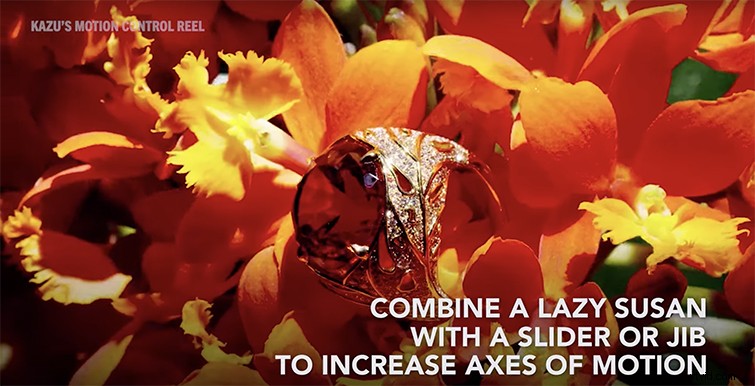
So, in addition to some nice, simple moves, add a Lazy Susan turntable to the shot. Not only does this add more energy, it’s a cheap, totally viable way to increase production value. These simple, sleek turns will create the movement and presentation you need to really showcase a product, no matter what you’re shooting. You can pull this type of shot off using a jib or gimbal to push in or pull out from the product.
If you’re interested in learning more about jibs and cranes, check out our video tutorial.
Study the Material
Here is, perhaps, the single greatest piece of advice: prepare. Preparing for the shoot can single-handedly save your entire video. With product shots, specifically, you want to know how light will react ahead of time. You want to know what lights to bring and how to use them. Knowing the product will also help you determine what types of motion and camera movements you’re going to need — one step guides the next. Recently, we covered how lighting a scene the night before can save you a lot of time and effort — the same is true here.
If you’re interested in the specifics of how to light your product shoot, check out our tutorial below: