
Before you go overboard with the zoom on your next shoot, learn how the lens works — and how to use it properly.
Whether you’ve been guilty of this yourself or have seen others struggle, zoom-happy filmmaking can ruin a shoot and annoy audiences. That’s not to say zooming in and out is a bad thing; in fact, it’s actually a marvel of lens technology that we can zoom at all. And when you use it intelligently, it can be quite effective.
However, it is still easy to take the zoom for granted — especially now that filmmakers have handy stock lenses for DSLRs and mirrorless cameras that offer great flexibility and range to zoom easily and often. Let’s explore how zoom lenses work and some best practices to help you use them effectively, intelligently, and properly.
How Zoom Lenses Work
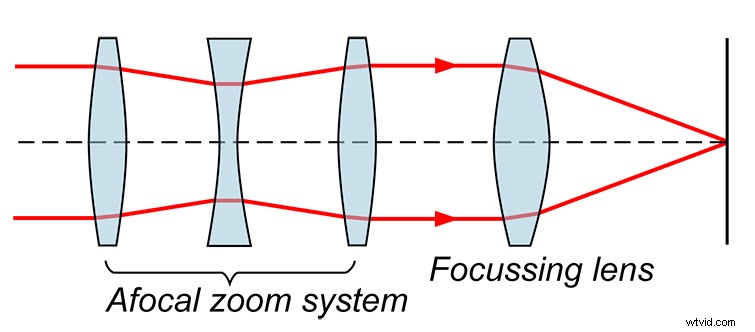
According to a good Wikipedia definition, “a zoom lens is a mechanical assembly of lens elements for which the focal length (and thus angle of view) can be varied, as opposed to a fixed focal length (FFL) lens (see prime lens).”
That sounds pretty straightforward, but let’s dive into how the mechanisms work to change the focal length and your angle of view.
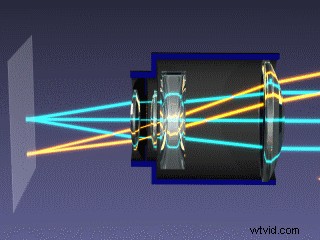
As you can see in the gif above, a simplified zoom lens works by combining two parts: a focusing lens similar to your standard prime or fixed lenses and an afocal zoom system, which is the sliding element that does not focus on light. Rather, it focuses on altering (thus magnifying) the size of the light. What’s important is that, while the zoom comes from this sliding lens, it is necessary to compensate for any movement of the focal plane to keep the focused image sharp — which means either you have to physically move the camera or move the focal plane to compensate.
Because of this compensation, and in spite of how much flexibility a zoom offers, there are several factors you need to be aware of: noise, pincushioning, slower shutter response time, and a greater need for stability. Here’s a great video by Canon that provides more in-depth information — not just about zoom lenses but also how lenses work in general.
How to Zoom Properly and Smoothly
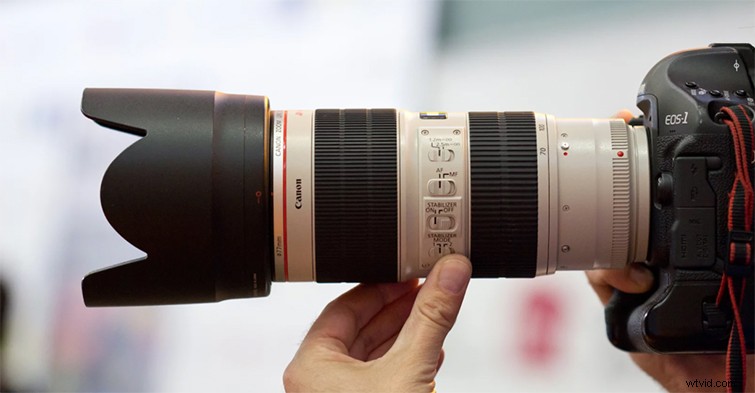
For filmmaking, it’s important to not only understand how your zoom works but also what zooming is meant to do for your audience. Zooms can be quite abrasive at times, which can be a stylistic decision, but it’s often an unwanted consequence.
On many professional production shoots, zooming is intentional, and it relies on a focus puller to compensate — or with exact measurements in mind. On small DIY productions, you can purchase (or make) different devices to help smooth a zoom. Here are a few resources and tricks.
- The Death and Rebirth of the Zoom
- How to get smooth camera movements using a rubber band
- Primes vs. Zooms: Situational EF Lens Prep
- Videography 101: Excellent Zooming Tips
I’d be remiss not to mention that you can add many zoom effects in post-production as well. Here are some resources to consider for creating digital and stylized zoom effects.
- Smooth Zoom Video Effect Tutorial | Adobe Premiere Pro
- How to Create a 3D Parallax Zoom in Premiere Pro
- Get to Know The Dynamic Zoom Tool In Resolve 14
- Create a Map Zoom Effect in FCPX
Know When to Zoom (and When Not To)

Once you feel you’ve mastered the art of zooming, it’s time for you to decide when you actually want to use a proper zoom. Like Stanley Kubrick so aptly demonstrates in his classic Barry Lyndon, zooms can create quite a cinematic effect when used slowly and artistically. It is important, however, to note that the heyday of zoom technology in filmmaking was in the ’60s and ’70s. As such, in the case of self-aware filmmakers like Quinten Tarantino, a heavy-handed crash zoom in itself can be a retro-filmmaking technique.
On the other hand, zooms have grown less popular in pure cinema settings. Instead, they have found a home in reality television, where they portray real life and home-video quality. You don’t have to look long or hard to find many essays on why you shouldn’t use zooms (or even many arguing more for dolly shots over zooms).
At the end of the day, a zoom is a practical and stylistic option for your production, but it’s not a perfect tool for every situation. Pick your spots, focus on your intentions, and use your tools and resources wisely for optimal results.