
Knowing how to use a monopod can add a lot of flexibility to many types of photography. In some ways the humble monopod is one of the most under-appreciated pieces of kit, yet is one of the best camera accessories you can buy.
Often regarded as a poor man’s tripod, the monopod is much more. A monopod is more stable than shooting handheld and significantly reduces camera shake, but is generally considered a temporary support for your camera and lens. Yet because the photographer still has to hold the camera when using a monopod, many photographers often wonder… what’s the point?
In truth, the monopod does have its limitations for some subjects, but there are some very specific situations in which it shines and will make all the difference for your photography. Sports, wildlife and music photographers, in particular, swear by them.
In these genres you are often working with low or challenging light conditions. And most of the time you likely have a telephoto lens mounted to your camera. Without any sort of stabilising device, you will undoubtedly experience camera shake. So why not use a tripod, you might ask?
When is the last tie you set up a tripod at a live music gig? Or on the sidelines of a professional sporting match?
- Find the best deals on monopods at Amazon UK and Amazon US
When to use a monopod
A monopod is best used when it’s not practical to use a tripod but you need some kind of stabilisation for your camera.
Monopods are staples because of their portability. They are light and compact, yet expand to great heights. They’re unobtrusive and easy to use in crowded spaces.
A monopod gives your camera a minimal amount of support, but a lot of the time this is just enough to enable you to get the shot you want. It might mean you can dial in that shutter speed a stop slower than you would have achieved if shooting handheld.
Another thing to consider is the extra support it gives your body. Working with telephoto lenses is a deceptively taxing task. Those heavy lenses take their toll on your body over time by the simple act of lifting it up and holding it stable.
A monopod shoulders some of that weight, and it can give your arms a rest in between songs or pauses in the action.
How to mount your camera to a monopod
A monopod has a screw on top with which you can attach it directly to your camera or lens collar. Alternatively, you might want to attach the monopod to a lightweight tripod head for more flexibility.
It’s worth noting that most monopods come without a head. This is because they’re mostly used with large lenses that have a built-in tripod collar. To mount your monopod to your lens, simply screw it into the collar rather than the screw thread on the base of your camera. This also lets you quickly change your image format from landscape to portrait.
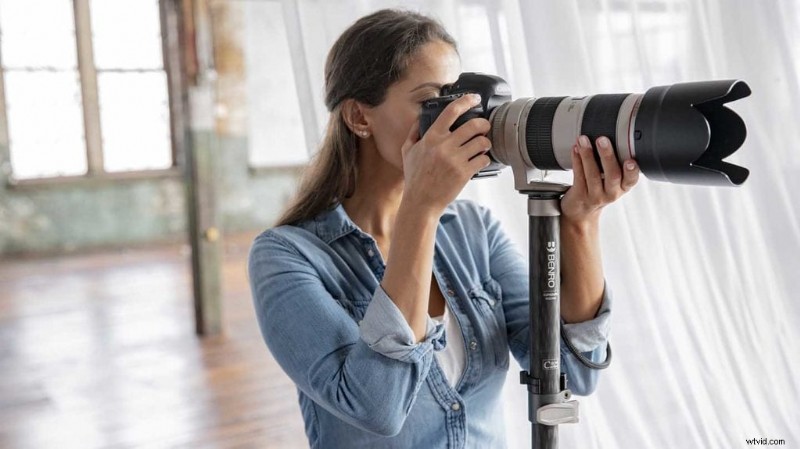
How to hold a monopod
Knowing when to use a monopod is one thing. Knowing how to hold a monopod correctly ensures you get your image.
There are ways of positioning your body that can make the monopod more stable than others. The most popular way of holding a monopod is to stand it upright in front of you, gripping it with both hands. Then spread your feet slightly apart.
If you think about what you’ve just done here, you’ve essentially just created that poor man’s tripod! The monopod, along with your two legs, forms a very stable triumvirate!
Another common way of holding a monopod is to rest the base against the back of your foot. With the pole then pressed against your leg and your hand holding it against your body, you have a very stable platform from which to shoot in low-light venues.
Using monopods with telephoto lenses
A monopod is a great alternative to a tripod when you’re shooting with a heavy telephoto lens. This is because tripods are also heavy and awkward to set up, particularly in tight spaces.
A monopod can support the full weight of your kit, which for wildlife and sports photographers, in particular, can be very heavy. Because it offers greater freedom of movement, it means you can position yourself anywhere within a scene.
But it’s not just sports and wildlife photographers who will find a monopod useful. Landscape photographers will find that a monopod is great for mid-telephoto landscape images and can allow shutter speeds as slow as 1sec without introducing camera shake.
Likewise, macro photographers might find a tripod cumbersome. A monopod allows you the freedom of adjusting its height and simply leaning forward until you get your composition right. What’s more, by manually pre-focusing your lens you can simply move until your subject becomes sharp.
What to look for in a monopod
Maximum height
If you’re tall, you’ll probably want a monopod that can extend high enough that you can use it comfortably. Make sure you check the maximum height of any monopod before you purchase it to ensure that you can shoot from a natural position.
Maximum load
Monopods, on the whole, have a lower maximum payload than tripods. Those that come with a tilt head will have a lower load rating than monopods that come without heads. The load rating is reduced simply to account for the weight of the head. But rest assured it is still robust.