
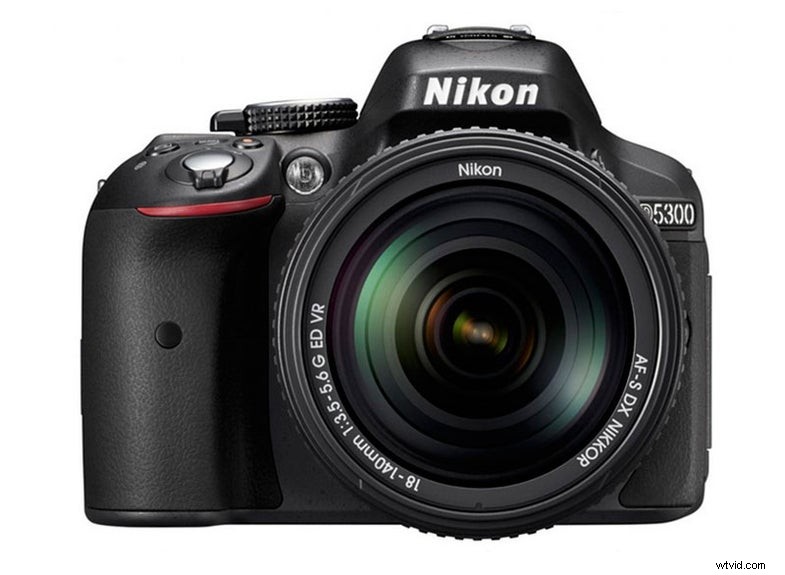
Nikon’s mid‑level DSLR lineup continues to evolve with the newly announced D5300, adding fresh processing power and enhanced connectivity.
By Stan Horaczek | Published Oct 17, 2013 4:27 PM EDT
We may earn revenue from the products available on this page and participate in affiliate programs. Learn more ›
The D5300 builds on its predecessor, the D5200, but introduces several upgrades that keep it competitive against peers such as the Ricoh Pentax K‑3 and Canon 70D.
At its core, the camera houses a 24.2‑megapixel DX‑format sensor paired with Nikon’s latest Expeed 4 image processor. This combination delivers a maximum ISO of 25,600 and a continuous shooting speed of 5 fps, whether using live view or the optical viewfinder. The autofocus system features 39 points, and the camera incorporates Nikon’s Scene Recognition System for accurate metering.
The D5300 is the first Nikon DSLR to integrate both built‑in Wi‑Fi and GPS. The 3.2‑inch articulating LCD, with a resolution of 1.037 K dots, makes on‑camera image review and remote control straightforward.
It will be available later this month as a kit with the 18‑140 mm F/3.5‑5.6 ED VR lens for $1,399.
While the performance leap from the D5200 is modest, the new features make the D5300 a solid choice for enthusiasts. The 24‑megapixel sensor can tax the built‑in Wi‑Fi, so transferring full‑resolution JPEGs to a mobile device in real time may feel sluggish after a short period.
The mid‑range DSLR segment continues to thrive, and step‑up models like the D5300 offer plenty of potential for photographers looking to upgrade.
