
Reading Time: 6 minutes
Published: November 21, 2025 | Last Updated: December 19, 2025

What is color theory?
Color theory is the systematic study of how colors are arranged, how they interact, and how they convey emotion and meaning in visual storytelling. By applying this framework, filmmakers can choose lighting, costume, and set colors that reinforce narrative intent, highlight key subjects, and keep the audience’s focus where it matters most.
Origins of Color Theory
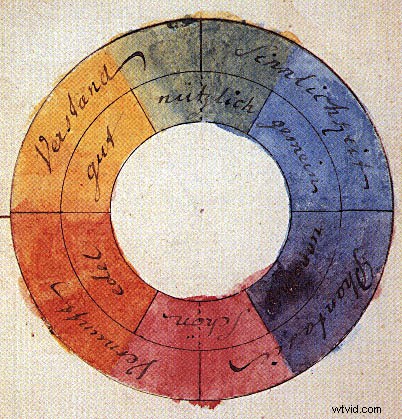 Goethe’s Color Wheel links color to human emotion. Painted in 1810, it was part of his theory that colors like red, blue, and yellow each express psychological states. His ideas influenced Romantic painters and later film designers.
Aristotle’s early attempt to explain color as a mix of white (light) and black (dark) set the stage for centuries of artistic speculation. Though observational, his concepts shaped how creators approached color for generations.
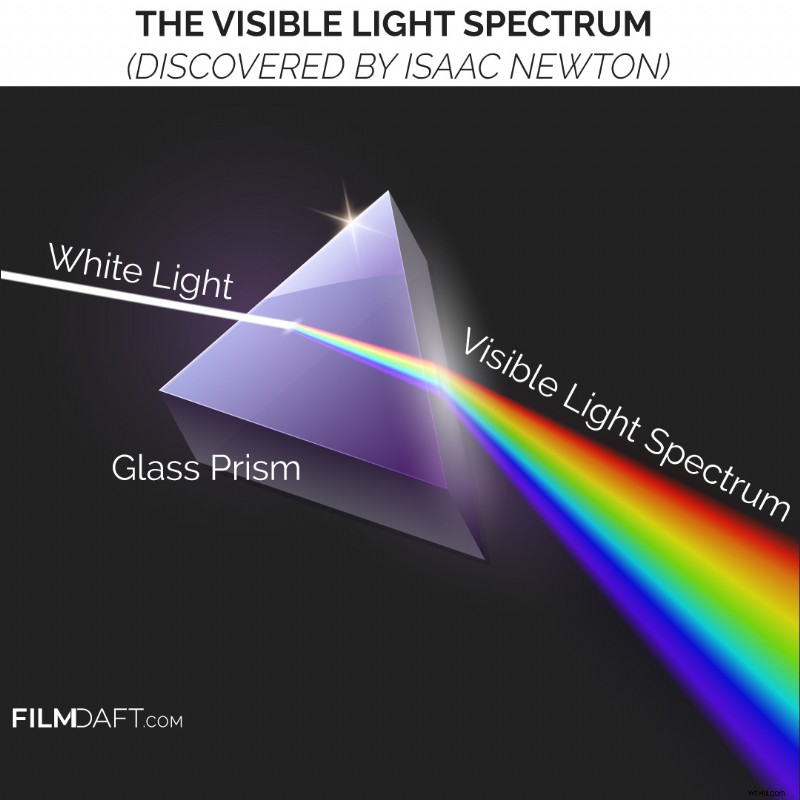 The Visible Light Spectrum shows how Isaac Newton used a prism to separate white light into a full range of colors. This discovery led to the first scientific color theory and influenced how we understand color mixing today. Image Credit: FilmDaft
In 1666, Newton’s prism experiment produced the first color wheel, arranging hues in a circular pattern that remains foundational in visual design.
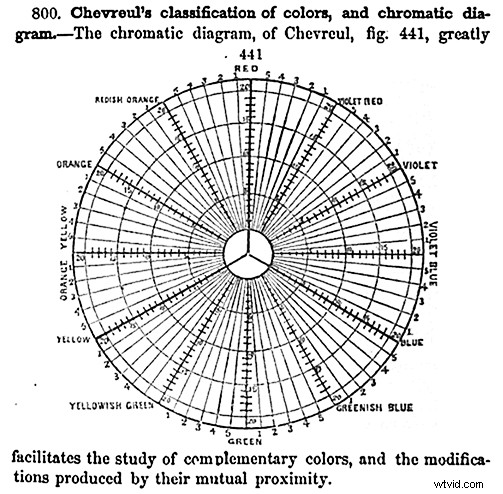 Chevreul’s Chromatic Diagram (1800s) organizes colors in a full circle using the RYB model. It helped artists understand complementary colors and how nearby hues affect each other visually.
Johann Wolfgang von Goethe later examined emotional responses to color, while Michel Eugène Chevreul explored how colors shift when placed side by side. Their insights now inform palette construction, emotional tone, and contrast planning in film.
How Color Functions: Hue, Saturation, and Value
Every color is defined by three controllable attributes that influence boldness, clarity, and balance.
- Hue: The fundamental color family—red, green, blue, etc.
- Saturation: Intensity of the hue. High saturation yields vivid tones; low saturation produces muted shades.
- Brightness (Value): Lightness or darkness. Adding white creates tints; adding black creates shades.
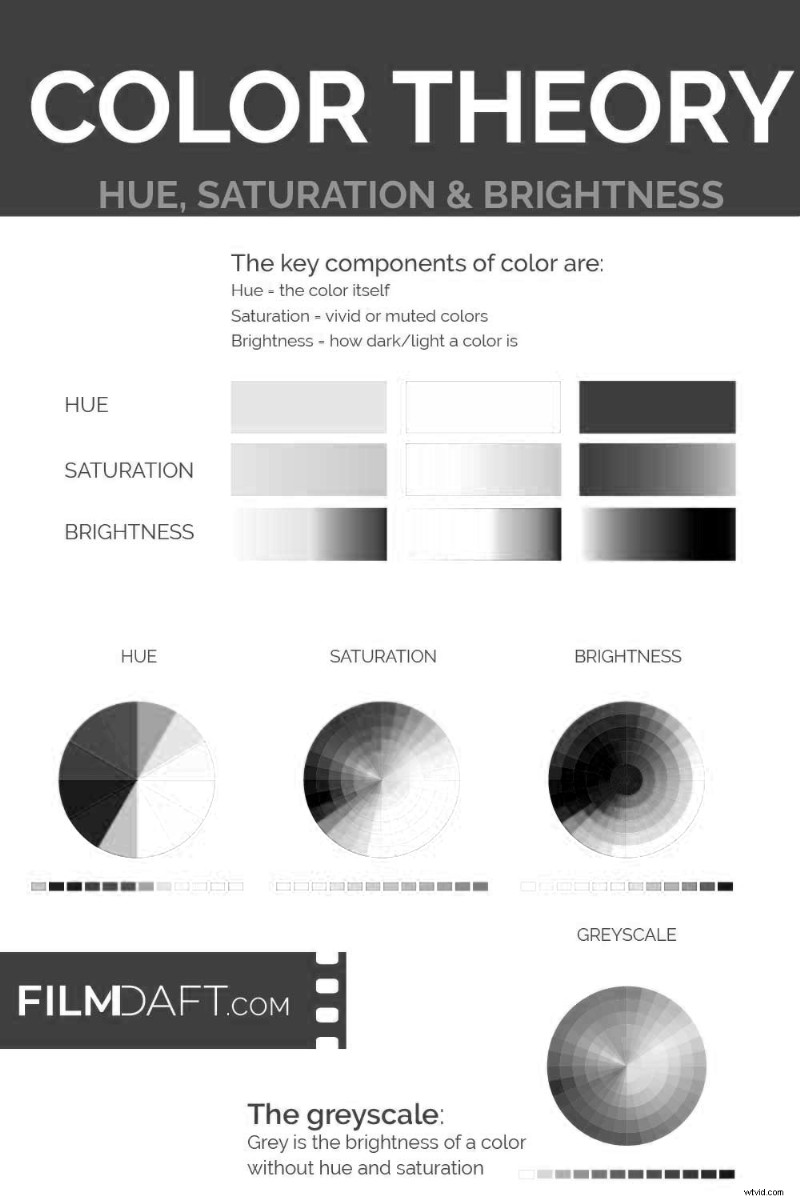
Digital grading tools like HSL and HSV allow precise manipulation of each attribute, enabling targeted adjustments to shadows, highlights, or skin tones without affecting the entire image.
Color Models in Film Production
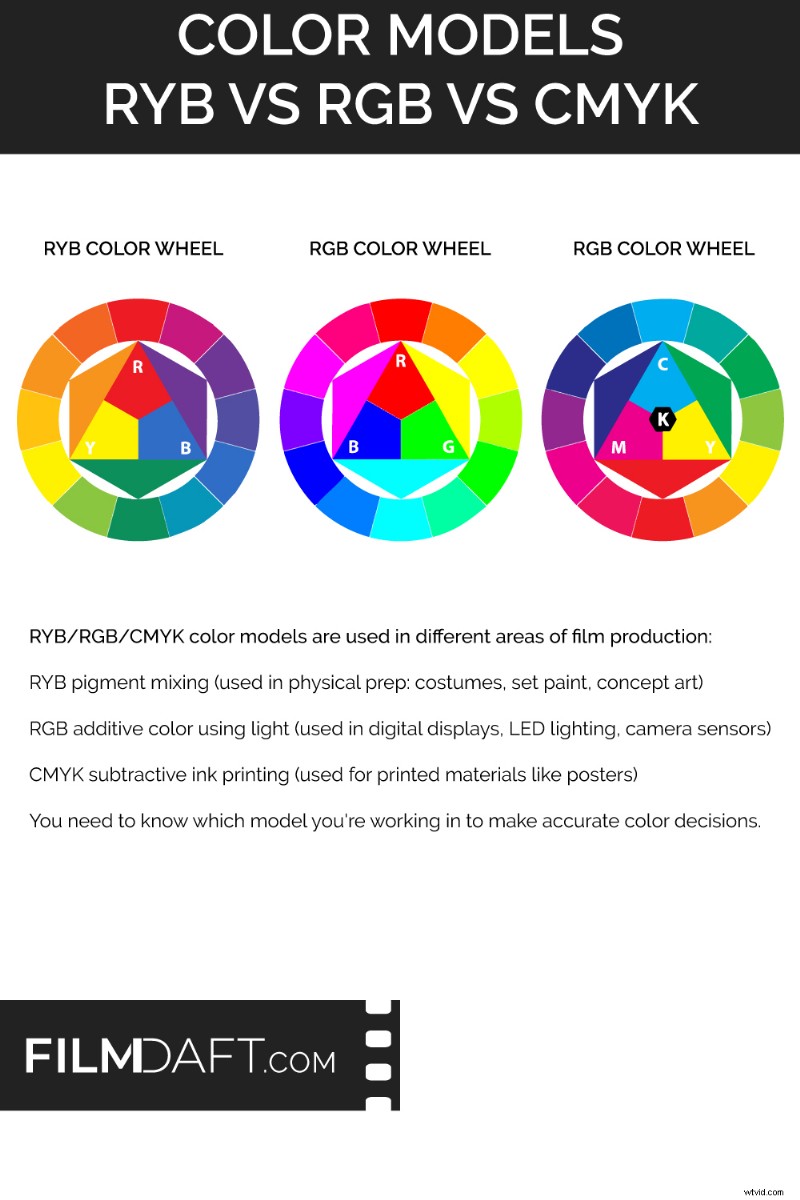 Color Models Used in Film Production compares how RYB, RGB, and CMYK are used across different parts of the workflow. Each model has its own method for mixing color, whether through pigment, light, or ink. Image Credit: FilmDaft
Understanding the appropriate model is crucial for consistent color across concept, set, and screen.
- RYB (Red, Yellow, Blue): Traditional pigment model used in concept art, set painting, and costume design.
- RGB (Red, Green, Blue): Additive model for screens, sensors, and lights—essential for lighting design and color grading.
- CMYK (Cyan, Magenta, Yellow, Black): Subtractive model for printing, including posters and marketing collateral.
Matching the model in each department prevents color drift and ensures the visual language remains intact from storyboard to final frame.
Color in Digital Workflow
Post‑production color manipulation is bounded by the footage’s bit depth and color gamut. Grading tools then help align the palette with narrative mood, setting, or character perspective.
Bit Depth and Gamut
Bit depth determines how many discrete color steps your footage can encode. Higher depth provides smoother gradients and greater grading latitude, reducing banding, clipping, or other artifacts.
- 8‑bit: Limited range, prone to visible compression when pushed.
- 10‑bit or RAW: Broad range, ideal for heavy grading and complex color work.
Color gamut defines the full spectrum a camera or display can render. Rec.709 is standard for HD video; DCI‑P3 is common in digital cinema. Wider gamuts allow richer, more saturated color choices.
Additional resources: LUTs, LOG, and Look camera profiles.
Color Correction vs. Color Grading
While often used together, these processes serve distinct purposes.
- Correction: Restores exposure, white balance, and skin tones to a neutral, clean baseline.
- Grading: Shapes the final mood—adjusting temperature, contrast, and saturation to evoke intimacy, urgency, or isolation based on narrative intent.
Read more about the differences between color correction and color grading.
Color’s Impact on Mood and Meaning
Color directs the viewer’s eye, distinguishes characters, and signals emotional shifts through harmony, temperature, contrast, symbolism, and cultural meaning.
Harmony and the Color Wheel
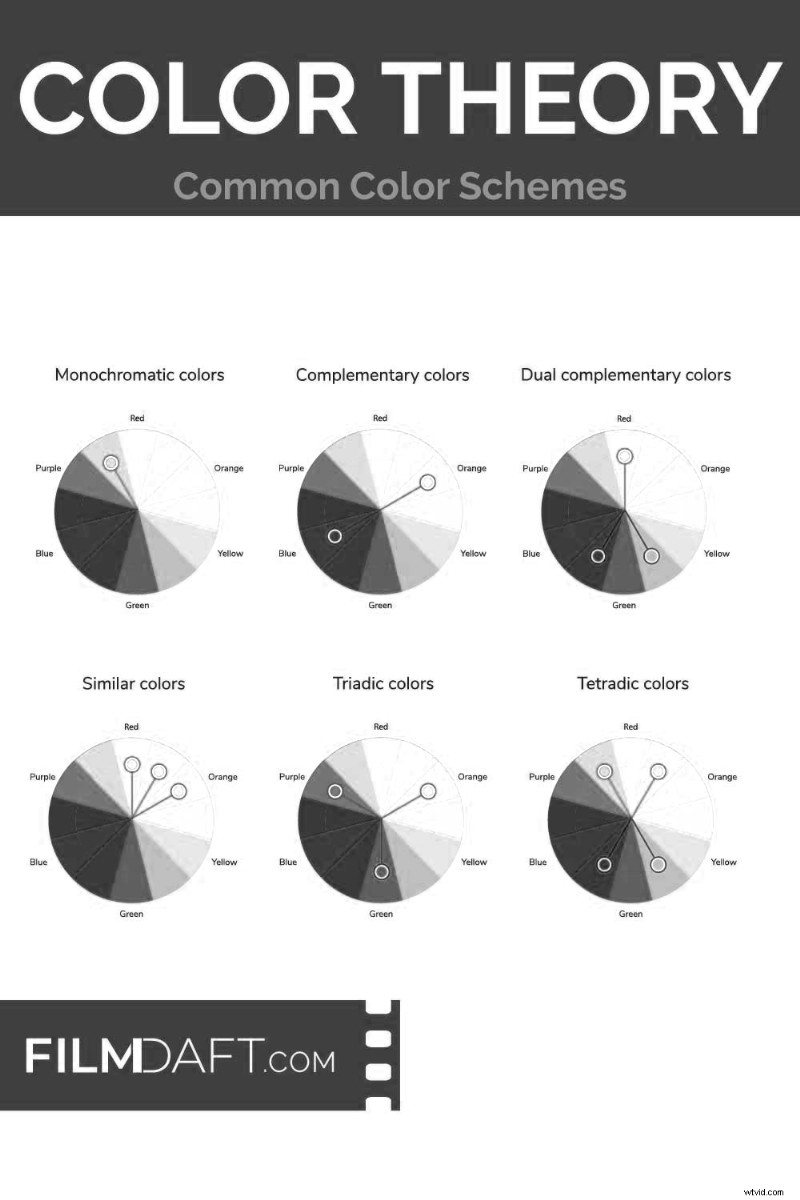
Harmony illustrates how hues relate on the wheel, establishing emotional tone and visual rhythm. Complementary schemes create sharp energy; analogous schemes promote calm flow.
- Complementary: Opposite colors (e.g., blue & orange) for high tension.
- Analogous: Adjacent colors for smooth transitions.
- Triadic: Three evenly spaced colors for balanced vibrancy.
- Split‑Complementary: One color plus the two beside its opposite for flexible contrast.
- Tetradic: Two complementary pairs for richness.
- Monochromatic: One hue with varied saturation/brightness.
- Achromatic: Only black, white, and gray.
Simultaneous Contrast
Colors shift relative to their neighbors. A neutral hue can appear warmer, cooler, brighter, or darker depending on adjacent tones.
Warm vs. Cool Colors
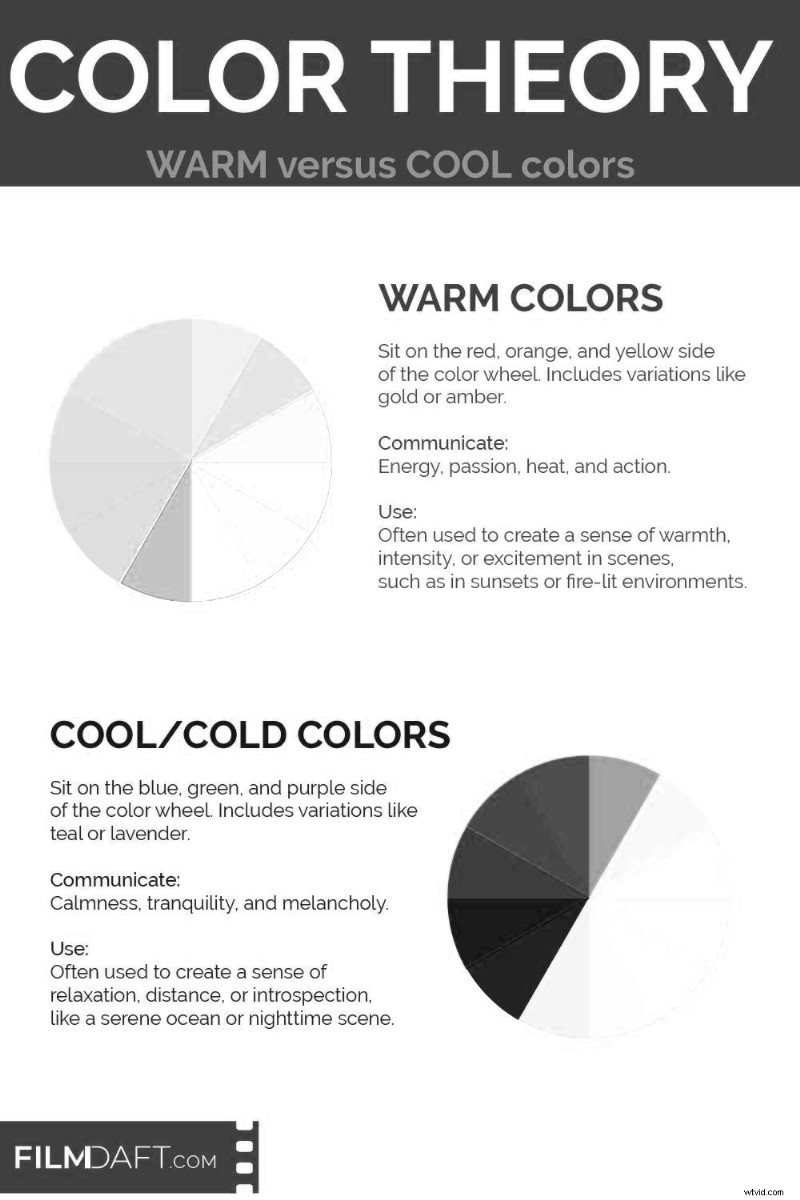
Warm colors (red, orange) feel active and intimate; cool colors (blue, green) convey distance or calm. Temperature contrast is a powerful tool for defining character or mood.
Symbolism and Emotion
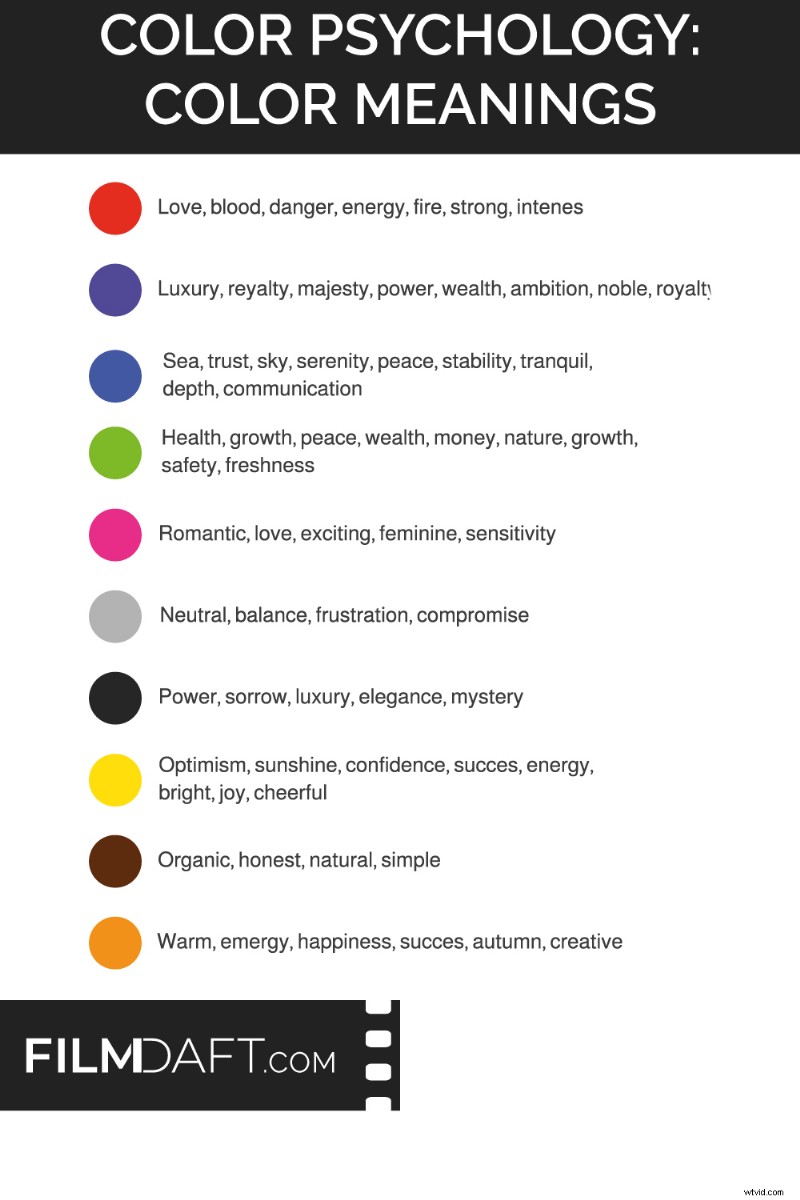 Common Color Associations in Film breaks down how colors like red, blue, green, and yellow are linked to emotions such as danger, peace, energy, or mystery. These links help you guide tone and character perception visually. Image Credit: FilmDaft
Colors often carry innate emotional meanings, allowing audiences to grasp danger, peace, conflict, or vulnerability before dialogue begins.
- Red: Passion, danger, power
- Blue: Calm, isolation, control
- Green: Nature, jealousy, balance
- Yellow: Joy, caution, energy
- Black: Fear, strength, mystery
- White: Purity, emptiness, clarity
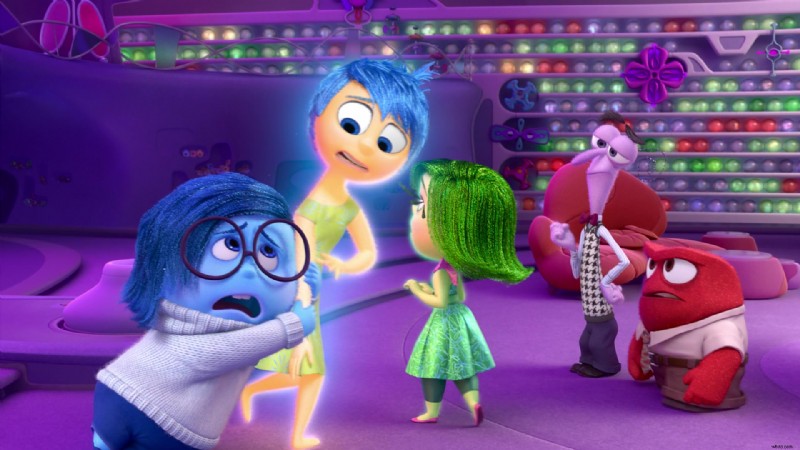 In Inside Out (2015), each emotion is designed around a distinct color. Blue stands for Sadness, red for Anger, green for Disgust, purple for Fear, and yellow for Joy. These color cues help you recognize emotional shifts instantly. Image Credit: Pixar
Inside Out (2015, Pixar) uses a unique color for each emotion, making their psychological impact instantly recognizable.
Cultural Associations
Color meanings vary globally. A hue that feels hopeful in one culture may carry a different connotation elsewhere.
- White: In Western traditions, often linked to purity or new beginnings; in East Asian cultures, commonly worn at funerals to symbolize mourning.
- Red: In American films, signals danger or urgency; in Chinese culture, denotes happiness, luck, and prosperity.
- Black: Western contexts associate it with mourning or authority; in many East Asian cultures, black can represent stability or wisdom, while white may signify mourning.
Conclusion
Color theory equips filmmakers with a structured approach to selecting and combining hues that shape emotion, clarity, and meaning. Mastery of hue, saturation, brightness, temperature, and contrast—within the appropriate color model—lets you craft visual narratives that are sharper, clearer, and more compelling.
Read Next: How do you design the look of a film?
Visit our Production Design section to learn how sets, props, and color palettes support story, character, and tone from the start.
Want the full picture? Explore the Pre‑Production archive for everything that happens before cameras roll—from visual planning to script breakdowns.