
Reading Time: 5 minutes
Published: November 26, 2025

What is film colorization? Definition & Meaning
Film colorization refers to the process of adding artificial color to black‑and‑white, sepia, or tinted footage through manual or digital techniques. The aim is to make monochrome film appear as if it had been shot in color. It is applied to silent films, classic Hollywood titles, and historical footage.
While colorization can make older footage feel more immediate and familiar to contemporary viewers, it also alters the original image, raising important questions about artistic control, historical fidelity, and whether the final version reflects the filmmaker’s intent.
Early Color Techniques: Hand‑Painting, Tinting, and Toning
Before color film stock existed, early filmmakers employed creative methods to introduce color onto the screen. These techniques were not intended to replicate realistic hues but to convey emotion or highlight specific scenes—much like the color grading used in modern cinema. Understanding this history shows that color has long been a part of film, even before the advent of true color stock.
Here’s a deep dive into the history of colorization.Hand‑painted Film Frames
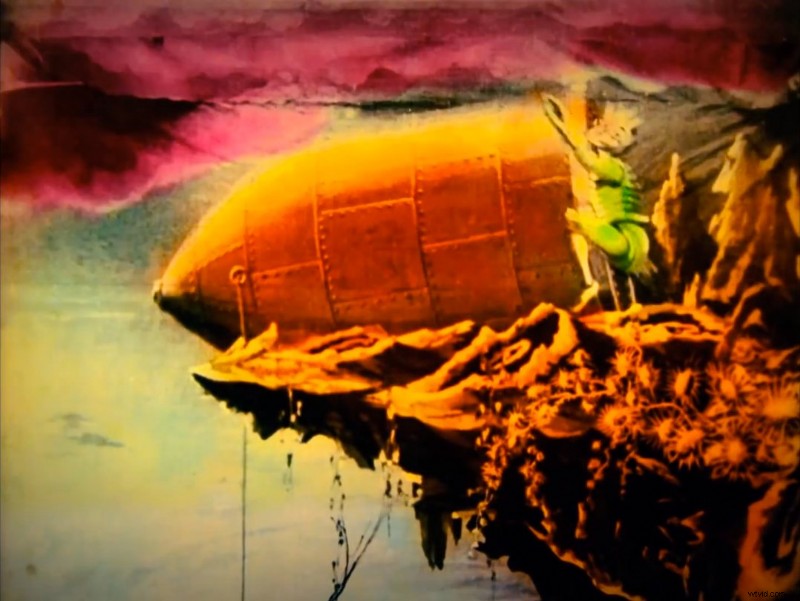
In the early 1900s, some prints of Georges Méliès’s A Trip to the Moon (1902) were hand‑colored frame by frame by a Paris studio. Most versions were released in black and white, and for decades that was the only available version. A rare hand‑colored print was rediscovered in 1993, fully restored by 2011, and re‑premiered that year at the Cannes Film Festival.
Coloring studios such as Elisabeth Thuillier’s painted each frame with fine brushes, often using 20 or more colors per scene. The result was a surreal, dreamlike image that made the action feel theatrical rather than realistic.
Stencil‑Based Color Systems
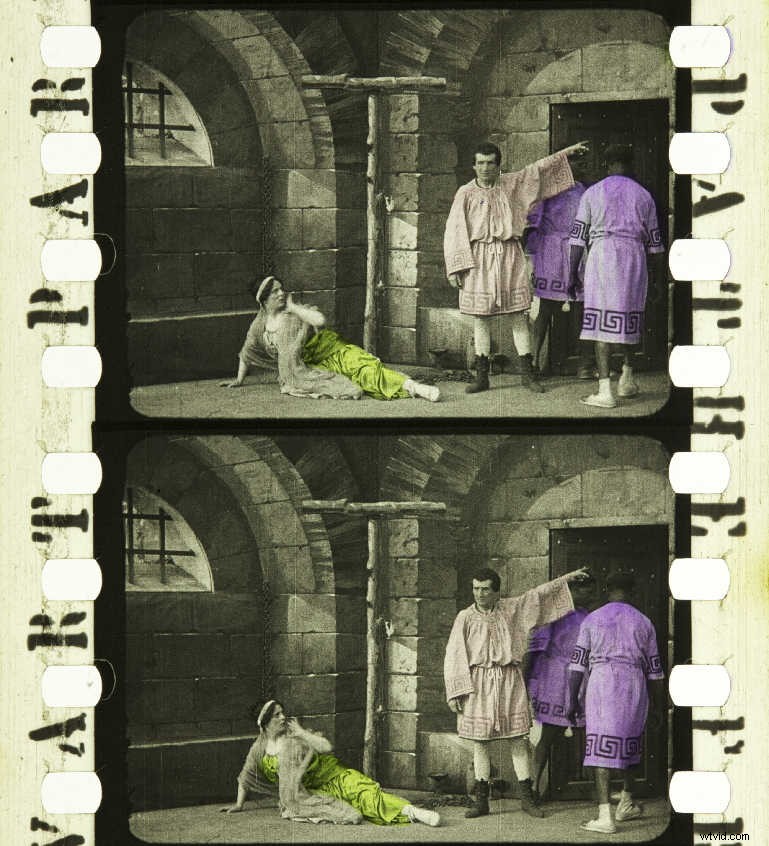
Pathécolor (later called Pathéchrome) used stencils to apply dyes only to specific parts of the image, such as skies or clothing. This allowed mass production of partially colored prints with bold color highlights that emphasized dramatic elements.
Tinting and Toning
Many silent films employed tinting, where a single color was applied across the entire frame—blue for night, amber for daylight, red for fire. Toning affected only the darker areas of the image.
Modern Digital Colorization: How It Works Today
Today, colorization is performed with digital tools. While software accelerates tracking and consistency, human expertise remains essential to determine accurate skin tones, lighting variations, and historically appropriate colors. Even with AI, colorization relies on informed decisions about how objects likely appeared, given limited visual evidence.
Frame Scanning and Separation
The original film is scanned into high‑resolution digital frames. Colorists use masks and rotoscoping to isolate specific elements—faces, clothing, buildings, or skies—on each frame. Below is an example of how to use the rotobrush tool in Adobe After Effects for this purpose.
Assigning and Tracking Colors
Colors are chosen based on reference photos, costume research, or educated guesses. Software then tracks these areas across moving frames to maintain color consistency, even when lighting or camera angles shift.
AI‑Assisted Workflows
Tools such as DeOldify employ machine learning to apply colors automatically. These models predict skin tones, sky colors, and clothing hues based on patterns found in contemporary photographs. However, the results often require manual refinement, especially for ethnic diversity, historical uniforms, or faded lighting.
Why and When Is Colorization Used?
Colorization is employed for various purposes, depending on the project’s goals. Some initiatives aim to increase viewer engagement, while others seek to help modern audiences visualize the past more vividly. Understanding the motivation helps balance the benefits of accessibility against the risk of distorting the original film’s design.
TV and Commercial Markets
During the 1980s, many studios colorized older black‑and‑white films to make them more appealing on television. Viewers were less likely to watch monochrome content, so adding color helped boost ratings and VHS sales. Titles such as It’s a Wonderful Life (1946) were re‑released in color for this reason.
Here, you can see a comparison of the black and white and color versions of It’s a Wonderful Life (1946). In my humble opinion, the colored version lacks some of the grittiness that adds to the mood of the original black‑and‑white version.Education and Documentaries
Films like They Shall Not Grow Old (2018, Warner Bros.) used colorization to help viewers visualize historical people and events more realistically.
Here’s an interesting documentary about the making of They Shall Not Grow Old (2018).The film colorized World War I footage, added synchronized voices, and adjusted motion to make the century‑old material feel closer to modern life.
Public Domain Re‑Releases
Many companies colorize films that are out of copyright, such as the classic zombie movie Night of the Living Dead (1968) or the early sci‑fi Plan 9 from Outer Space (1959).
Here’s the full colorized version of Plan 9 from Outer Space (1959).These color versions are legal to produce and distribute, even if the original creators would not have approved the change. However, not all film enthusiasts embrace them.
Here’s the full colorized version of Night of the Living Dead (1968).Read more about licenses such as the public domain and Creative Commons.
Creative Ethics: Should We Change What the Director Intended?
Colorization can aid viewers in understanding history, but it also alters how scenes are lit, framed, and emotionally read. Many directors and critics argue that it risks erasing the design choices embedded in the original black‑and‑white version.
Altering Visual Design
Black‑and‑white cinematography relies on contrast, low‑key lighting, and negative space to structure the image. Adding color can obscure these elements, making them harder to interpret.
Restoration vs. Colorization
These terms are frequently conflated. Restoration preserves the original image while repairing damage. Colorization, on the other hand, changes the image by adding visual elements that were never part of the original film.
Restoration involves cleaning a film to remove scratches, dust, or flicker, aiming to restore its original appearance. Colorization digitally adds color, replacing the original lighting and contrast with a modern reinterpretation.
Institutions such as the Library of Congress, BFI, and the Criterion Collection argue that original black‑and‑white versions must always be preserved. If a film is colorized, the new version should be clearly labeled. Archives emphasize that colorization is a reinterpretation, not a restoration.
Global and Cultural Questions
Colorization can unintentionally rewrite cultural or ethnic details. When footage from non‑Western or colonized regions is colorized using AI models trained on Western images, the process can assign incorrect colors to clothing, buildings, and people, erasing local identity and authenticity.
For example, traditional fabrics may be colored inaccurately. Religious buildings might be tinted with modern Western hues. Skin tones can be over‑smoothed or standardized, ignoring actual regional variation. In these cases, colorization changes more than the look of the footage; it changes how that history is remembered.
This raises a critical question: Should modern artists or software decide how people from the past looked, especially when visual records are incomplete or missing?
Summing Up
Film colorization is a manual or digital process that adds color to footage originally captured without it. While it can make films more accessible, it also alters how they look, feel, and are understood. Directors, critics, and archivists agree that original black‑and‑white films must be preserved. Colorized versions can offer a new experience, but they should never replace the filmmaker’s original vision.
Read Next: Want a deeper look at global film history?
Start with our Film History, Theory & Genre hub to explore how early studios, national movements, and major shifts shaped the language of cinema.
Then dive into our full Film Movements & World Cinema section for guides on German Expressionism, French New Wave, Italian Neorealism, and more.
You can also check out our Visual Art Timeline to see how global art movements have influenced the look, tone, and rhythm of film across decades.