The Film Set Jargon Guide Every Filmmaker Actually Uses (And Why It Matters)
I still remember my first day on a professional film set. The 1st AD shouted "Last looks!" and I froze, clutching a coffee that was actually meant for the gaffer. Later, someone asked for "sticks and an apple," and I spent minutes searching for fruit. A PA pulled me aside and explained that "sticks" are tripod legs and "apples" are wooden boxes. That five‑minute lesson saved me from looking clueless for the rest of the shoot.
Why Film Set Jargon Exists (And Why You Can’t Ignore It)
Film sets move at 100 miles per hour and burn thousands of dollars each hour. There’s no room for full sentences or polite explanations. When the DP shouts "I need a full apple, C‑47s, and a blonde with barn doors," they’re conveying precise needs in just a few words—not propelling themselves with pseudo‑cool mandalas. Jargon isn’t pretentious; it’s mandatory communication that keeps the production humming like a well‑oiled machine.
The Real Cost of Not Knowing Set Terminology
Last year I watched a film‑school graduate freeze during his first PA job when the Key Grip asked him to "grab a bazooka and some speed rail." The kid literally pulled out his phone to Google it while 40 crew members waited. He didn’t get called back. The fallout isn’t just embarrassment—it slows production, creates safety risks, damages reputation, and blinds you to what’s needed half the time.
- Slows production (costs money)
- Misses critical safety cues
- Looks unprepared (kills reputation)
- Fails to anticipate needs (half the job)
Film sets thrive on reputation. Word travels fast; being "that person" who can’t distinguish a C‑stand from a Century stand follows you.
How Film Set Language Evolved (It’s Older Than You Think)
Jargon is decades of industry evolution compressed into verbal shortcuts. Some terms date back to old Hollywood studios, others emerged from union departments, and a few honor pioneers—like the "Abby Singer" shot named after the legendary AD who’d always call "two more shots" to give crews time to wrap.
The MOS designation (filming without sound) supposedly came from early German directors saying "mit out sound." Whether true or myth, it stuck and became a shared culture. When someone yells "Martini shot!", everyone knows it’s the last shot of the day and the mood lifts. That tribal knowledge passes through generations.

The Essential Film Set Jargon (Organized By Department)
Assistant Director (AD) Commands – The Rhythm of Production
The AD runs the set; their commands set the heartbeat of production.
- First Team – Principal actors needed on set
- Second Team – Stand‑ins for lighting
- Last Looks – Final chance for hair, makeup, wardrobe before rolling
- Quiet Please – Silence on set, we’re about to roll
- Lock It Up – Stop all movement and noise; we’re recording
- Roll Sound – Sound department starts recording
- Roll Camera – Camera starts rolling
- Speed – Camera/sound confirms recording
- Mark It / Slate – 2nd AC claps the slate
- Action – Performance begins
- Cut – Stop performance
- Back to One – Reset to starting positions
- Moving On – We’re done with this setup
- Check the Gate – Ensure no debris in camera
- That’s a Wrap – End of day
On a recent commercial shoot in Vancouver, our 1st AD orchestrated the calls like a conductor: "Quiet please… settle… roll sound… speed… roll camera… speed… marker… and action." That rhythm gives performers time to settle into character.
Camera Department Terminology
- Sticks – Tripod legs
- C‑47 – Clothespin (yes, grips call it that)
- Martini Shot – Last shot of the day (afterward drinks)
- Abby Singer – Second‑to‑last shot (prep time)
- Gate – Area between lens and sensor
- Speed – Camera recording at proper frame rate
- Checking the Gate – Inspect for dust/hair
- Racking/Pulling Focus – Shift focus between subjects
- Whip Pan – Fast horizontal camera movement
- Push In / Pull Back – Camera moves toward/away from subject
The focus puller’s job is critical—nailing focus on actors in near‑darkness requires a steady hand and an ear for the “check the gate” cue.
Lighting & Grip Department Slang
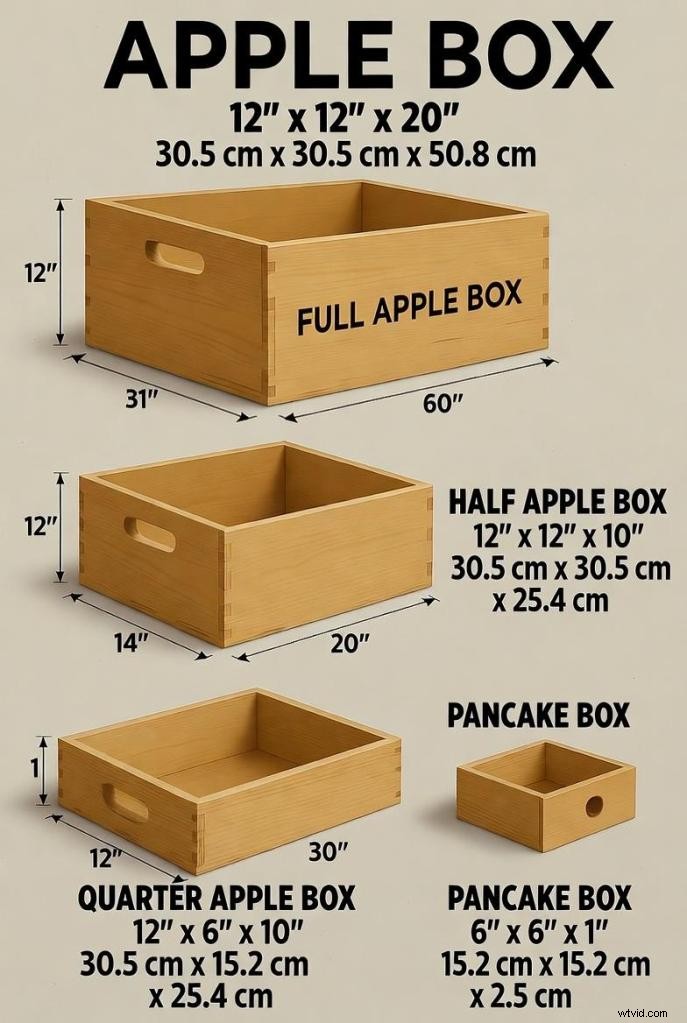
- Apple Box – Wooden boxes (full, half, quarter, pancake)
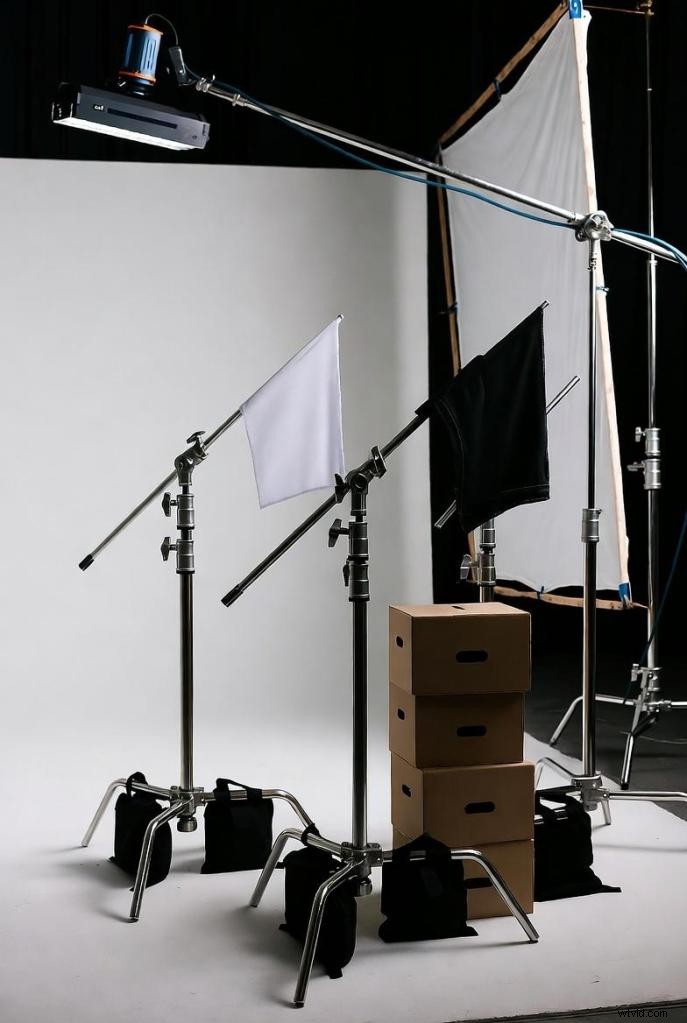
- C‑Stand – Century stand with extendable arm
- Blonde – 2K open‑face light
- Redhead – 800W open‑face light
- Kino Flo – Fluorescent bank for soft lighting
- HMI – Powerful daylight‑balanced light
- Barn Doors – Metal flaps to shape beam
- Flag / Cutter / Blade – Light‑blocking tools
- Scrim – Wire mesh to reduce intensity
- Bounce – Reflective surface to redirect light
- Diff / Diffusion – Material to soften light
- Gobo – "Go Between" pattern placed between light and subject
- Speed Rail – Metal piping for rigging
- Bazooka – Tube to hold backdrops
- Hot Brick – Fully charged walkie battery
- Dead Brick – Empty walkie battery
Grip and Electric are distinct departments. Grips handle camera support, movement, and rigging; Electric manages power and lighting. On union sets, lines are clear.
Shot Types & Camera Angles
- EST – Establishing shot
- WS – Wide shot
- MS – Medium shot (waist‑up)
- CU – Close‑up
- ECU – Extreme close‑up
- MCU – Medium close‑up
- OTS – Over‑the‑shoulder
- POV – Point of view
- Two‑Shot – Two people in frame
- Cowboy – Mid‑thigh‑up shot
- Dutch / Canted Angle – Tilted horizon
- Low Angle – Camera below subject
- High Angle – Camera above subject
- Bird’s Eye View – Directly overhead
- Worm’s Eye View – From ground level up
Sound Department Terms
- Speed – Sound recording confirmed
- Sound Speed / Rolling – Audio is recording
- Boom Op – Boom operator
- Lav / Lavalier – Clip‑on microphone
- Plant Mic – Hidden microphone
- Room Tone – Ambient background sound
- Wild Track – Audio recorded separately from picture
- MOS – "Mit Out Sound" (filming without audio)
- ADR / Looping – Automated Dialogue Replacement
- Sync – Audio‑picture alignment
The boom operator’s job is physically demanding; one I watched held a boom above actors for a seven‑minute take, never dipping into frame.
Production & Scheduling Terms
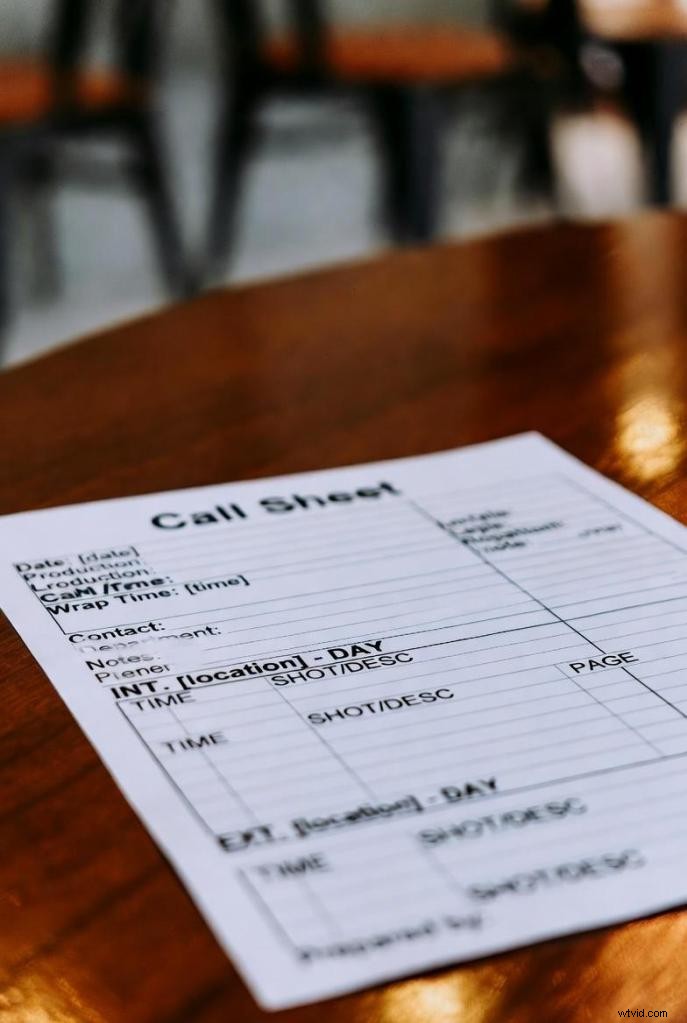
- Call Sheet – Daily schedule with call times
- Call Time – When you’re required on set
- Crew Call – General crew start time
- Talent – All actors/performers
- Background / BG / Extras – Non‑speaking performers
- Stand‑Ins – Body doubles for lighting setup
- Sides – Script pages for scenes shooting that day
- Turnaround – Minimum rest between wrap and next call
- Pre‑Call – Arriving before official call time
- Wrap – End of day (or production)
- Hot Set – Active set that cannot be altered
- Closed Set – Limited access for privacy
- Video Village – Monitor viewing area
- Crafty / Craft Services – Snack table
- Basecamp – Trailers and support areas
- The Lot – Film studio property
Call sheets are sacred. They detail locations, scenes, cast, crew parking, weather, sunrise/sunset, and the nearest hospital.
On‑Set Communication
- Copy That – Understood
- Standing By – Ready and waiting
- 10‑1 / 10‑100 – Going to restroom
- 10‑2 – Meal break
- 86 – Remove/eliminate something
- DFI – "Don’t Follow Instruction" (cancel that order)
- New Deal – Moving to new camera setup
- MOW – "Make Own Way" (transport yourself)
- Per Diem – Daily allowance for expenses
- Hot Brick – Fully charged battery
- Tail Slate / End Board – Slate at end of take (held upside down)
Walkie etiquette is its own skill: keep transmissions short, wait for a break before transmitting, and never interrupt a rolling take. On large sets, knowing which channel to use is crucial.
Post‑Production Terms You’ll Hear On Set
- Dailies / Rushes – Previous day’s footage reviewed daily
- Pick‑Ups – Additional shots filmed later
- Reshoots – Re‑filming previously shot scenes
- Cutaway – Insert shot to cover edit
- B‑Roll – Supplemental footage
- Plate – Clean background shot for VFX
- Practical – Real working element (lights, effects)
During filming, the DP and director often discuss post‑production needs: "We’ll need a clean plate for that" or "Get a cutaway of the hands".

Industry‑Specific Jargon (Different Sets Have Different Languages)
Commercial Production Terms
- Hero – Main product being filmed
- Beauty Shot – Perfect, pristine product shot
- Lifestyle – Natural, real‑world product usage
- Pack Shot – Packaged product display
- Talent Release – Legal permission to use someone’s likeness
Reality TV & Documentary Terms
- Verité / Fly‑on‑the‑Wall – Observational style
- B‑Roll Package – Supplemental coverage
- Interview Setup – Sit‑down conversation filming
- Run‑and‑Gun – Mobile, reactive shooting style
Music Video Production
- Performance – Artist performing for camera
- Concept – Narrative/artistic segments
- Green Screen Stage – Chroma key work
- Playback – Song playing on set for lip‑sync

The Unwritten Rules Behind The Jargon
Knowing terminology isn’t enough. You must understand the culture.
- Never touch another department’s equipment. Camera doesn’t touch lighting; lighting doesn’t move props.
- Always announce yourself when crossing frame. Even during rehearsal, yell "Crossing!" to avoid ruining a take or walking into a moving dolly.
- Stay off apple boxes unless you’re supposed to be there. They’re precision tools, not furniture.
- Don’t walk on C‑stand legs. Step over them to preserve stability.
- Keep conversations quiet near the set. Actors are preparing even when not rolling.
I learned these rules by breaking them. Nothing teaches faster than a gaffer’s death stare when you accidentally kick a cable.

How To Actually Learn This Stuff (Beyond Just Reading)
- Watch behind‑the‑scenes content. YouTube hosts thousands of hours of real film sets. Listen to professional communication.
- Volunteer on student films or indie projects. Being present is irreplaceable.
- Ask questions between takes. Most crew members explain when asked respectfully during downtime.
- Shadow different departments. Spend time with camera, then grip, then sound. Each has its own terminology.
- Study call sheets and shooting schedules. These documents teach production language fast.
When I started, I kept a notebook in my pocket and wrote down every term I didn’t know. By week one, two pages were full; by week four, the notebook was empty.
The Safety Vocabulary You Must Know
- Heads Up! – Something’s falling or moving above
- Watch Your Back! – Something’s approaching from behind
- Hot Points! – Sharp objects being carried
- Hot Set! – Active filming; stay out
- Fire in the Hole! – Pyrotechnics about to ignite
- Eyes! – Look at whatever I’m pointing to
- Clear! – Path is safe
Film sets are construction sites with million‑dollar equipment. Respecting safety calls isn’t optional. I saw a stand‑in clipped by a moving jib arm because they didn’t heed "Heads up!" It could have been catastrophic.
Why This Matters For Your Career
Every set is a temporary tribe; the jargon is the tribal language. Speaking it fluently signals belonging. Doors open, you’re called back, and people trust you with bigger responsibilities.
When you stumble over basic terms, you mark yourself as inexperienced. That’s fine at the start, but learning the language shows you’re serious.
The fastest‑rising crew members all learned the language early and used it confidently. They anticipated needs because they understood requests. That made them invaluable.
Film Set Jargon Quick Reference Guide
Essential Equipment (Physical Items)
- Apple Box – Wooden boxes in various sizes for height adjustment
- C‑Stand – Versatile adjustable stand with extending arm
- C‑47 – Grip/lighting clothespin
- Duvetyne – Black light‑absorbing fabric
- Flag – Tool to block/shape light
- Gel – Colored plastic sheet for lighting effects
- Gobo – Pattern placed in front of light
- Sandbag – Weight to stabilize stands
Time & Schedule References
- Call Time – Required arrival time
- Hold the Work – Stop current activity
- Lunch Penalty – Fee for missing meal break deadline
- Meal Penalty – Additional pay for late meal breaks
- Pre‑Call – Early arrival before official start
- Turnaround – Minimum rest between shooting days
- Wrap – End of shooting day
Common Actions & Instructions
- Back to One – Return to starting positions
- Flying In – Bringing something to set quickly
- Kill It – Turn off/remove something
- Speed – Confirmation of recording
- Strike – Remove/break down
Bottom Line
Film set jargon exists for a reason: efficiency and precision under pressure.
You don’t need to memorize everything overnight. But showing up on set familiar with core terminology proves you’re prepared and serious.
Start with the AD commands—they’re what you’ll hear most frequently. Then branch into your department’s specific vocabulary. Before long, you’ll be the one explaining terms to newbies.
The language becomes second nature faster than you think. Until then, bookmark this guide, keep it on your phone, and don’t be afraid to ask questions when you’re not sure.
Every professional filmmaker started exactly where you are now—confused by the jargon, overwhelmed by the pace, unsure what an apple box was for.
The difference is they learned the language and kept showing up.
Now it’s your turn.
Want to Learn More About Filmmaking?
Become a better filmmaker with the MasterClass Annual Membership. Gain access to exclusive video lessons taught by film masters, including Martin Scorsese, David Lynch, Spike Lee, Jodie Foster, James Cameron, and more.