
The Gear Paradox
Three years ago, while shooting the indie feature “Going Home,” I was working with a borrowed camera and an inappropriate 85mm lens. The hallway I was filming looked like a cramped closet, and both the director and I recognized the story was being distorted by the wrong glass. That instant was a wake‑up call: lenses are not merely optical devices—they are the vocabulary you use to translate a vision into cinema.
If you find yourself in a rental house, scrolling through endless rows of glass, or you’re on a mirrorless rig debating whether a $15,000 anamorphic set is necessary, this guide will help you make sense of the chaos and choose lenses that serve your narrative.
The Real Problem: Specs vs. Story
When you search “best cinema lens,” the results are flooded with T‑stop charts, MTF graphs, and endless debates about Cooke versus Zeiss character. What’s missing is a reminder that lenses are storytelling tools, not just technical specs. A 50mm lens may be versatile, but it won’t salvage a poorly blocked scene. A $20,000 anamorphic won’t fix flat lighting. Vintage Soviet glass might add character, but it also brings soft corners, focus breathing, and a color cast that can become a post‑production headache.
The obsession with gear details often obscures the core question: which lens helps me tell this story?
Why Lenses Matter More Than Your Camera
Camera captures light; lens shapes it. Camera angles can influence narrative weight, but the lens determines the emotional tone of that angle. A low‑angle shot with a 24mm feels commanding; the same angle with an 85mm feels intimate and vulnerable.
In “Married & Isolated,” I used a 35mm lens for 90% of the film—not because it was the “best” lens, but because it matched the claustrophobic, everyday reality of the story. That constraint became our visual language.
Wes Anderson and cinematographer Robert Yeoman consistently use 35mm film cameras paired with wide anamorphic lenses to achieve deep depth of field and a signature dollhouse aesthetic. Anderson specifically favors a 40mm anamorphic for roughly 95% of his shots—one focal length, one perspective, total control.
The Anatomy of Cinema Glass: What Actually Matters
Focal Length: Your Frame’s Personality
Focal length is the distance in millimeters between the lens and the camera sensor. Here’s how it translates to storytelling:
- 14‑24mm (Ultra‑Wide): Ideal for sweeping landscapes, tight interiors, and exaggerated perspective. Notable use in “The Revenant.”
- 28‑35mm (Wide): The documentary sweet spot—natural perspective that shows context. A workhorse for run‑and‑gun setups.
- 50mm (Normal): Mirrors the human eye. Versatile, neutral, and perfect for realism‑driven narratives.
- 85mm (Portrait): Flattering compression, beautiful bokeh. Standard for close‑ups and interviews.
- 135mm+ (Telephoto): Isolation, compression, and voyeuristic distance—think “The Dark Knight” rooftop scenes or wildlife work.
T‑Stops vs. F‑Stops: Why Cinema Uses T
While still‑picture lenses use f‑stops—a mathematical calculation of aperture size—cinema lenses measure aperture in T‑stops. T‑stops represent the actual light transmission to the sensor, ensuring consistent exposure across lenses. A T2.8 lens, regardless of brand, delivers the same light as any other T2.8 lens, which saves hours of color correction when matching shots.
Aperture & Depth of Field: Your Creative Weapon
Wide apertures (T1.5‑T2.8) offer:
- Shallow depth of field for background separation.
- Superior low‑light performance.
- Cinematic focus that directs the viewer’s eye.
Closed apertures (T5.6‑T11) provide:
- Deep focus for everything sharp.
- More tolerance for focus errors.
- A crisp, documentary look.
In “Noelle’s Package,” we shot everything at T2.8 to keep the focus on subtle details that drive the narrative.
Focus Throw: Why Manual Matters
Cinema lenses feature a focus rotation angle of 270°+—more than double that of most stills lenses—giving precise control over moving subjects. Photo lenses typically offer only 90°–180° of focus throw, making smooth focus pulls difficult. A larger focus throw is essential for on‑the‑go cinematography.

The Five Cs of Cinematography (And How Your Lens Powers Them)
The five Cs—Camera Angles, Continuity, Cutting, Close‑ups, and Composition—form the backbone of visual storytelling. Your lens choice directly influences each element:
- Camera Angles: A wide lens can amplify dominance; a long lens can flatten it.
- Continuity: Switching from a 35mm to an 85mm mid‑scene can break visual flow unless intentional.
- Cutting: Matching focal lengths creates rhythm; varying them creates emphasis.
- Close‑ups: An 85mm feels intimate; a 24mm feels aggressive.
- Composition: Wide lenses demand careful foreground/background relationships; telephotos compress space and isolate subjects.
Mastering these principles makes your lens invisible—exactly what a cinematographer aims for.
The Prime Lens Trinity: Do You Really Need It?
While photographers obsess over zoom “holy trinity” lenses, filmmakers benefit most from a prime lens trinity: 35mm f/1.4, 50mm f/1.4, and 85mm f/1.4. These fast primes cover wide, normal, and portrait perspectives with exceptional low‑light performance.
Reality check: you don’t need all three at once. Start with one, master it, and add lenses only when you can articulate a narrative need. I shot an entire short film using just a 50mm lens; another director I know prefers a single 35mm.
My ideal kit today includes:
- 35mm T1.5 – Workhorse for 70% of shots.
- 85mm T1.5 – Close‑ups and interviews.
- 24mm T2.8 – Wide establishing shots when necessary.
Three lenses, a focused budget, and the freedom to invest the savings in better lighting.
Anamorphic: The Desired Look, The Practical Reality
An anamorphic lens compresses the image horizontally, enabling wider aspect ratios and delivering oval bokeh and dramatic flares. I used Atlas Orion anamorphics on “Going Home,” achieving a striking 2.39:1 frame that feels larger than life.
Pros:
- Instant cinematic aesthetic.
- Unique optical traits (oval bokeh, horizontal flares).
- More horizontal field of view without cropping.
- No need to add black bars in post.
Cons:
- High cost ($5k–$50k+ per lens).
- Heavier and bulkier than spherical glass.
- Typically slower (T2.8 or slower).
- May be soft wide open.
- Requires de‑squeezing in post.
Iconic films like “Lawrence of Arabia,” “Star Wars,” and “Blade Runner” used Panavision anamorphics, but many stunning movies—such as “Moonlight,” shot on Cooke S4/i spherical primes—demonstrate that spherical lenses can also deliver Oscar‑level quality.
The takeaway: anamorphic is a stylistic choice, not a requirement for cinematic quality.
Cine Lenses vs. Photo Lenses: What’s the Real Difference?
Photo lenses can be used for film, especially on tight budgets. However, cine lenses offer:
- Manual focus and aperture rings with hard stops.
- Geared rings for follow‑focus compatibility.
- Consistent T‑stop markings for accurate exposure matching.
- Long focus throw (270°+) for precise focus pulls.
- Parfocal design for zoom lenses.
- Uniform front diameter for consistent matte box use.
- Minimal focus breathing.
- Robust build quality.
Photo lenses:
- Electronic or fly‑by‑wire focus.
- F‑stop markings (less consistent).
- Short focus throw (90°–180°).
- Variable front diameters, complicating matte box setup.
- Focus breathing.
- Lighter weight and smaller size.
- More affordable.
Choose cine lenses for narrative projects where control matters. For documentaries, run‑and‑gun, or limited budgets, high‑quality photo lenses (especially declicked models) can work exceptionally well.
Specialty Glass: When to Break the Rules
Macro Lenses
Canon EF 100mm f/2.8L Macro IS USM and Nikon AF‑S VR Micro‑Nikkor 105mm f/2.8G IF‑ED deliver extreme close‑up capability. Use them for makeup details, set design shots, or any moment where you need to dive into the world.
Tilt‑Shift Lenses
These lenses create a miniature effect by tilting the focus plane. Peter Jackson employed them extensively in “The Lord of the Rings” to make practical sets look like tiny models.
Fisheye Lenses
With extreme distortion, fisheyes are great for experimental work, music videos, or intentional POV shots. Use them sparingly to avoid a dated look.
Choosing Lenses for Your Project, Not Someone Else’s
Shift from “What lens should I buy?” to “What does my story need?”
Documentary/Run‑and‑Gun:
- Zoom lenses (24‑70mm, 70‑200mm).
- Fast apertures (T2.8 or faster).
- Image stabilization for handheld work.
- Consider photo lenses for weight and cost.
Narrative/Controlled Sets:
- Prime lenses for superior image quality.
- Build a small kit (35mm, 50mm, 85mm).
- Rent specialty lenses as needed.
- Invest in one great lens rather than several mediocre ones.
Commercial/Corporate:
- Versatile zoom range (18‑135mm type).
- Consistent aperture across zoom.
- Autofocus can be advantageous.
Music Videos/Experimental:
- Experiment with anamorphic, vintage glass, and specialty optics.
- Embrace character and flaws as creative features.
- Mix focal lengths for visual energy.
Sensor Size and Crop Factor
Sensor size influences effective focal length:
- Full Frame (36x24mm): Lenses behave as advertised.
- Super 35/APS‑C (~1.5× crop): A 35mm lens equals a 52mm equivalent.
- Micro Four Thirds (~2× crop): A 35mm lens equals a 70mm equivalent.
Example: A 50mm lens on a camera with a 1.6× crop factor provides the field of view of an 80mm lens on full frame.
This is why cinematographers refer to “full‑frame equivalent” focal lengths.
Rent, Buy, or Adapt: The Budget Reality
Buy first:
- One excellent 35mm or 50mm prime.
- That’s it.
Rent for projects:
- Anamorphic sets.
- Specialty lenses (macro, tilt‑shift).
- Expensive cine zooms.
- Anything used less than five times a year.
Adapt vintage glass:
- Old Nikon, Canon FD, Contax Zeiss lenses.
- Character and flaws add personality.
- Cost $200–$800 with adapters.
- Manual only, but that’s the point.
Many DPs with $100k lens collections use adapted vintage glass to create unique looks. The glass matters less than how you use it.
What Wes Anderson Actually Uses (and What You Can Learn)
Anderson shoots on Arricam 35mm film cameras with Cooke S4 primes, and he relies on a 40mm anamorphic for roughly 95% of his shots. This single focal length creates a disciplined, symmetrical aesthetic.
His focus on discipline—centering the camera, controlling the lens, and maintaining a consistent visual language—offers a lesson for all filmmakers: you don’t need the most expensive gear; you need consistent vision.
Lens Recommendations Based on Real Shoots, Not Marketing
Budget Tier ($200–$1,000):
- Rokinon/Samyang Cine DS – declicked, geared, affordable.
- Vintage adapted primes – Contax Zeiss, Canon FD, Nikon AI‑S.
- Sigma 18‑35mm f/1.8 – an indie zoom not to be missed.
Mid‑Tier ($1,000–$5,000):
- Zeiss CP.3 – modern cine primes, lightweight, great value.
- Canon CN‑E primes – native EF mount, RF versions available.
- Tokina Cinema ATX – solid build, good image, cine features.
High‑End ($5,000+):
- Cooke S4/i or Panchro – the gold standard for beautiful rendering.
- Atlas Orion anamorphics – best value for an anamorphic set.
- ARRI/Zeiss Master Primes – for those with a budget to spare.
Maintaining Your Glass (or: How Not to Destroy $10K of Optics)
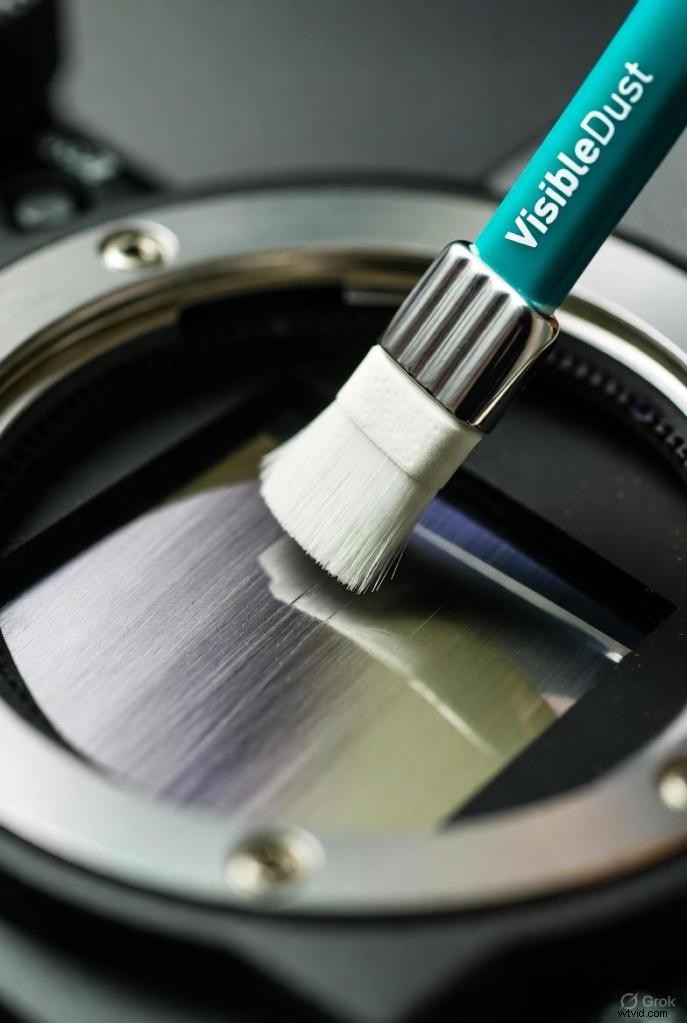
Cinema lenses are built to last, but they’re expensive. Follow these best practices:
- Keep them clean: Use a lens blower, microfiber cloth, and isopropyl alcohol.
- Store properly: Dry cabinet or desiccant packs.
- Check for fungus: Especially in humid climates.
- Service regularly: Calibrate high‑end glass as needed.
- Use protective cases: Pelican cases are a reliable choice.
One time I saw an AC drop a Cooke S4 on concrete; the lens survived, but the AC’s spirit did not.
The Real Secret: Stop Chasing Gear, Start Building Language
Three years of lens anxiety taught me that the best cinematographers can create compelling scenes with a single 50mm prime and a bounce card. The worst obsess over whether their $30k anamorphic set has the “right” character.
Resolution alone doesn’t make something cinematic—performance, mood, and depth combine to create magic.
Your lens is a storytelling tool. Use it to:
- Control perspective: Wide lenses engage; long lenses observe.
- Manage depth: Shallow focus directs attention; deep focus shows context.
- Establish consistency: Stick to a small lens set for visual coherence.
- Break rules intentionally: Change focal length when you want to jar the audience.
Action Plan: Your Next Steps
If you’re starting out:
- Acquire one excellent 35mm or 50mm prime (photo or cine).
- Shoot an entire project with that single lens.
- Learn its personality inside and out.
- Add a second lens only when you can articulate a clear narrative need.
If you’re upgrading:
- Identify your most‑used focal length.
- Invest in the best version you can afford.
- Rent specialty glass for specific projects.
- Build slowly—three great lenses beat ten mediocre ones.
- Test lenses before your shoot day.
- Bring backups of critical focal lengths.
- Learn focus throw and breathing characteristics.
- Check for parfocal accuracy on zooms.
The One‑Liner
Buy less glass, shoot more frames, and remember: Kubrick shot “Barry Lyndon” by candlelight with NASA lenses, and it’s gorgeous—but “Clerks” was shot on whatever Kevin Smith could afford, and it launched a career.
The lens doesn’t make the filmmaker. The filmmaker makes the lens.
See the video below for “Going Home” as an example of Orion anamorphic lenses in action.
FAQs
What are the five Cs of cinematography? Camera angles, continuity, cutting, close‑ups, and composition—foundational principles that work together with lens choice to create cinematic language.
What does the prime lens trinity look like for filmmakers? Typically 35mm f/1.4, 50mm f/1.4, and 85mm f/1.4—fast primes covering wide, normal, and portrait perspectives with excellent low‑light performance.
How does Wes Anderson’s gear influence his style? He uses a 40mm anamorphic on Arricam 35mm film cameras with Cooke S4 primes, creating a consistent, symmetrical aesthetic with one focal length.
Can photography lenses be used for filmmaking? Yes, but they lack manual focus, aperture control, and may produce a different look than cine‑designed glass.
Which lenses are best for low‑light shooting? Prime lenses with wide apertures (e.g., 50mm f/1.8, 85mm f/1.4) and lenses with image stabilization.
Is renting lenses a cost‑effective option? Absolutely—many rental companies offer a wide variety of lenses for projects that don’t require daily use.
How should I care for my lenses? Clean regularly, store in a dry environment, protect from extreme temperatures, and use appropriate cases.
Can I use lenses from different brands together? Some adapters exist, but compatibility varies; research before purchasing.
Do I need to be an expert to use lenses effectively? Not necessarily—practice and understanding of how each lens influences storytelling are key.
Will lens choice affect my film’s mood? Absolutely—wide‑angle lenses convey space, telephoto lenses create intimacy or compression; choose based on desired emotional impact.
What should I prioritize over specs? Story needs, focal length, aperture for depth control, sensor compatibility, and cine‑specific features like T‑stops and geared rings.