The Night Everything Went Dark
We were three hours into shooting Camping Discovery when the farmhouse’s power abruptly vanished—no flicker, just a clean cut‑off. With a crew of eight and roughly forty‑five minutes of battery life left on all our gear, we were staring at a hard truth: having gear isn’t the same as being prepared.
Most film blogs focus on cameras, lenses, and lighting. Few discuss what happens when a location loses electricity, an injury occurs, or a storm rolls in miles from civilization. If you’ve worked on a set long enough, you know the answer: it’s not if something goes wrong, it’s when.
This isn’t doomsday prepping; it’s about maintaining professionalism and crew safety when reality throws a wrench into your schedule.
Disclosure: This post may contain affiliate links, which means we may receive a commission if you click a link and purchase something that we have recommended.
The Problem: We Plan for Creative Challenges, Not Actual Emergencies
Typical pre‑shoot checklist:
- Scout locations ✓
- Create shot lists ✓
- Check weather forecasts ✓
- Pack camera gear ✓
What we often overlook:
- Plan for medical emergencies
- Prepare for power failures
- Stock backup communication tools
- Consider what happens if we get stuck
I’ve seen hands cut on rusty gates (no first aid kit), crews lose cell service and walkie‑talkies die (no backup plan), and crews freeze in sudden cold snaps (no proper layers). The common thread? Assuming a “professional location” equals professional safety.
Remote sites, abandoned buildings, rural areas, and winter shoots are inherently unpredictable. In such environments, the difference between a smooth day and a costly incident can hinge on a single overlooked detail.
The Underlying Cause: Production Preparedness Isn’t Sexy
Let’s be honest: emergency preparedness rarely makes the highlight reel. Creatives focus on shots, not survival; budgets are allocated to gear, not first aid supplies. The instinct to skip “what if” scenarios is understandable when you’re already over budget.
But most of us haven’t received formal training for location emergencies. Film school teaches the 180‑degree rule, not how to treat a burn from a hot light. Production handbooks cover call sheets, not how to handle anaphylaxis.
Assuming the location manager, producer, or the ever‑organized PA has it covered is a dangerous shortcut.

The Solution: Build a Filmmaker’s Emergency Location Kit
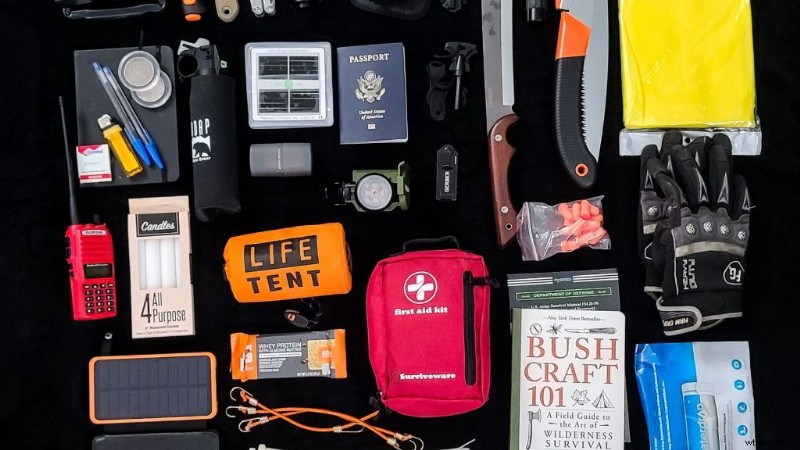
After the “Camping Discovery” blackout—where we finished a scene with car headlights and phone flashlights—I assembled my Filmmaker’s Emergency Location Kit. It lives in my car, travels to every shoot, and has saved me more than once.
It’s not a 72‑hour apocalypse kit; it’s a compact, practical setup addressing the emergencies filmmakers actually face:
- Power failures
- Equipment malfunctions
- Medical situations
- Weather exposure
- Communication breakdowns
Think of it as insurance you can carry in one backpack.
Implementing the Solution: What Actually Goes in the Kit
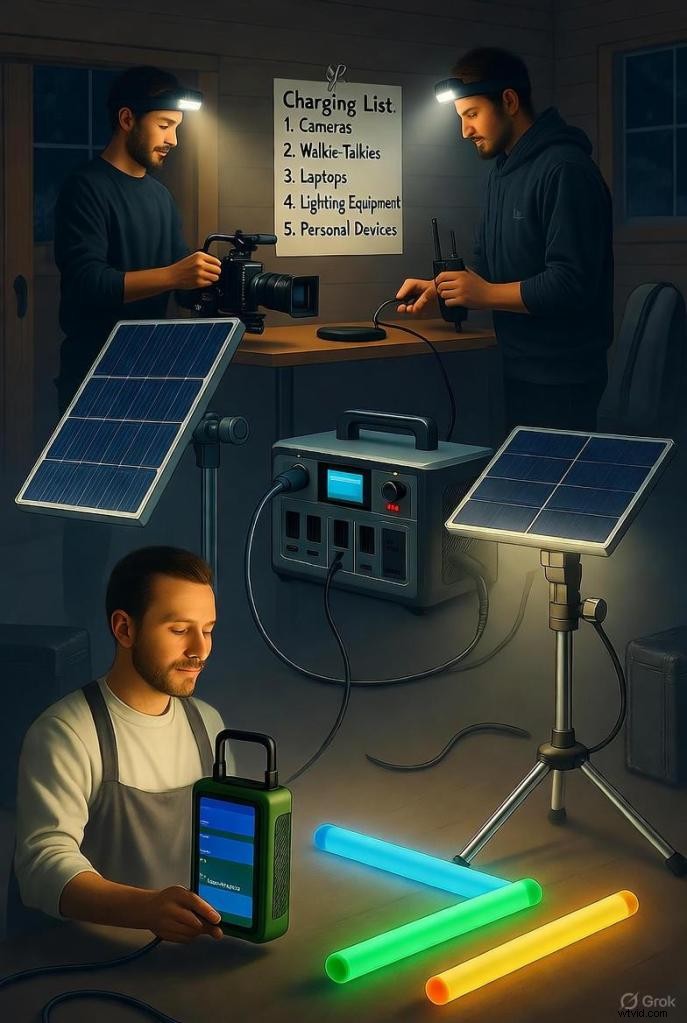
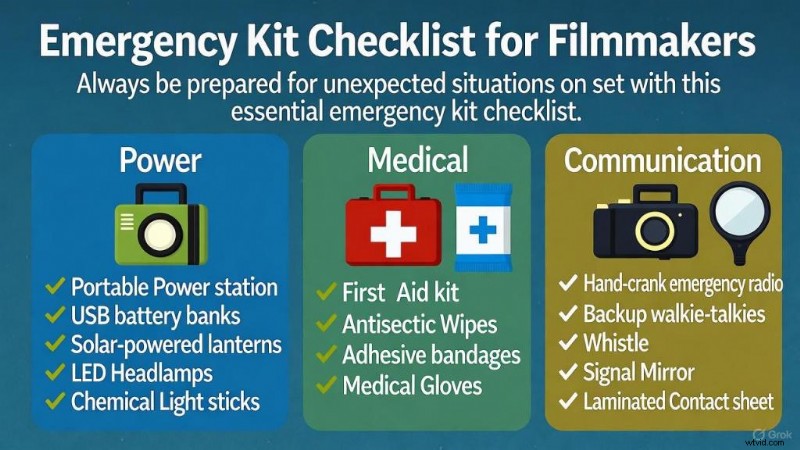
Power & Lighting Backup
Locations lose power. Batteries die. Generators fail.
What I Pack:
- Portable Power Station (e.g., Jackery or Goal Zero)
- Charges camera batteries, phones, and runs small LED panels
- Saved us during “Married & Isolated” when a blown fuse locked the breaker
- USB Battery Banks (minimum 20,000mAh each; bring two)
- Phones, tablets, small LED lights
- Production assistants appreciate a charged phone at hour ten
- Solar‑Powered Lanterns (LuminAID PackLite or similar)
- Inflatable, rechargeable, lightweight
- Provided fill light on “The Camping Discovery” and boosted morale after sunset
- LED Headlamps (one per crew member)
- Hands‑free lighting is essential when moving gear or working in the dark
- Choose units that last beyond two hours
- Chemical Light Sticks
- Mark exits, hazards, equipment cases in darkness
- Visible from far away, lasting 12+ hours
Pro Tip: Keep a laminated list of charged items. Check it before every shoot. I learned this after arriving with three dead battery banks.
Communication When Everything Fails
Remote locations mean no cell service; walkie‑talkies die; crews can become separated.
What I Pack:
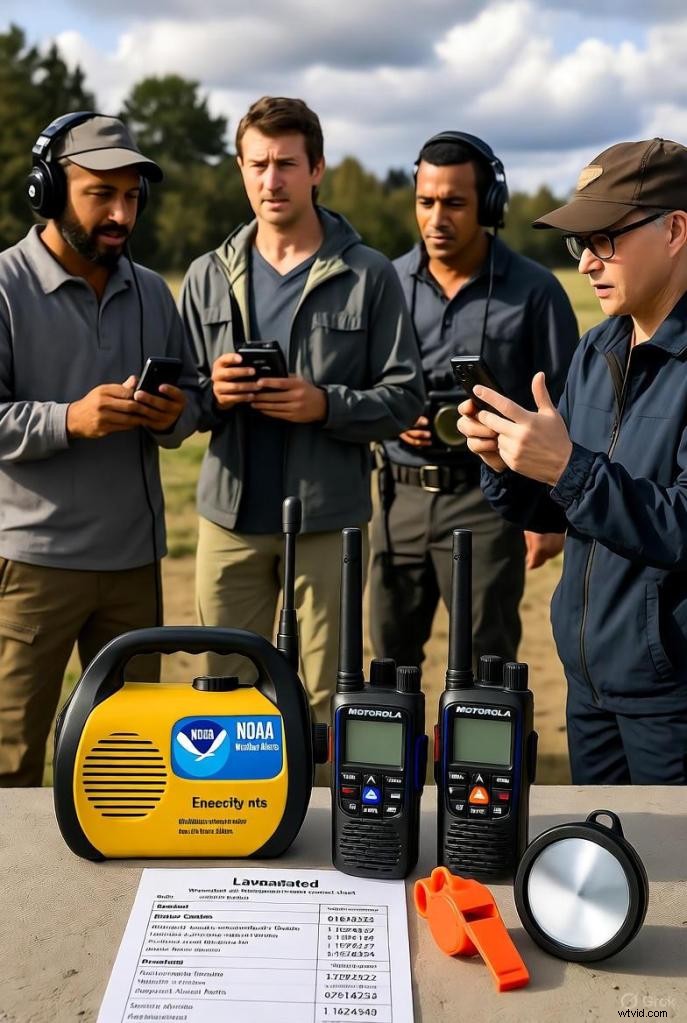
- Hand‑Crank Emergency Radio (with NOAA weather alerts)
- Essential for knowing if a storm is approaching during exteriors
- During “Elsa,” it warned us of an incoming thunderstorm, giving us 20 minutes to secure equipment
- Backup Walkie‑Talkies (extra batteries included)
- Keep them separate from your primary set of walkie‑talkies
- I use Motorola Talkabouts—affordable, reliable, and widely available
- Whistle & Signal Mirror
- Looks odd until someone wanders off in the woods (it happened)
- Saved us on “Watching Something Private” when a crew member got turned around scouting
- Printed Contact Sheet
- Laminated, waterproof list of emergency contacts, location address, and nearest hospital
- When phones die, you can’t rely on Google to find urgent care
First Aid That Actually Matters
Film sets feature sharp equipment, hot lights, heavy gear, and tired crews. Injuries happen.
What I Pack:
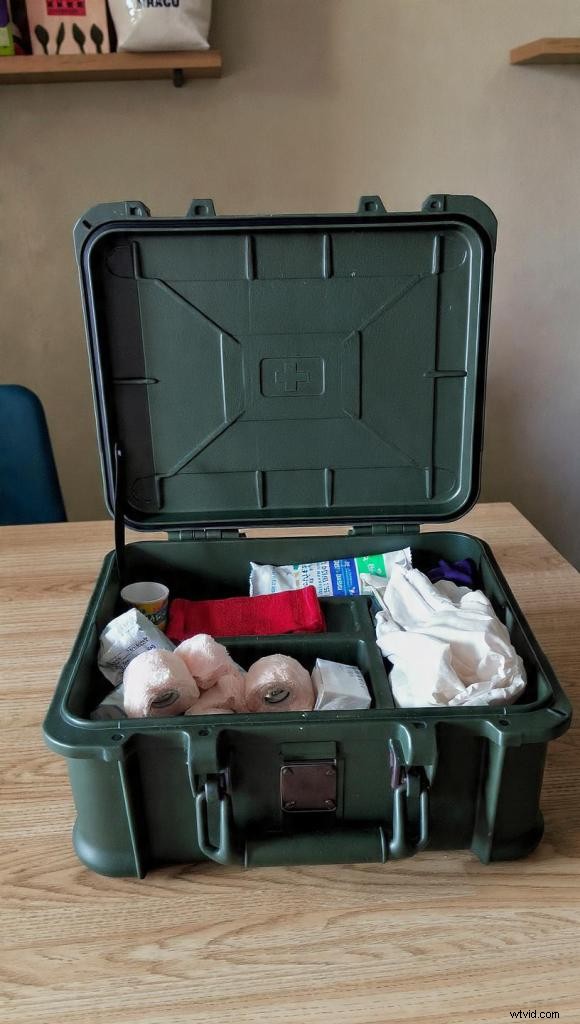
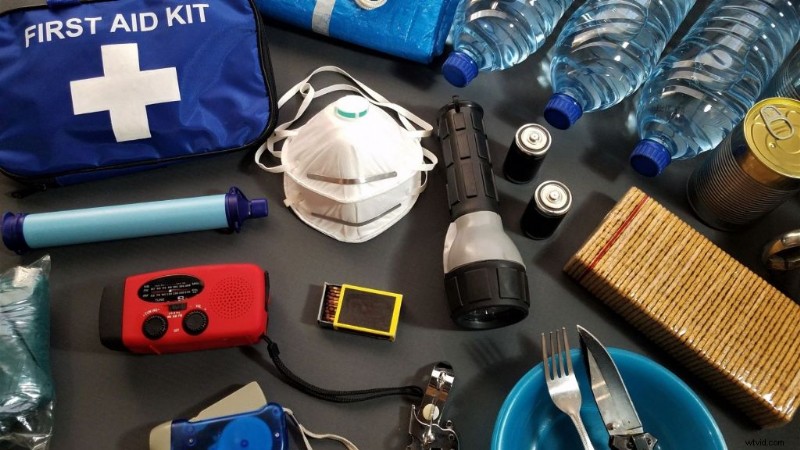
- Comprehensive First Aid Kit (more than basic band‑aids)
- Gauze pads, medical tape, scissors, antiseptic wipes, antibiotic ointment
- Pain relievers (ibuprofen, acetaminophen), antihistamines, burn gel, tweezers, safety pins, elastic bandages, instant cold packs
- Trauma Shears
- Cut through clothing, tape, or rope quickly when an emergency arises
- EpiPen or Equivalent (if anyone on crew has severe allergies)
- Ask during pre‑production; keep it accessible when needed
- CPR Face Shield & Gloves
- Hope you never need them, but be grateful they’re there
- Emergency Blanket
- Reflective, compact, retains 90% of body heat
- Used on “Blood Buddies” when an actor shivered between takes in cold rain
Take a basic first‑aid course. Knowing how to use these supplies is far more valuable than having them.

Weather & Shelter Protection
Weather can change rapidly, turning a pleasant location into a miserable one. Crew morale suffers when people are cold, wet, or exposed.
What I Pack:
- Emergency Ponchos (one per crew member + extras)
- Compact, inexpensive, keeps everyone dry
- Used on “Chicken Surprise” when unexpected rain threatened sound gear
- Emergency Bivvy/Tube Tent
- Compact shelter for staying warm and dry or protecting equipment
- Hand Warmers (chemical heat packs)
- Keep crew comfortable during cold shoots; hand them out like candy in winter
- Work Gloves (multiple pairs)
- Protect hands when moving sharp or rough equipment; essential for grip work in cold weather
- Duct Tape & Paracord
- Emergency repairs for everything—rain covers, sandbags, C‑stands, wardrobe malfunctions
Food & Water
Long shoots without facilities can sap focus and morale.
What I Pack:
- Water (minimum 1 liter per person)
- Collapsible containers take up zero space when empty
- Include purification tablets for truly remote locations
- High‑Calorie Emergency Bars
- Backup fuel if you’re stuck; 3600‑calorie bars last for years and won’t melt in the trunk
- Protein Bars & Trail Mix
- Real snacks for crew energy between meals; replace every few months
- Can Opener
- If you pack canned food, you need a reliable opener—no screwdriver miracles
Survival Tools You’ll Actually Use
- Multi‑Tool (Leatherman or similar)
- Pliers, knife, saw, screwdrivers, wire cutter, bottle opener—everything you’ll need
- Headlamp + Backup Batteries
- Already mentioned, but hands‑free light changes everything
- Sewing Kit
- Quick fixes for ripped gear bags, wardrobe, or broken straps
- Zip‑Lock Bags (various sizes)
- Waterproof electronics, organize small items, collect emergency water
Organization: What Holds It All Together
Get a Good Backpack (30‑50L Capacity)
I use an Osprey pack for durability, comfort, and ample compartments. North Face and Kelty are solid alternatives.
The key: you need to grab it and run. Don’t bury your kit in a production truck under C‑stands and apple boxes.
Use Clear Zip‑Lock Bags Inside
Group related items together:
- First aid supplies in one bag
- Power/charging gear in another
- Food/water in a third
- Tools in a fourth
Label them. When a crew member is bleeding or the power dies, you don’t want to sift through fifty loose items.
Real Stories: When This Kit Saved Shoots
Going Home – Power Failure
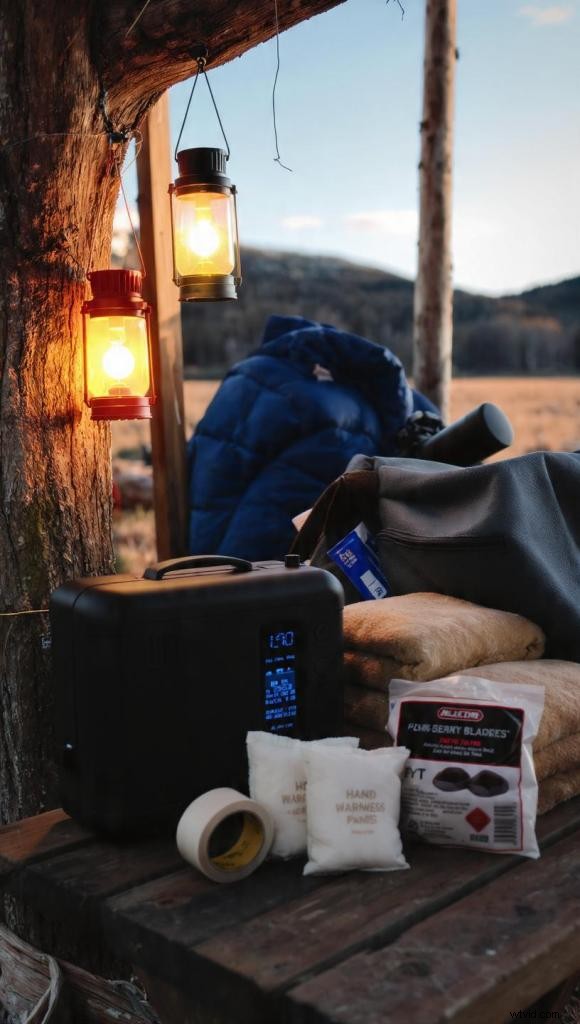
Lost power at a remote location. I used my portable power station to finish essential coverage and LED lanterns for basic lighting. The footage wasn’t what we planned, but it was usable. Without backup power, we’d have wasted a full shoot day.
The Camping Discovery – Weather Turn
Temperature dropped twenty degrees after sunset. Hand warmers and emergency blankets kept the crew functional. Without them, we’d have wrapped early and missed our best shots.
Chicken Surprise – Rain Surprise
Sudden downpour mid‑shoot. Emergency ponchos protected crew and equipment until we could pack up. Duct tape sealed a torn equipment cover.

What This Kit Won’t Do
Let’s be clear:
- This won’t replace proper location scouting
- It won’t fix terrible planning
- It won’t make up for skipping safety meetings
- It won’t protect you from every possible disaster
What it will do: give you options when things go sideways. On independent film sets with tight budgets and frantic schedules, having options can mean the difference between finishing your shoot and heading home empty‑handed.
The Bottom Line
Most of this kit’s contents will never be used, and that’s fine. But when you do need it—someone’s hurt, the power’s gone, the weather turns—you’ll be the person who saved the shoot, not the one who had to cancel.
I’ve experienced both sides. Being prepared is the safer choice.
Your crew feels safer. Your shoots run more smoothly. And when something inevitably goes wrong (because it always does), you’ll handle it like you knew it was coming all along.