
Everybody wants full-frame, but maybe not all the time. The Canon C700 FF’s versatility in sensor size options gives you everything you’d want and more.
These days, the sensor size of each camera system seems to be one of the more hotly debated aspects of each new spec sheet. The ability to shoot on a full-frame sensor is almost an instant sell for many shooters, due to the beautiful depth of field, low-light capabilities, and other desirable image characteristics.
The full-frame sensor size hasn’t been available in digital cinema cameras for a while (outside of the DSLR world),but full frame is finally making its way into digital filmmaking in a big way. Canon recently announced its entry into the full-frame cinema camera game with the C700 FF. Likely an answer to the Sony Venice (not to mention more recent releases from RED, and the ARRI LF), the C700 FF can switch between sensor sizes in-camera.
In this video from ShareGrid, Brent Barbano shows us how the versatility of this camera changes the game.
As you can see, there are quite a few benefits to the Canon C700 FF. (Beyond the fact that it looks fantastic.) If you’re not initiated, here is the spec list for the camera:
- 5.9K Full-Frame CMOS Sensor with DAF.
- EF-Cinema Lock Type Mount.
- Dual Pixel AF, Triple DIGIC DV 5.
- XF-AVC and ProRes Recording to CFast 2.0.
- Internal Full-Frame up to 60 fps.
- Internal 4K/Super35 Crop up to 72 fps.
- Internal 2K/Super16 Crop up to 168 fps.
- Selectable Gamma and Log Curves.
- ACES Support.
- External Raw Recording Option.
The Options The C700 FF Gives You
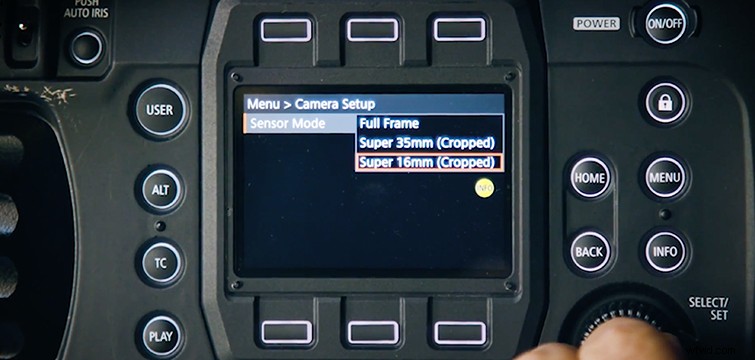
One of the most attractive aspects of the C700 FF is the ability to change between sensor sizes in camera. Specifically, you can change between full-frame and super 35, and impressively, you can even change to super 16.
Why is this helpful? Well, there are many reasons, but it gives you a ton of different options. Not all lenses are capable of covering a full-frame sensor image circle. Many modern lenses are meant for a super 35 sensor, as that has become the most common with digital cinema cameras. However, many vintage lenses and some of the newest ones are capable of using with a full-frame sensor. Being able to change between them gives you the option to basically use any lens you can think of.
Adding the ability to shoot with Super 16 opens up a ton of possibilities with lenses as well (especially some really interesting vintage lenses).
How It Affects The Way You Shoot
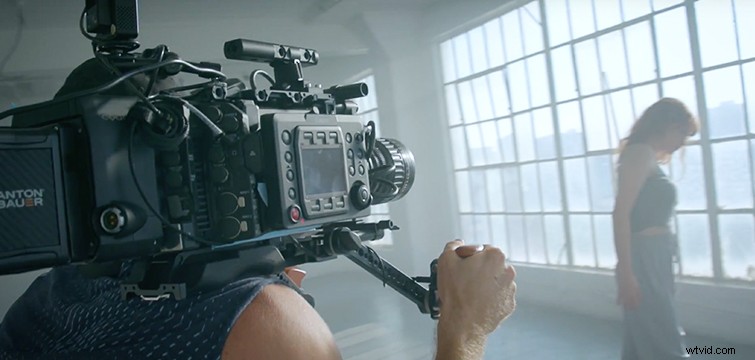
If you’re not familiar, sensor size affects a lot of aspects of shooting. A larger sensor will yield a much shallower depth-of-field, it will have better low-light capabilities, and (among many other image characteristics) on a more practical level it will change the field of view for specific focal lengths vs. a different sensor size — i.e. crop factor.
So, for instance, being able to switch between sensor sizes makes it much easier to quickly swap between different crop factors, yielding tighter/wider images based on your lens. If you’ve ever shot with the Sony a-series cameras, most of which have the ability to switch between full-frame or APS-C mode, you know how beneficial that can be when shooting. Your 50mm lens can quickly punch into a tight shot with the touch of a few buttons.
In the ShareGrid video, the filmmakers switched between full-frame vintage canon K35 lenses to more modern zoom lenses by switching the sensor size.
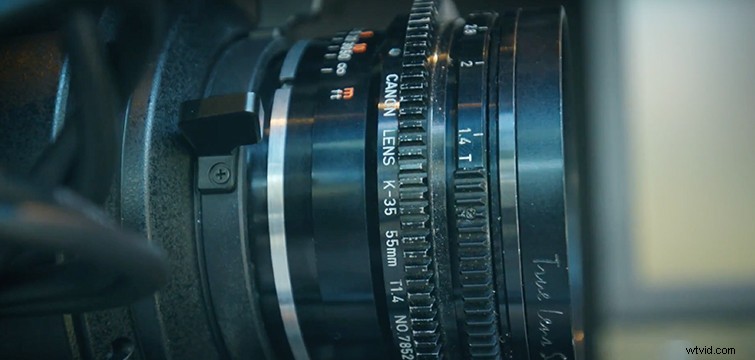
Sometimes, you want the most dreamy, shallow depth of field, and sometimes you want to sharpen things up a bit. The full-frame sensor will yield that shallow depth of field, but of course, switching over to S35 will change that up a bit if you want.
I love this new trend of full-frame cinema cameras, and I also love when the camera manufacturer gives us all the options we might want.