
We talked with the editor of The Disaster Artist about what it’s like telling a true story that is simultaneously hilarious, inspiring, and bizarre.
All images via A24.
One of the strangest cultural phenomena to come out of the 21st century is the cult god Tommy Wiseau. The story of how the “worst movie ever made” found its fanbase among cinephiles defies all logic, but here we are with an award-winning movie about the making of The Room.
After talking with the editor of The Disaster Artist, I learned that one of the most fascinating aspects of the film’s story is its reception. Even before the movie debuted, there were expectations the team was fighting to meet. On one hand, you have the die-hard fans of The Room who know the source material by heart and want to see it honored and respected. On the other hand, you have the mainstream audience who might not know anything about the legendary film. The production team met the challenge head-on, and the editor, Stacey Schroeder, was a big part of telling the story in a respectable way that honored the source material while entertaining audiences.
Portraying Tommy Wiseau
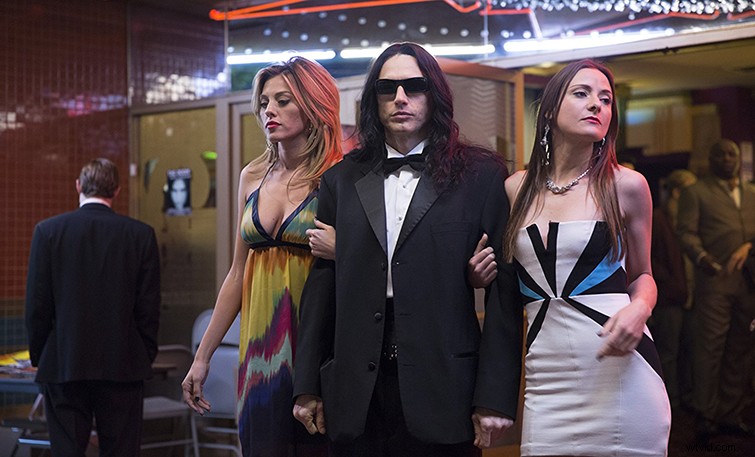
One of the most admirable accomplishments of the film is that it nails Tommy Wiseau’s redeeming qualities. For being such a divisive figure in the filmmaking community, he comes across as a sympathetic-yet-ambitiously flawed character. However, this was no easy feat. Schroeder and the team behind the film were careful to balance comedy, drama, and cringe:
The film successfully makes a questionable, sometimes-rude character likable — a character that has gained a massive following since The Room‘s initial release in 2003. Like any piece of pop-culture with a substantial following, bringing the characters to the screen came with challenges.
However, reception from fans everywhere has been nothing but positive for the film’s strong narrative and comedic qualities.
The Film’s Initial Reception

The premiere at the 2017 SXSW Film Festival in Austin, Texas, was the first chance Tommy Wiseau got to see the film — along with several hundred other people. So, for a movie about someone making one of the worst movies ever, it’s hard not to go into the theater thinking about the titular character in a comedic and (frankly) insulting way. Schroeder and company, however, were confident that the story wouldn’t upset Wiseau:
The filmmakers described the version they showed at the initial screening as a work in progress. The premiere would be a moment of truth for Schroeder and crew, eager to see how Tommy (and the general public) would react. Knowing that most of the audience at SXSW would probably know of or have some appreciation for The Room helped, but they still didn’t know what to expect. After the viewing, they got both critical praise and appreciation from the audience. After this screening, Schroeder and her team made a few changes to the 90-minute, film including some additional titles and a few new cuts:
Exposition for a New Audience
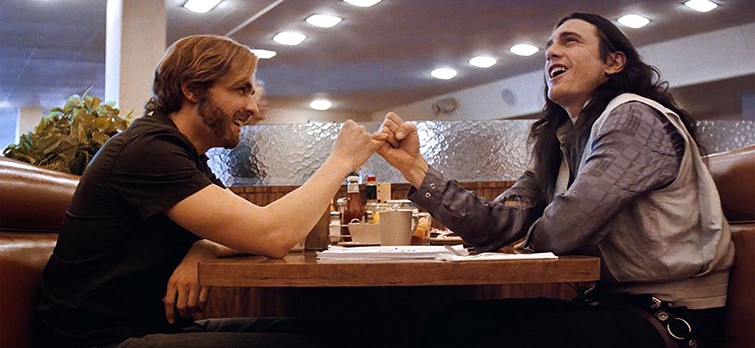
If you haven’t seen the film, the first sequence you see is a series of interviews with big-name celebrities talking about the first time they saw The Room. It’s a short, sweet, somewhat-humorous way to prep the audience for the story they are about to watch. But, the sequence is a masterful example of how to balance real life with a fictional world.
Sources of Inspiration
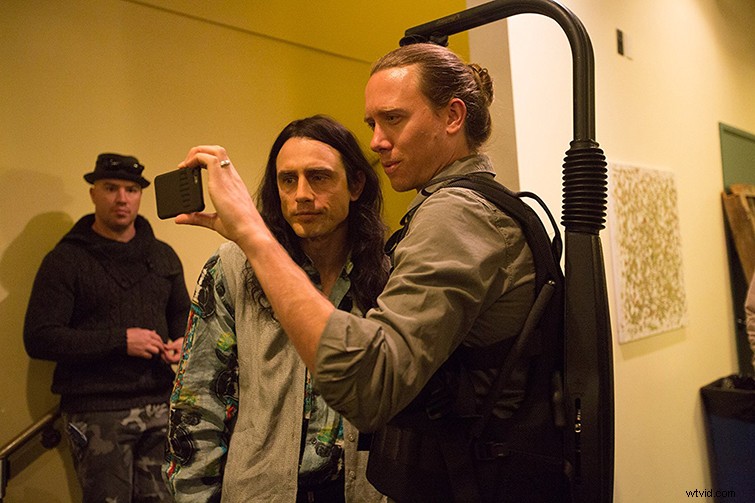
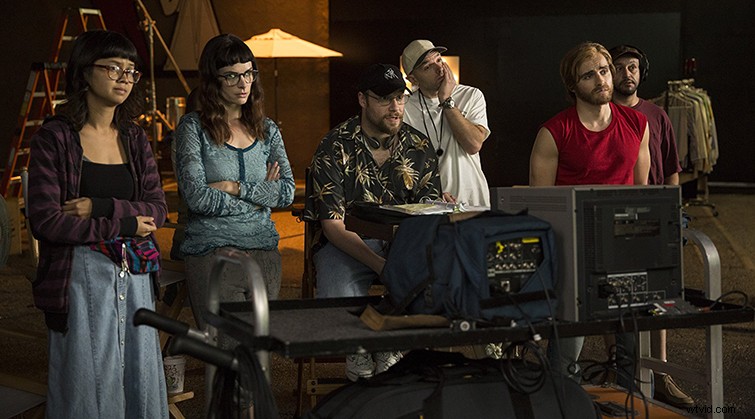
One of the most interesting aspects of The Disaster Artist is how the filmmakers shot it. The camera moves in and out of fake movie scenes and setups, so at some points, you’re not sure if you’re watching the film-within-the-film or the film you bought a ticket to see. It’s a wonderful blend of documentary-style shots and dialogue. Schroeder discussed the cutting of some of the long-take shots:
In order to build tension, Schroeder decided not to cut certain scenes in the film. She wanted the audience immersed in the extremely tense and awkward moment while Tommy and Greg, or Tommy and the crew, argue about what’s going wrong with production.
This is filmmaking at its finest. The DP shoots a scene one way, then the editor determines what makes the most sense for the emotional weight of the story in this moment and lets it play out. This scene, in particular, is so awkward and hilarious that you simultaneously want it to end and keep going. What a story, Stacey, ahah.
Editing Improv
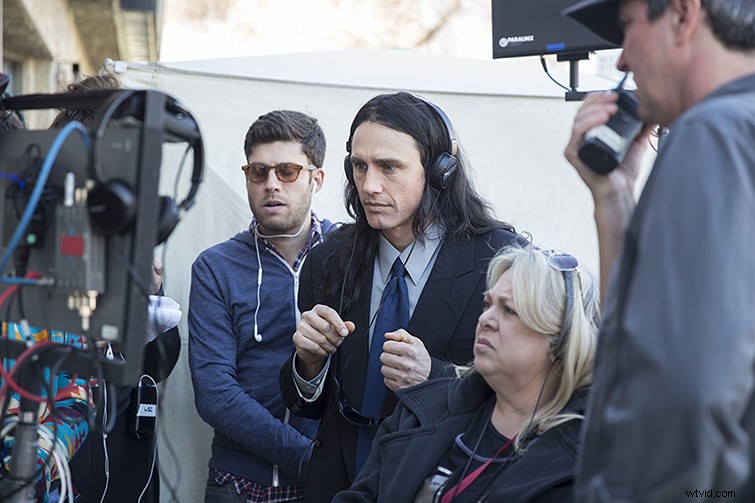
As you might expect in a movie filled with comedic actors, Schroeder and her team had to sift through plenty of improvisation. As an editor (especially cutting Franco, Rogen and Goldberg), you’re going to have to find the jokes that really land, while still telling your story.
So, naturally, I asked her which of the darlings she killed was her favorite:
Mockumentary vs. True Story
Having worked on projects like Popstar: Never Stop Never Stopping, Schroeder found that the footage and editing flow of this project couldn’t have been more different. Instead of endless talking heads or short bits, she had long, emotionally weighted scenes that had to hit very specific notes.
On which film was harder to edit for which reasons, Schroeder had the following to say:
Advice for New Editors
There you have it: keep working and explore your passions.
This movie was edited on Avid Media Composer 8.1.