
Explore WandaVision‘s meta look at the making of television, franchise crossovers, and setting up the future of Marvel Studio’s films and series.
The first of Marvel Studio’s Disney Plus original series has concluded, and what a start. Here are seven interesting facts from behind-the-scenes.
*Obviously, spoilers ahead. You’ve been warned.
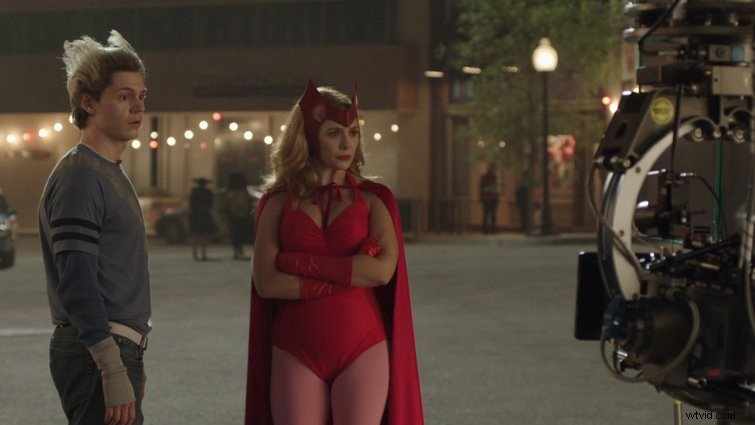
1. Captured on One Camera System with Forty-Seven Different Lenses
WandaVision was shot on the ARRI ALEXA LF in 4K. To capture the look of the various decades, the production relied on both new cine lenses and plenty of vintage glass.
In an interview with Film School Rejects, cinematographer Jess Hall talked about the massive undertaking of shooting a show like WandaVision.
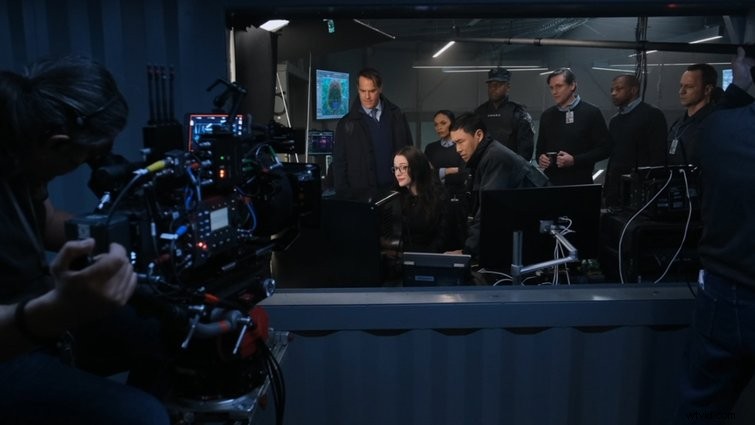
2. The First Episode Was Filmed Before a Live Studio Audience
Also revealed in the same interview, Hall talked about the challenge of filming the single-take first episode in front of an audience.
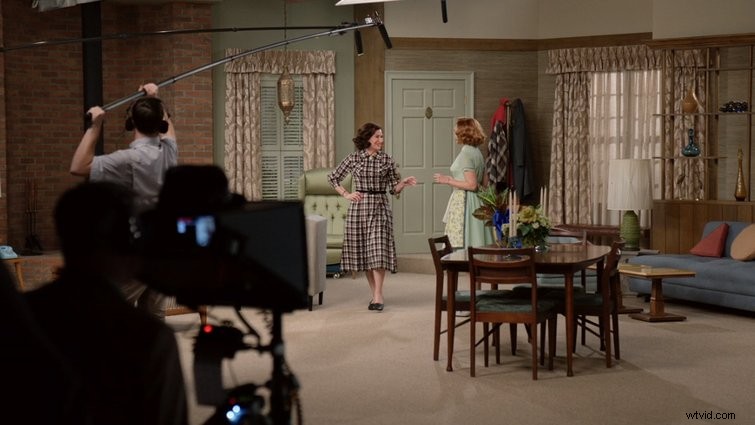
You can get a glimpse into the making of the series and see the live audience in Marvel Studio’s ASSEMBLED now streaming on Disney Plus.
3. Agatha Was Filmed All Along
“Agatha All Along” is a straight up bop. That song penetrates the mind and stays there forever. The catchy fake show title sequence was filmed throughout the series, usually at the end of each day, since all the characters were still on set in the appropriate costume.
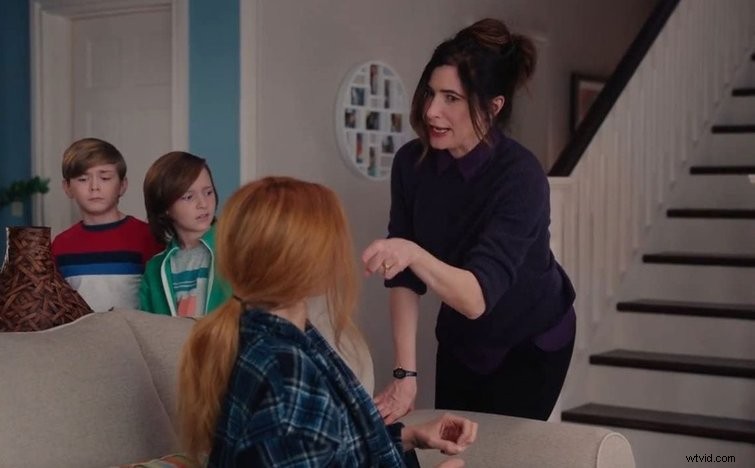
Director Matt Shakman talked more about the sequence to Entertainment Weekly:
4. “Agatha All Along” Was Written by the Couple Behind Frozen‘s “Let It Go” and Coco‘s “Remember Me”
“Agatha All Along,” and all of the WandaVision title songs, were composed by musical masterminds Kristen Anderson-Lopez and Robert Lopez.
Robert Lopez wrote music for Avenue Q, The Book of Mormon, and with his wife they wrote songs for the Finding Nemo musical, Frozen, Coco, and Wreck-it Ralph.
WandaVision‘s director Matt Shakman actually went to college with Robert Lopez.
Anderson-Lopez is credited for coming up with the lyrics after taking a shower. In an interview with Variety, her husband Robert says:
Lopez began putting the words to music, paying homage to spooky themes from The Munsters and The Addams Family, as well as from 1971’s Willy Wonka & the Chocolate Factory.
As for the different feel to each of the title themes, Lopez also credits Adult Swim’s Too Many Cooks as inspiration.
5. The Specific TV Shows Referenced Were Chosen Based on Family Dynamics
Each of the shows referenced in the 50s through 00s were specifically chosen because they were family sitcoms, and Wanda’s grief forces her to search for her missing family.
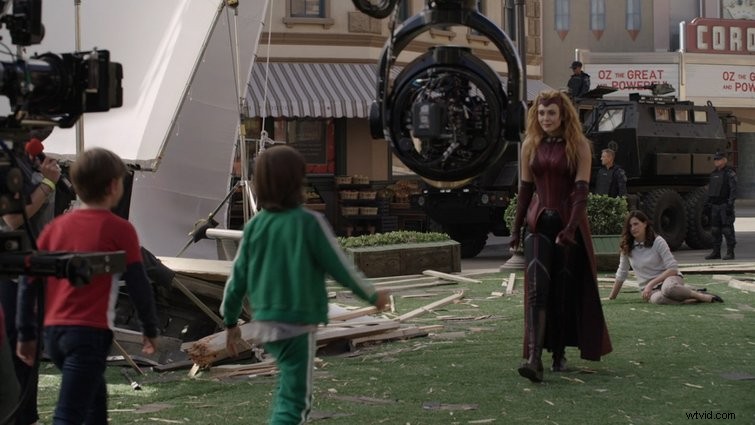
In his interview with Entertainment Weekly, Matt Shakman says,
6. Make-up and VFX Artists Used Golden Age of Television Tricks to Nail the Black and White Look
Throughout production of the films featuring Vision, Paul Bettany would be painted red for shoots, with digital elements added in post.
In the early episodes of WandaVision, the character is only seen in black and white. The VFX artists went over to the colorists with footage from the previous films to test the look, and they realized that Vision’s skin color didn’t properly crossover into black and white.
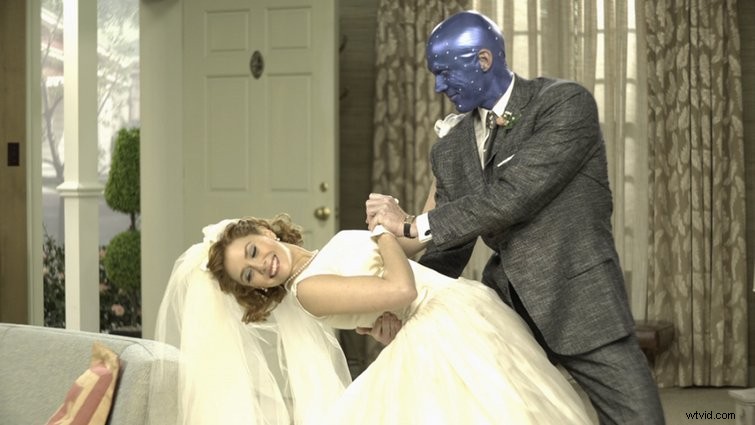
To adjust and get the proper color, Bettany was painted blue for the first two episodes.
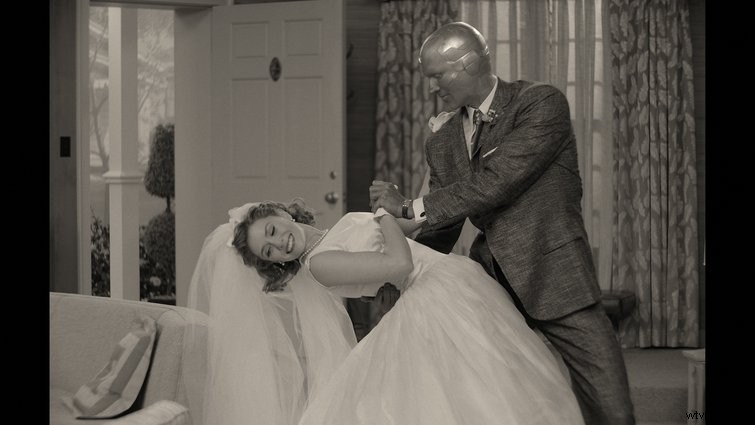
In black and white, the color looks as if it were red. This is a tried-and-true method from golden era television, when actresses would wear blue lipstick on set.
7. VFX Artists Studied the Effect of Magnets on CRT Televisions to Create the Look of The Hex
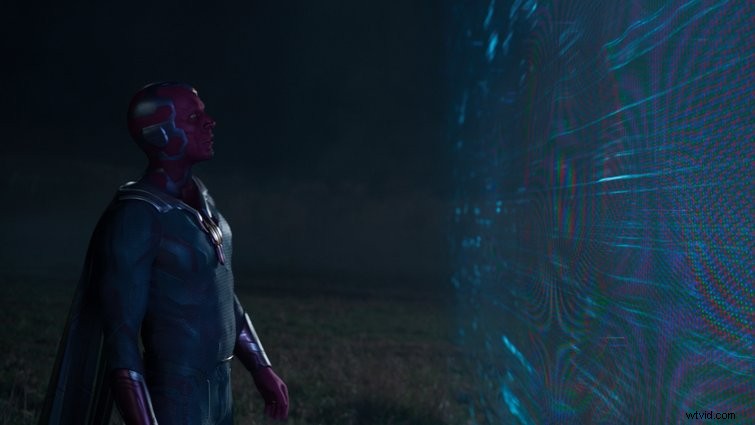
The Hex is invisible to the eye in the earliest episodes until it’s revealed that Wanda has created her own makeshift television studio out of the city of Westview.
To visualize this, VFX artists looked at television static, pixelation, and CRT screens to find the perfect look. The final look is a combination of different effects, with character interactions being inspired by the effect a magnet has on older CRT screens.
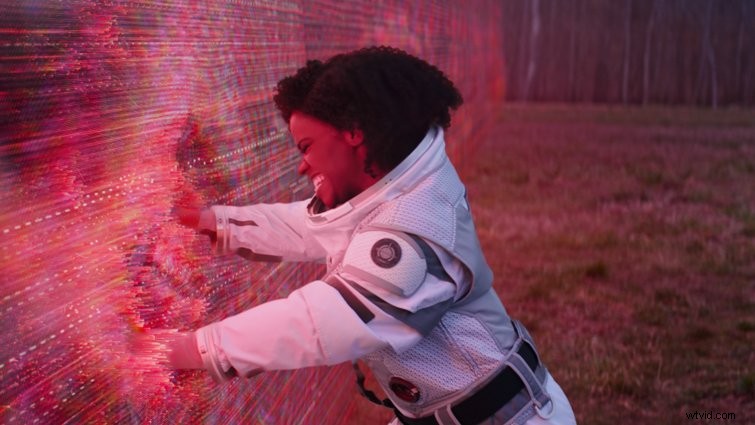
Want to recreate the look of The Hex? Check out this tutorial from Todd Blankenship on creating a similar look from the film Annihilation. Just swap out the liquid effects with some glitches.
Share this story:
Want to share these facts with friends? Here’s a Instagram carousel I put together to share on your stories.
More Marvelous articles like this:
- The Cameras and Lenses Behind the Marvel Cinematic Universe
- The Cameras and Lenses Behind the Marvel Cinematic Universe – Phase Two
- The Cameras and Lenses Behind the Marvel Cinematic Universe – Phase Three
- Exclusive: Designing Wakanda and the Amazing Sets of Black Panther
- Set Photographer Matt Kennedy on Shooting for Marvel and More