
Rotating roles — an intimate lesson in how multiple directors can use multiple filmmaking styles to create one vision.
In the roughly two decades since Danny McBride, Jody Hill, and David Gordon Green all attended The University of North Carolina School of the Arts together, the three filmmaking writers, actors, and directors have cemented themselves as some of the brightest minds in high-minded dude-comedy.
From some of their early indies like The Foot Fist Way to big budget features like Pineapple Express, the trio — who each have successful careers of their own — have stayed close, collaborating on several HBO series, including Eastbound & Down, Vice Principals (excluding Green), and their latest: The Righteous Gemstones.
For those who haven’t caught the first season of The Righteous Gemstones, the HBO comedy series following a dysfunctional family behind a televangelical megachurch empire (which was just picked up for a second season) is perhaps the trio’s greatest work, yet. Originally conceived by McBride, he, Hill, and Green all co-executive produce the series, as well as share directing duties across episodes.
Hill and Green have rotated directing roles in the past on Eastbound & Down; however, for Gemstones, Danny McBride was given credit for directing the pilot of the project he created. It’s interesting to watch Gemstones from a filmmaking/directing perspective for many reasons, but this story-behind-the-story of rotating directors, and their individual styles, is pretty fascinating — very informative for aspiring comedy filmmakers.
Trust and Familiarity
In an interview with McBride, Hill, Green, and frequent collaborator, writer, and star Edi Patterson (who plays Judy Gemstone), Green talks about how much trust must go into a collaborative project — and how they’ve been able to keep a core group together to keep things familiar and focused. Green states the following:
This is especially true when taking on the directorial role in regards to an episodic series like Gemstones, where the director is ultimately just one cog in a much bigger machine, tasked with realizing the full vision of a nine-episode series.
Decision-Making in Directing
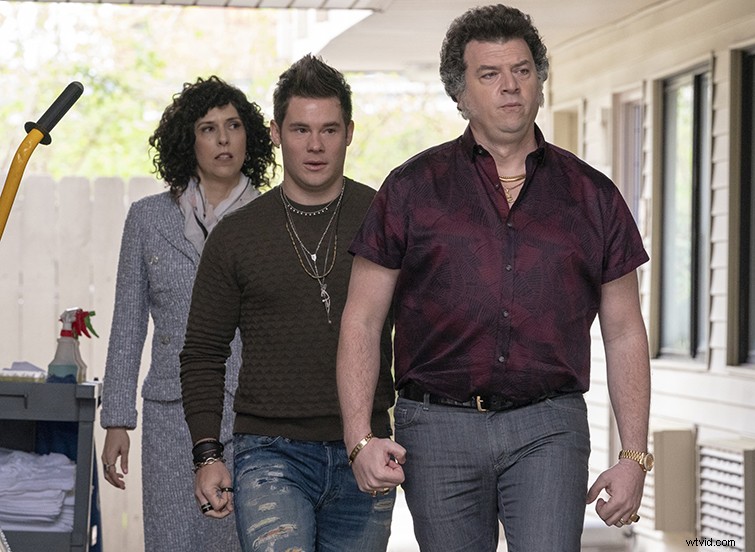
When you watch Gemstones, it’s possible to reverse engineer some of the directorial decisions that clearly had to be made episode to episode. First off, the show looks to be in the same single-camera cinematic style of their earlier works like Eastbound & Down and tracing back to The Foot Fist Way, which becomes almost quasi-documentary at times.
This means decisions about which shots to shoot steady on a tripod, or more loose and free-roaming — whether on a Steadicam, a gimbal, or handheld. The camera and shot decisions also tend to change as the narrative calls for it, staying wider and stationary for some of the big sets and megachurch services to more close-up and intimate in the more raw moments between family members. (Here’s a good article on the best options for smooth — and not so smooth — “handheld” options.)
McBride’s pilot episode feels much more like a movie with big camera moves, as it sets the world and reveals the spectacle contained in the Gemstones’s megachurch and lavish compound. Meanwhile, once Green takes over for the second and third episodes, we start to get more shaky and intimate, as the camera moves around like a character (at times) in scenes between family members to build the narrative tension of the series.
Directing Comedy and Action
Hill’s direction — he has the distinction of directing McBride the most in his career — comedy and action quickly come into play, requiring a deft touch. Similar to HBO’s other hit Barry, there are plenty of high-octane sequences thrown in that spur much of the comedy. From gunshots to car crashes, Gemstones finds a good balance as all three directors are left to film complicated stunt sequences, as well as choreograph elaborate stage productions and dance numbers.
The Challenges of Episodic
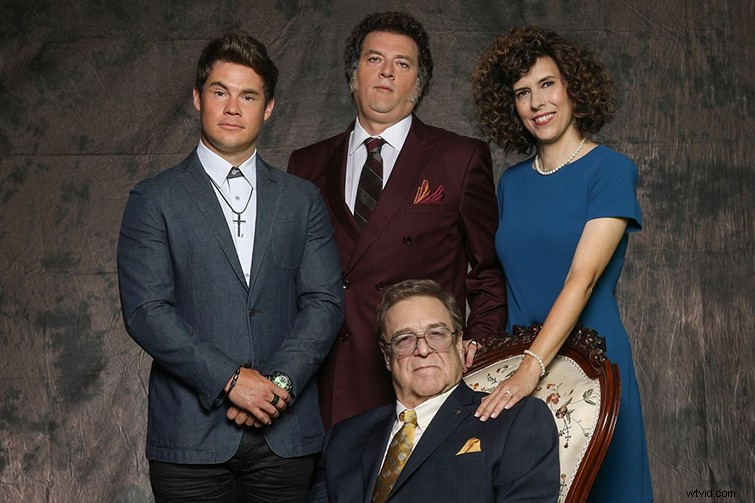
It’d be fair to say that the majority of television shows, or other episodic content, rely on multiple directors. The directing role is a difficult, laborious task, so it makes sense to spread the work around. However, this creates challenges.
As Hill, Green, and McBride would undoubtedly tell you, it really comes down to having a strong vision, a solid team, and great trust and communication. Directors may have license to bring in their own styles and decision-making processes, but overall, they’re there because they’ve subscribed to a bigger vision — one they’re trying to remain faithful to.
Gemstones is a show that feels much more epic than the trio’s previous collaborations, with a big HBO budget, and exploring important themes such as family, friendship, and religion. However, while the episodes may vary stylistically, they each do a great job of building a show that has already proven itself a success among critics and audiences alike.