
As new players and tech developments enter the field, let’s explore what the future will hold for virtual production.
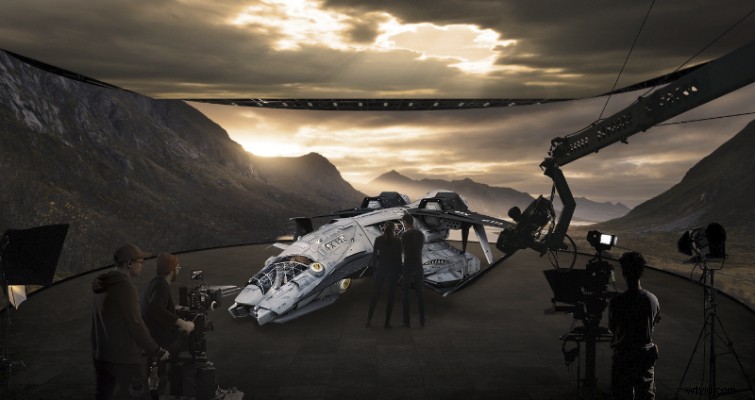
Virtual production has evolved from a buzzword to a core production methodology. At its heart lies the “volume” – a bank of high‑resolution LED panels that work in tandem with camera tracking and real‑time game engines. Volumes act as the modern backdrop, offering filmmakers unparalleled flexibility and creative control.
So who is leading the charge? Marvel’s recent use of a volume in Love & Thunder marked their first full‑scale embrace of the technology. Actors Chris Hemsworth and Tessa Thompson praised the immediacy and realism that volumes deliver, compared to traditional blue‑screen work.
New Volumes
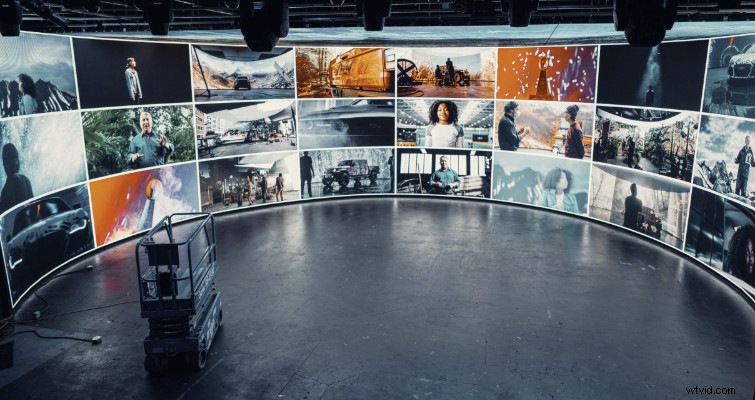 Vū Technologies’ new volume in Tampa Bay. Image © Vū Technologies.
The race to build the largest, most sophisticated volume is heating up. In South Korea, CJ ENM’s "The Wall" now boasts a 20‑meter diameter, 7‑meter high curved panel, alongside a 20‑meter straight wall 4 meters tall. These screens utilize Samsung’s latest LED technology, pushing the limits of resolution and color fidelity.
Pinewood Studios in the UK, built by ILM’s StageCraft, has upgraded its facilities with a larger, higher‑resolution volume that delivers smoother wall‑to‑ceiling transitions and better in‑camera lighting. ILM’s Senior Vice President Janet Lewin notes that the new stage “provides an end‑to‑end virtual production service for directors, cinematographers, and VFX supervisors.”
Vū Technologies continues its rapid expansion. The new Orlando studio spans 32,000 square feet and will host the largest LED volume in the North American network, featuring three on‑site stages. President Jon Davila envisions a future where on‑location shoots and green‑screen rigs become relics of the past, replaced by the creative freedom of virtual production.
Better Screens
 Samsung’s new “The Wall” micro‑LED technology. Image © Samsung.
Samsung’s “The Wall” micro‑LED screen offers a 25% wider color gamut than sRGB and covers 99% of the DCI‑P3 standard, ensuring cinema‑grade accuracy. Its short pixel pitch enables close camera placement without loss of detail, while a 7,680 Hz refresh rate minimizes flicker and moiré, addressing a long‑standing limitation of virtual production.
These advancements allow filmmakers to shoot intimate close‑ups and complex camera movements with confidence, making the volume a versatile tool for any production scale.
Epic’s Unreal Engine
Unreal Engine 5 has become the industry’s go‑to real‑time platform, enabling instant visual feedback and on‑the‑spot revisions. Its MetaHuman technology simplifies the creation of realistic digital actors: users can select a base model from a library, then refine the mesh with intuitive sculpting tools and drag‑and‑drop controls.
Integration with Quixel Bridge gives access to a vast library of pre‑rigged MetaHumans, while the new MetaHuman plugin turns custom meshes into fully rigged characters. Enhanced hair, clothing, and physics features further elevate the realism achievable in real time.
Virtual Production’s Rosy Future
As industry trade shows resume, innovation will accelerate. From sitcoms to high‑budget streaming epics, virtual production is set to become the default workflow. While challenges remain—such as managing very long camera distances—crews and actors alike report a smoother, more collaborative experience inside the volume.
For further reading, explore these topics:
- Why Virtual Production Could Work for You
- Virtual Production: How It Will Affect You
- Why Some Special Effects Age Well (and Others Clearly Don’t)
- Will Real‑Time Digital Sets Replace Green Screens?