
Build a Winning Video Production Team: Roles, Business Models, and Niche Opportunities
In the dynamic world of filmmaking, understanding the mandate of each position and the variety of business models is essential to turning creative vision into revenue. Below we outline the most common roles you’ll need, the spectrum of production companies, and how to align your skills with the right niche.
While many enter the industry driven by a passion for storytelling, the reality is that sustainable success comes from combining artistry with sound business acumen. Whether you’re shooting independent art-house films or high‑budget corporate campaigns, the fundamentals of a professional production pipeline remain the same.
We’ll explore the full range of video production and post‑production enterprises—from turnkey agencies to specialty houses—so you can choose the path that best fits your expertise and market needs.
Production Companies
Production companies are the engine rooms that create video content across a wide array of genres. While the core workflow is similar, each niche demands unique skills, equipment, and client expectations.
Typical specialties include:
- A/V Rental
- Event Video
- Wedding Films
- Documentary
- Narrative (shorts and features)
- Corporate
- Commercial
- Educational
- Real Estate
- YouTube Content
- Influencer / Social Content
Budgets can vary dramatically—from $100,000+ for polished commercial work to a few thousand dollars for a YouTube vlog shot on a smartphone. By mastering multiple niches, you expand your service portfolio and increase resilience against market swings.
For example, a studio that excels at event coverage may easily pivot to wedding films or small documentary projects, while a commercial‑focused team can grow into broader corporate video services.
Turnkey Production Companies
Turnkey agencies handle every phase of a project, from pre‑production planning to final delivery. This full‑service model appeals to clients who want a single point of contact and minimal oversight.
Digital tools and democratized filmmaking have enabled many “shreditors” (shoot‑edit‑produce specialists) to offer comprehensive solutions. However, as you scale, you’ll need to assemble a dedicated team to maintain quality and meet deadlines.
Post‑Production Companies
Post‑production houses specialize in the creative refinement of footage. While some agencies bundle editing into their service offering, others focus on niche areas that require deep expertise.
Common post‑production specialties include:
- Animation
- Motion Graphics & VFX
- Color Correction & Grading
- Sound Design & Effects
- Voice‑over & ADR
- Sound Mastering
These specialists often work in collaboration with a core editing team, providing the technical polish that elevates a project from good to great.
Choosing the Right Business Model
When deciding which type of production company to pursue, consider your strengths, resources, and long‑term goals. Mastering a single niche—such as animation or documentary—can establish you as a go‑to expert, while a turnkey model offers broader revenue streams at the cost of higher overhead.
Clients who mandate self‑serve solutions may gravitate toward turnkey agencies, whereas projects requiring a mix of specialized skills might be better served by hiring dedicated producers, editors, or VFX artists.
Ultimately, the key is aligning your creative vision with a business structure that maximizes efficiency and profitability.
Key Roles in a Production Company
Below is a consolidated list of essential positions you’ll encounter—or need to create—in a full‑service video production outfit. The descriptions focus on core responsibilities and why each role matters.
Sales / Client Manager
This individual is the company’s face to the market, cultivating relationships, securing new projects, and ensuring client satisfaction. Responsibilities include:
- Cold outreach and networking
- Presenting proposals and demos
- Managing client communication and expectations
- Tracking sales metrics and pipeline health
- Collaborating closely with the producer for project hand‑off
Producer
A producer is the project’s operational backbone, responsible for planning, budgeting, scheduling, and on‑site coordination. Producers possess deep knowledge of every production phase, distinguishing them from generic project managers. Key duties:
- Developing production schedules and budgets
- Negotiating contracts and resources
- Co‑creating the project scope with the director
- Managing logistics, permits, and crew coordination
- Ensuring on‑time, on‑budget delivery
Director
The director is the creative architect who translates the story into visual language. Whether in‑house or hired per project, their mandate is to deliver a compelling final product. Core responsibilities:
- Developing a clear vision and style guide
- Communicating expectations to cast and crew
- Making on‑set decisions under pressure
- Problem‑solving and adjusting the plan as needed
- Collaborating with the DP and other department heads
Director of Photography (DP)
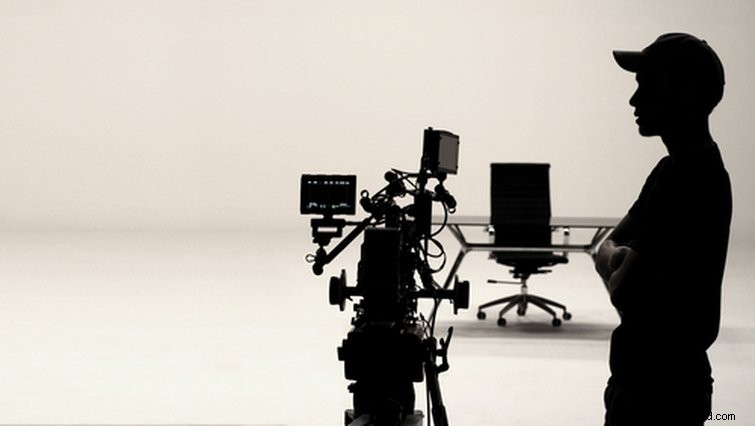 The DP oversees the camera department and works closely with the director. Image via gnepphoto.
The DP is responsible for the visual tone, lighting, and camera work of the shoot. They translate the director’s vision into composition, exposure, and motion. Responsibilities include:
- Choosing cameras, lenses, and accessories
- Planning lighting and camera setups
- Collaborating with the gaffer and lighting crew
- Co‑managing the camera crew and on‑set workflow
Camera Operator
The camera operator physically runs the camera, ensuring smooth framing, focus, and movement. In larger productions, an assistant camera operator may handle focus pull, lens changes, and follow‑focus duties.
- Proficient with a variety of camera systems
- Strong knowledge of framing and composition
- Effective communication with the DP and crew
Gaffer / Lighting Crew
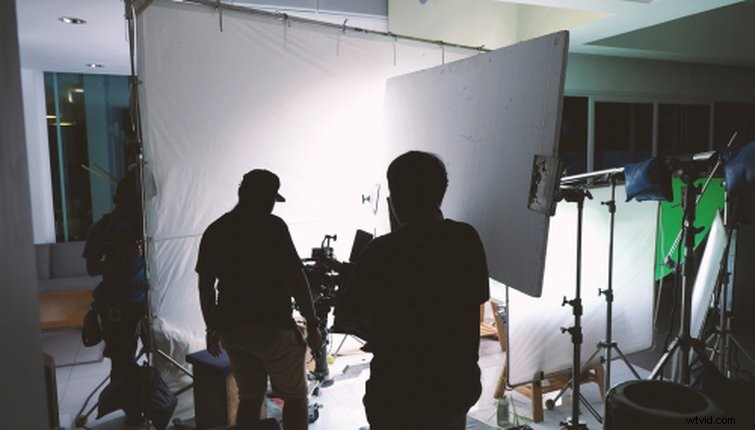 Gaffers are in charge of the lighting department and crew. Image via gnepphoto.
The gaffer designs and implements the lighting plan, ensuring safety and visual consistency. Duties:
- Setting up lighting rigs and equipment
- Maintaining safety protocols on set
- Collaborating with the DP to achieve the desired look
- Managing the lighting crew and scheduling
Audio Technician / Sound Recording
The audio technician is responsible for all on‑set sound capture, working closely with boom operators and the director to preserve audio quality and avoid visual distractions.
- Expertise in microphones, mixers, and acoustics
- Managing audio levels and preventing bleed
- Co‑working with the director and DP on shot planning
- Providing clean, usable sound files for post‑production
Editor / Editing Supervisor
 An editor handles the footage in post‑production. Image via FrameStockFootages.
The editor shapes raw footage into a coherent narrative, working closely with the producer and other post‑production specialists. Responsibilities include:
- Mastering editing software (Premiere, DaVinci, etc.)
- Developing a post‑production workflow
- Synchronizing audio and video tracks
- Incorporating motion graphics, VFX, and color work
Motion Graphics / VFX Artist
Artists in this role create dynamic visual elements that enhance storytelling—lower thirds, titles, logo animations, and more complex VFX sequences.
- Proficiency in After Effects, Cinema 4D, Nuke, etc.
- Collaboration with editors and producers on storyboards
- Delivering high‑quality assets for final render
Colorist
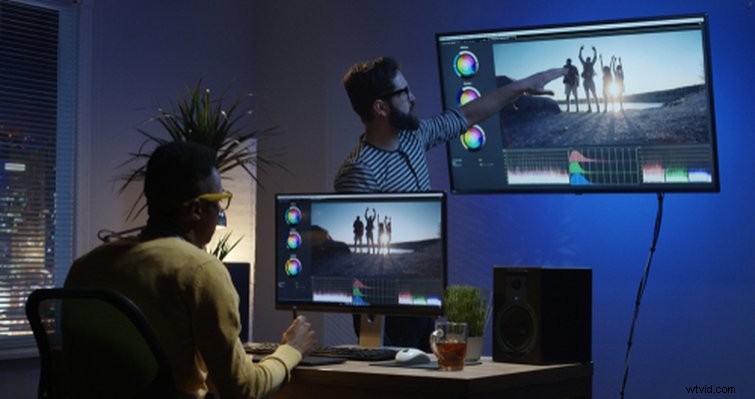 The colorist works on the aesthetics of the final draft of a project. Image via FrameStockFootages.
Colorists refine the visual palette, ensuring consistency and mood across all scenes. Key tasks:
- Applying color grading techniques using DaVinci Resolve or similar
- Matching shots for tonal consistency
- Collaborating with editors and producers for final look
Building a Flexible Team
While the above roles represent industry best practices, every production has unique needs. As you grow, you may merge responsibilities, outsource specialists, or create hybrid positions. The priority is a cohesive, reliable crew that can adapt to evolving project demands.
For further insights into the video production ecosystem, consider reading these resources:
- Essential Gear You Need to Start Your Own Production Company
- Getting Hired for a Video Production Company Job
- The Pros and Cons of Forming a Production Company
- 7 Things Clients Look For in a Video Production Company
- 6 Tips for Marketing Your Video Production Company