
We interview the DP behind the latest installment of The Texas Chainsaw Massacre franchise about his new styles for tackling classic horror.
It’s a tale as old as time itself—a group of friends visit an old homestead and fall victim to a group of cannibals along the way. Oh wait, maybe that’s not the oldest tale of them all . . .
Perhaps the tale of how a new group of filmmakers, who grew up watching films like these, are tasked with giving new life to such a historic IP is the better tale to tell.
Let’s focus on the latter as we sit down with DP Ricardo Diaz, who, along with director David Blue Garcia, were given the reins to re-imagine The Texas Chain Saw Massacre for a new generation.
Released as a direct sequel to The Texas Chain Saw Massacre (1974) and the ninth installment of the overall franchise, Diaz had an array of difficult decisions for how he shot the project—as well as exciting opportunities to push the horror genre forward.
Interview with Director of Photography Ricardo Diaz
PremiumBeat: What camera did you shoot on and why?
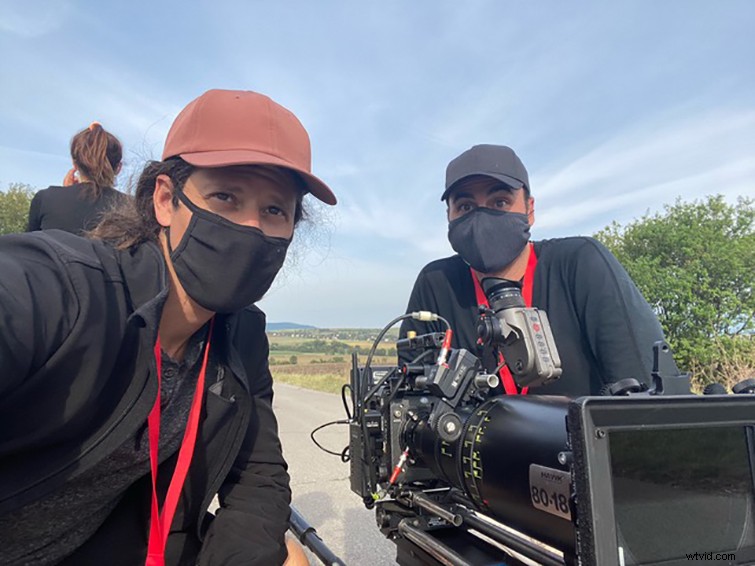
Ricardo Diaz: Texas Chainsaw Massacre was shot on an ALEXA Mini, with Vantage Hawk V-lite primes and V-plus zooms. In terms of format, we decided to shoot ARRIRAW for the most fidelity and information possible.
Form factor was also a key concern in my decision-making. The film finds our characters in the absolute tightest spaces, many of them practical. We have a crowd packed in a party bus and another character wedged in a crawl space. The size and weight of the ALEXA Mini were crucial to put the camera in the many compromising places our story necessitated.
I also have a shorthand with the camera’s layout, menu, and sensor capabilities. This was crucial for me as my prep period for the film was only a week! I needed something I could rely on without the aid of extensive tests.
PB: How much research did you do in regards to The Texas Chain Saw Massacre (and perhaps even into what cameras/lenses they used in the original)?
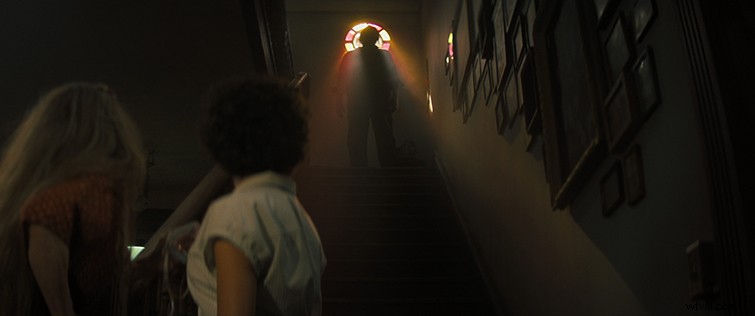
Diaz: I definitely looked to the original The Texas Chain Saw Massacre for inspiration and guidance on the look of our sequel. We were very lucky that there is quite a bit of history into the production of that film.
The cinematographer who shot the original film, Daniel Pearl, ASC, is very open on social media about his process. Right off the bat, when watching the first film, you are hit with very rich colors and deep contrast. The images are so stylized and eye-catching, and I knew I wanted to carry that palette into our vision.
We also felt the depiction of the sweltering Texas heat and humidity needed to be a character in our version. Our translation of that was our sandblasted day exteriors and halation around street lights for our night exteriors.
PB: How do you feel that horror cinematography has changed over the years? (Even specifically with The Texas Chain Saw Massacre franchise.)
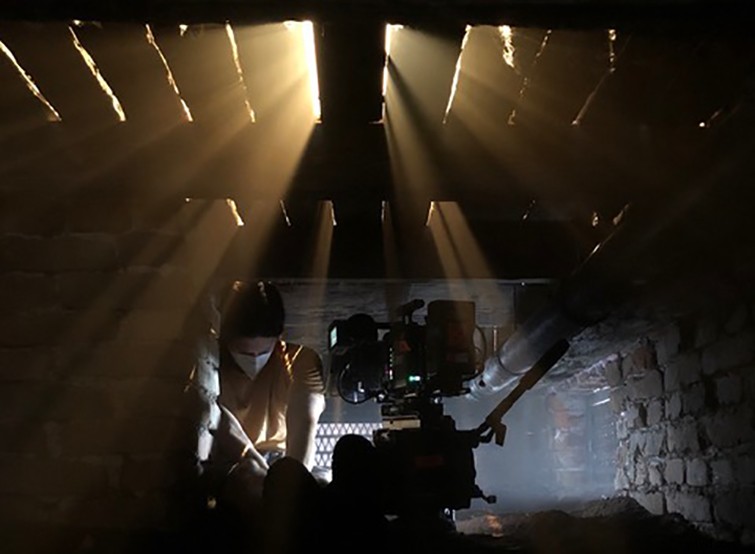
Diaz: It’s really easy to see how the shift from film to digital has tracked with the way we photograph horror films. Film emulsion has such great latitude across the curve, but especially in the shoulder. It made more sense to make sure your negative was dense and then print down to achieve a dark look. Thanks to this, night scenes often felt over-lit.
As digital capture began to find a hold in the industry, it became clear that its advantages were at the toe of the curve. Knowing that, I feel we, as artists, have been emboldened to be daring in our lighting and exposure approach. This has fundamentally changed how the genre looks as we often underexpose and push the look in the grade. Whereas with film, we were exposing in the middle and pulling or printing down.
Texas Chainsaw Massacre is no different. We were always underexposing the sensor by shooting in RAW at 1280 ISO. By doing this, I was always protecting my highlights by 2/3rds of a stop and underexposing the image with the intent to print up in the grade.
PB: Where do you see the horror genre going in the future?
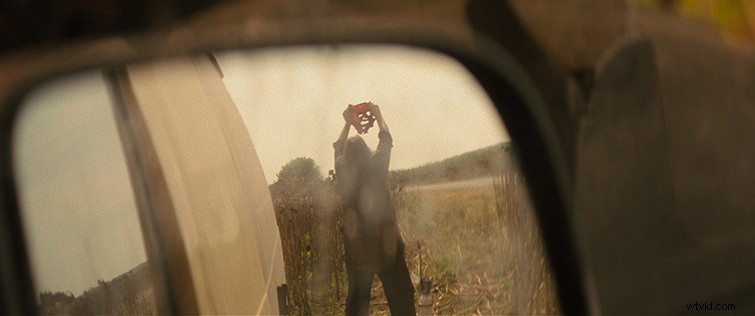
Diaz: I continue to see horror as a vessel to tell very personal stories. The genre is just so suited to magnify tangible and existential human issues. It’s not hard to see that being pushed to the next level going forward.
As we continue to give voice to new filmmakers of diverse socio-economic backgrounds, we will see hidden struggles visualized as never before. The 1980s gave us a recognizable blueprint for the slasher and horror film, but I think the future will continue to be that our nightmares aren’t limited to hulking men with chainsaws but, more often, the things right outside our doors.
PB: What advice would you give to any aspiring filmmakers trying to shoot their own projects for the first time?
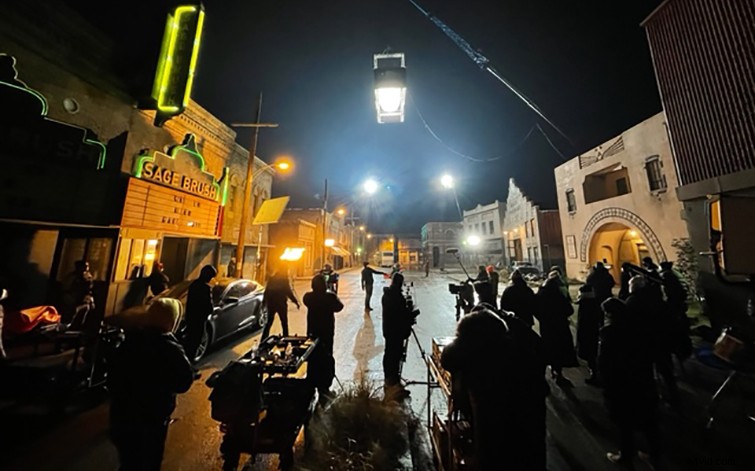
Diaz: I can’t stress enough how important it is to ask for exactly what you want. Filmmaking is a collaborative art. You NEED the help and support of others to manifest your vision. Don’t ever feel you aren’t allowed to ask for help or feel you can’t ask for what you need.
This applies to the smallest thing like sending an email to that agent or fighting to hire a key crew member who makes your work better. You don’t get what you don’t ask for.