
If it’s trending it’s cool, right? Let’s explore this by diving into the uses for a diffusion filter and what it can do for your next project.
Every so often, a new visual trend comes along that takes the online filmmaking community by storm. You can’t tune into your favorite filmmaking content creator without seeing them using the trend. And, while there’s always a place for the technique to be utilized, the popularity of the practice causes it to be used in shots where it typically isn’t needed. Maybe the trend is every single shot being filmed at f/1.8 (as seen around 2010), or gimbal slow-motion footage (heavily popularized later in the decade).
While it’s been a long time since 2010, I think I can see the whittling of amateur filmmaking trends down the following list (somewhat in order).
- Shallow depth of field
- Slider shots
- Time-lapses
- M31 LUT
- Gimbal shots
- Drone shots
- VR/360
I’m sure I’ve missed several small trends, especially regarding editing. But, at large, these techniques were at one point used in abundance during a set period within the 2010s. However, it does seem that we’ve moved into an era where there isn’t a predominant visual trend that YouTube creators can’t get enough of. Or, is there?
Diffusion Filters
A few weeks back, filmmaker and OG PremiumBeat writer Noam Kroll posted this Instagram post, which reads:
And, it instantly hit me as to what’s currently trendy—diffusion filters. We’re in the era of hazy highlights and milky shadows.
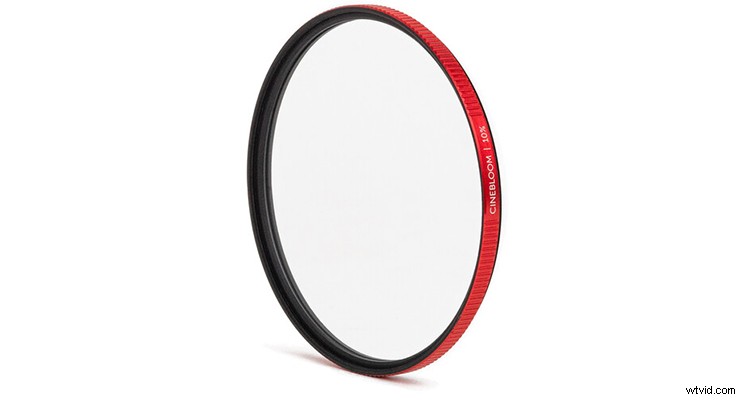
If you’re unsure as to what a diffusion filter does, no worries. I’ve already written an article on this exact subject. However, to quote myself in said article:
If we take a quick look into Google trends of Tiffen Black Pro-Mist, we can see the popularity increase over the last two years. But what’s causing this?
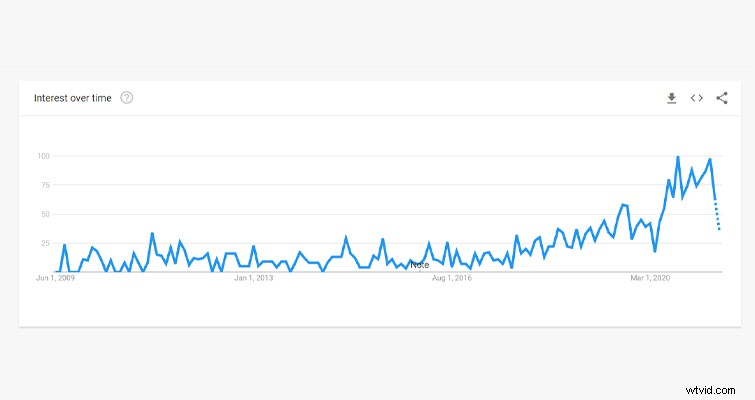
Of course, there’s always been a need for diffusion filters. Again, my article looks at when you’d typically want to use one, but I want to specify why I think content creators are using diffusion filters in abundance when, perhaps, the project doesn’t necessarily call for one.
The Film Look
The film look. It’s been the singular drive for no-to-low budget filmmakers for the past decade. Of course, many factors contribute to achieving the film look, and many elements aren’t even related to the technical aspects of the camera. However, at a low-budget level, making your images look filmic is the most feasible way in making your project look like it has more production value than it has. Ever since the 5D MK II, filmmakers have been trying to make their digital imagery appear as if it was shot on celluloid.
Full-frame DSLRs gave low-budget filmmakers shallow depth of field, a visual attribute that was only reserved for cinema and TV pre-2010s. As time pushed forward, cameras housed better dynamic range, and when coupled with RAW image processing, we moved into a position where low-budget cameras produce extremely cinematic images (see the Pocket 4K).
However, even when using film emulation tools like FilmConvert combined with the above attributes, one area that consumer cinema cameras have yet to truly nail is halation.
While cameras such as the Blackmagic Pocket Cinema Camera 4K have fantastic highlight roll-off, it still doesn’t promote the typical halation that’s associated with celluloid. For that true celluloid feel, we’d want to see the spreading of light beyond its proper boundaries to form a fog around the edges. And, this is one reason why I think diffusion filters are being used in excess by online content creators. The haze around the highlights somewhat imitates the look of halation.
As such, you’ll find a number of videos on YouTube that suggest the diffusion filter is the missing link for content creators to get that filmic look.
The issue with diffusion filters, and perhaps why it’s more noticeable than halation itself, is that the filter also raises the black levels of the image. As a user commented in Noam’s post:
That’s why you should be careful when adding a filter to replicate the likes of halation. It’s going to minimize contrast ratio, and compositions can start looking like dream sequences and flashbacks.
If we look at the comparison video from Tiffen, we can see that a diffusion filter affects the contrast ratio of the entire image. This is especially the case when you progressively increase the strength of the filter.
So, let’s look at this video from Salomon Ligthelm, which was shot on film. We can see that the highlights have halation, but the blacks are of true black value.
And, you’re going to see this across the board with projects shot on celluloid. Only the bright highlights are affected by halation, as it doesn’t necessarily bring up the values of the other tonal regions.
Therefore, next time you reach into your kit bag to attach your diffusion filter, ask yourself: Why? Does it serve the story? Are you using it to soften facial features? To replicate the hazy look of the romantic period? If your answer isn’t related to the context of the project, but instead “to get the film look,” I’d question whether it’s truly going to give you that celluloid look.