
2018 SXSW Film Festival’s Ben Strang shares these 7 tips from his original thriller series for shooting with a camera in motion.
All images via Beast.
It’s strange to think, but there was a time in cinema history when a simple left-to-right camera pan was considered an incredible innovation. Today, cinematographers have a full range of camera motion at their disposal, but not all movements are created equal.
We chatted with filmmaker Ben Strang about his SXSW Independent Episodic pilot BEAST, an adventure/thriller set against the Chesapeake Bay’s eerie marshland islands, about how he was able to work with his camera in motion while on location in challenging production environments.
1. Storyboarding Is Critical
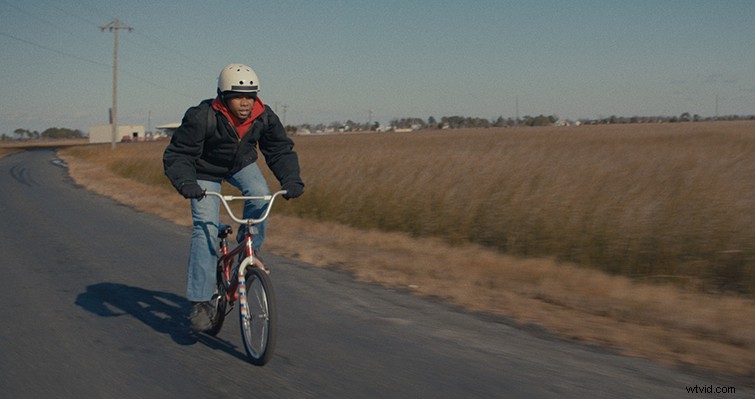
When you start adding extra elements like movement and motion to your shots, a concrete outline of what you need to do to capture the right footage is absolutely key. Strang also talks about the nerve-racking schedule they had to keep while battling things like sunsets — knowing what you need to get by a certain time based on your storyboard is critical.
2. Use What’s Available for Motion
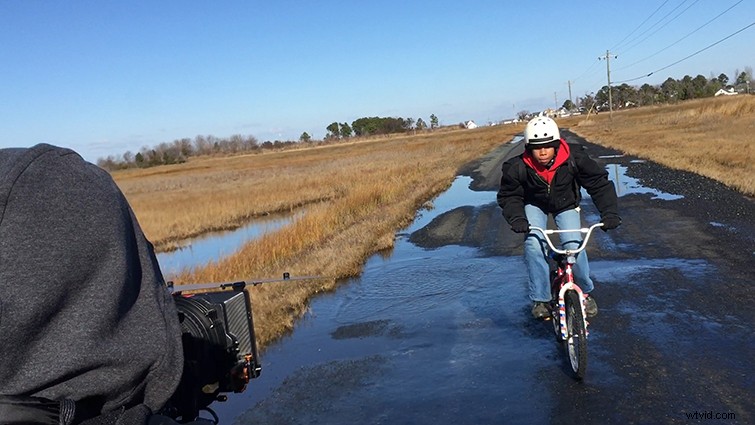
For the majority of BEAST‘s production, the team was in a remote location on an island with very little access to the outside world. This meant that they had to improvise many traditional camera movement setups using whatever was available. Strang’s favorite shot (pictured above, video below), shows how they captured their subject riding a bike at a high speed toward the camera by strapping their Steadicam operator to the back of a pickup truck.
3. Make a Plan Before You Shoot on the Water

Strang stresses efficiency in all scene and sequence setups as the best way to move quickly between shots. This is especially true when filming against the elements and trying to work in the narrow periods of sunrise or sunset for cinematic magic-hour lighting.
4. When in the Wild, Stay on Foot
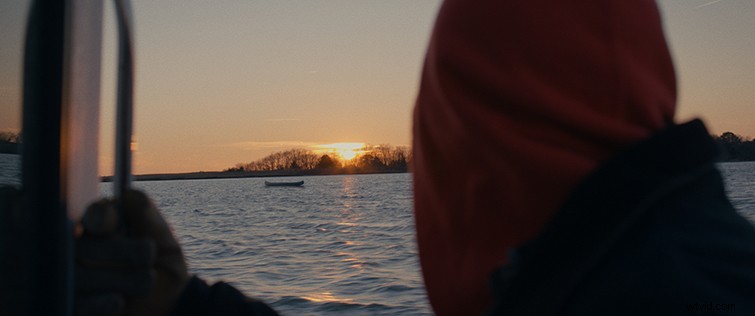
To get another cool shot (video below), Strang actually had his Steadicam operator on the back of a golf cart (which were plentiful on the island). Similar to the pickup setup, the filmmakers used the golf cart to get a backward-looking shot of their subject riding out on a dock before doing a step-off to follow the character down the pier on foot.
5. Innovative Rigs for Speed

Working primarily with a Steadicam on land, Strang and his crew had their hands full keeping up with their character on his bike. While they always preferred to stay on foot, when forced to use their pickup truck and golf cart resources, they had to build out a DIY harness for both stability and safety. The rail bar contraption harnessed the Steadicam operator while the rest of the crew had room to pile in behind him.
6. Understand the Theory of Movement
Since BEAST is premiering at a film festival but is ultimately intended for television, laptop, and smartphone viewing, Strang was in an odd position regarding moving shots. Different camera movements (and different editing choices) may look good on one format while feeling overwhelming on the other. Ultimately, Strang and his team decided to shoot for the theater screen and big TVs.
7. Only Move the Camera When You Need to
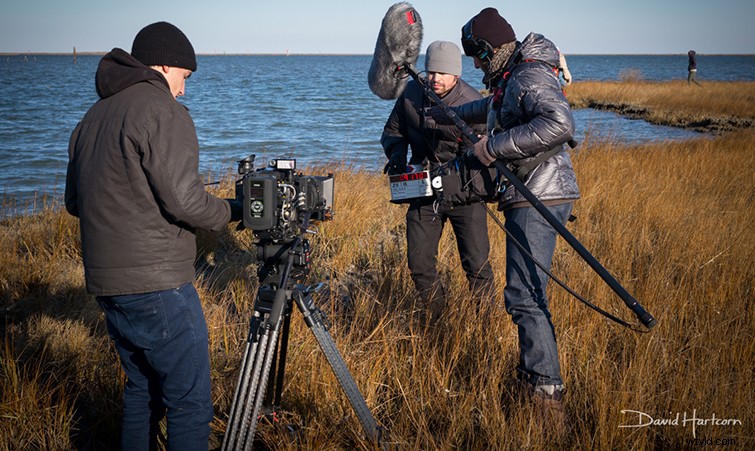
Strang asserts that “both movement and stillness can have a loud effect.” Which I think is a profound statement because if you know why your camera is doing what it’s doing (and have storyboarded it out that way), you can let the motion and movement (or lack thereof) tell the story the best way possible. According to Strang, it’s also helpful once you start to feel comfortable with your static shots to scratch some more complicated and time-consuming movement “as long as the visual language is what you wanted all along.”