
- Shallow Depth of Field definition
- How to get shallow Depth of Field
- How to use shallow Depth of Field
Shallow Depth of Field definition
Depth of Field (DoF) is a term that defines how many “layers” of the picture are sharp. With the deep DoF you’ll be able to see the finest details of the foreground as well as the background, shallow depth of field photos keep only a foreground focused, while the rest is blurred.

How to get shallow Depth of Field
Distance between an object and the background
To get the background blurred you must leave some space between it and the object you shoot, so that the photo has distinct “layers”. You won’t be able to create such an effect with an object leaning on the background.
You may also step a little forward and get closer to your model, then the cam will focus on it and the background will get hazed.
This trick is also used to achieve Bokeh effect – which is, in fact, another demonstration of shallow DoF.
Aperture
The wider aperture is, the shallower focus you’ll have. Just a small reminder: aperture is defined by an F-stop number. Small numbers stand for wide apertures, which let a lot of light in, and vice versa. To achieve shallow DoF you’ll need to set it on F/2.5 or even less.
In order not to overexpose your picture, you should shoot with a fast shutter speed. Or you can just turn on aperture priority mode that will adjust all the settings according to the aperture you’ve selected.
If your lens doesn’t allow a wide aperture, you can distance from the object of shooting and then zoom in. Doing this will create a better shallow Depth of Field effect.
Focal length
The meaning of this term in simple words is “the distance between a lens and a sensor”. The longer focal length is — the shallower DoF you get. So, if you can, try out a zoom or a telephoto lens for a DSLR camera, it will increase this parameter and improve your experience in general. In case of iPhone or Android phones, you can use a digital zoom, there will be the same effect.
The best way to understand how it works is practice, take different shots of the same scene with different settings, keeping in mind our small tips, and just go creative.
How to use shallow Depth of Field
You can use this technique almost in every type of photography, for example:
- Portraits
- Macro photography
- Travel photography
- Object shooting

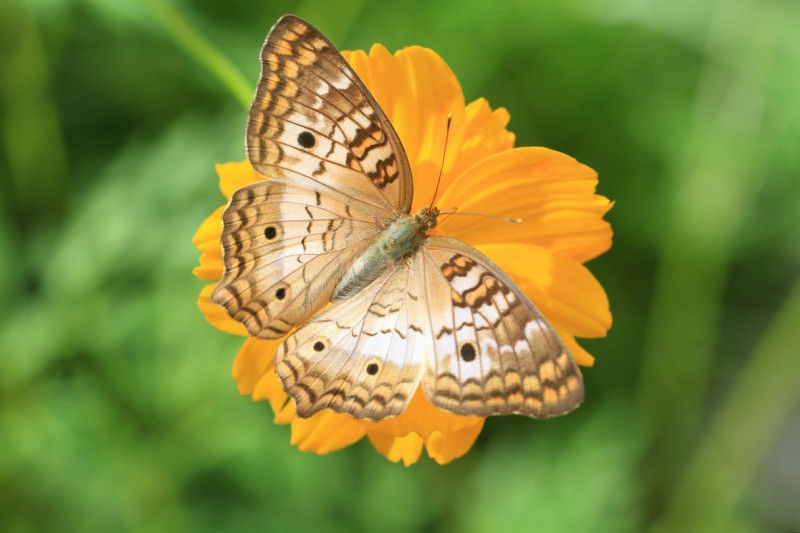


To tell briefly – in all the cases when a photographer wants to draw the viewers’ attention to the central figure, not to the distracting background.
If you want to change the depth of field when the picture is already taken, post-shooting editing sometimes can help. But try different combinations and take as many pictures as you can, it will greatly save your time.