
To autofocus or not to autofocus, that is the question. So, let’s look at when AF may be preferable over manual focus.
There’s somewhat of a stigma towards autofocus, especially within the online filmmaking community. The notion is that the way of cinema is only by manual focus. And, from a purely statistical point, that’s true.
There is, of course, a designated person for the job of pulling focus (a focus puller). Plus, you can find a host of accessories, and tools to pull focus (a follow focus) correctly and accurately. In general, larger and more professional lenses are solely designed to produce the best optics, leaving little wiggle room to include noisy electronics.
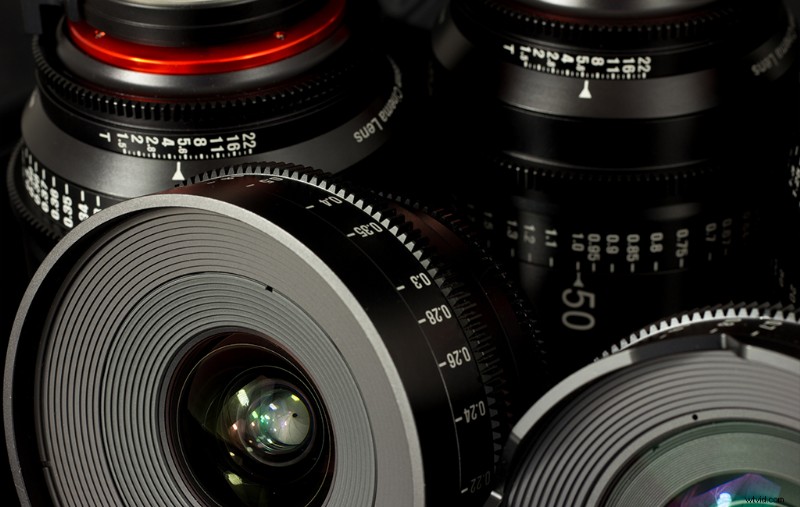
However, we’ve seen tools initially designed for photo merge and become interwoven with film and video tools over the last decade. As photography lenses typically house autofocus, we saw more DSLRs and mirrorless cameras take advantage of the function for their video mode (even if it wasn’t terrific). In 2021, however, we also see many high-end cinema cameras house autofocus.
I have to admit, for some time I did fall into thinking that autofocus (for video) was a gimmick. However, it was simply because I hadn’t become accustomed to its usefulness.
My first big purchase leaving my teenage years was the 5D Mk II, back in 2010. Which, of course, didn’t have autofocus. After that, I jumped up to a RED cinema camera, again no autofocus. But with this camera, I invested in a series of vintage Nikkor lenses.
Later on, when I jumped over to Panasonic into the GH line, even though the Gh4 had video autofocus, the lenses were non-compatible. Therefore, it’s only been over the last year with the C300 Mk III that I’ve started to use autofocus.
And, well, it’s been worthwhile.
When Is Autofocus Useful?
Continuous video autofocus has come a long way since the adoption by DSRLs early into the 2010s. The GH4, for example, it was slow to react. It’d sporadically attach onto a subject you didn’t want it to focus on, and it was prone to focus hunting.
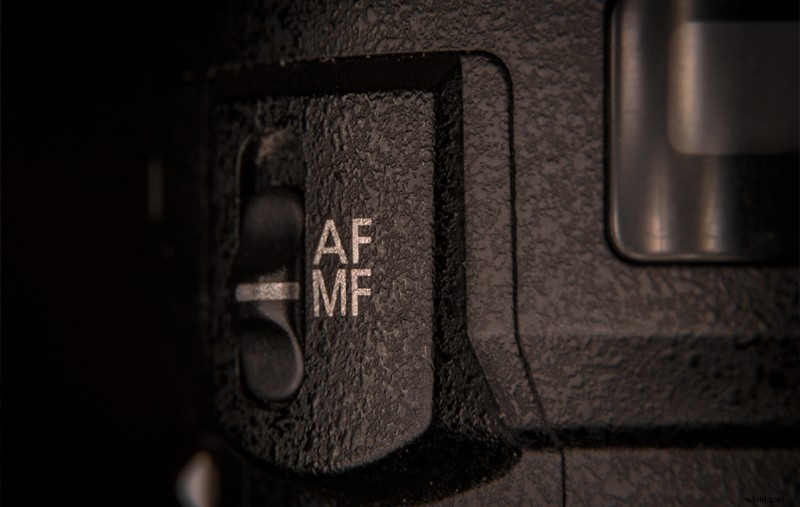
With Sony leading the charge, more expensive mirrorless cameras and cinema cameras have extensive autofocus features that I didn’t know existed before owning one.
The Canon C300 Mark III has dual pixel AF with support for touch AF and face detection AF. This means that the camera will latch onto the subject’s face within the composition, but the camera operator can specify which face to focus on.
While the functionality of continuous autofocus continues to advance, ultimately, you’ll find that even $10,000 and $15,000 cameras cannot replace the intuition of a dedicated focus puller. Or, at the very least, a self-shooter aware of what’s about to happen.
That’s because while the camera’s processing can latch onto a moving subject entering into the frame, it does so in a reactionary fashion. It focuses on the subject when it moves into what the camera can see. Unfortunately, sometimes we’ll see that within the video itself. That focus is slightly too late. Not by a devastating amount, but it’s not instant. And, of course, this is a limitation of the field of view from the camera.
Meanwhile, a focus puller or a self-shooter can have those areas marked both on the lens and the ground. So, when the subjects move into that positioning, the focus puller isn’t reacting, but preemptively moving focus.
Ultimately, unless a camera has some form of radar outside of the sensor, autofocus will never match being able to focus for something moving into the frame preemptively. However, I did note that it’s become beneficial for my work.
Now, let’s take a look at when AF may be preferable over manual focus.
Gimbals
You’ll often find that on professional Steadicams, there’s a wireless follow focus operated by a focus puller somewhere behind the camera. For self-shooters using gimbals, this isn’t a luxury we have. Standard follow focuses are too big and, more importantly, it’s not recommended to touch the camera when it’s balanced.
Therefore, even if you were to try and manually focus the lens while moving the gimbal, which sounds pretty tough, you’d likely run the risk of throwing the camera off balance.
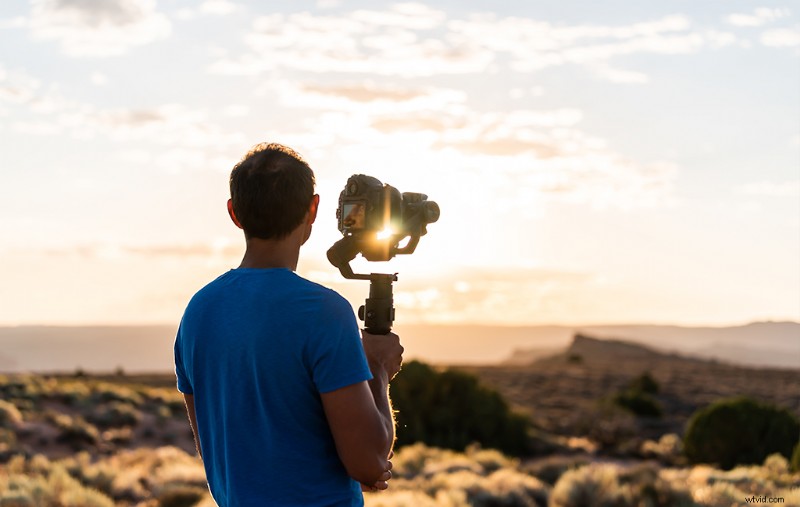
As a result, a tried-and-true method has been to use an extreme wide-angle, a deep depth of field, and set to infinity focus. With those three combined, you’d often have all things primarily in focus when moving on a gimbal.
However, sometimes that isn’t fun, especially if you want to use a shallow depth of field on a tighter focal length. In these circumstances, when moving with the talent at a low-budget level, autofocus is an invaluable tool to make sure they stay in focus.
Animals and Children
Turning a manual focus cinema lens can be slow and precise to ensure the actor’s movement continually stays in focus. The focus throw defines this as the amount you need to rotate a lens from its minimum focus distance to its maximum.
On still lenses, the focus throw is typically small, requiring a minimal form of rotation to focus from the MFD to infinity. On a cinema lens, the focus throw requires more rotation. As a result, it allows you to make minimal focus adjustments as opposed to a sweeping adjustment found on a still lens.
While it seems trivial for photography, and I guess it is, when actors are moving forward ever-so-slightly, or continuously swaying back and forth, changing the focus by minute adjustments is incredibly helpful.
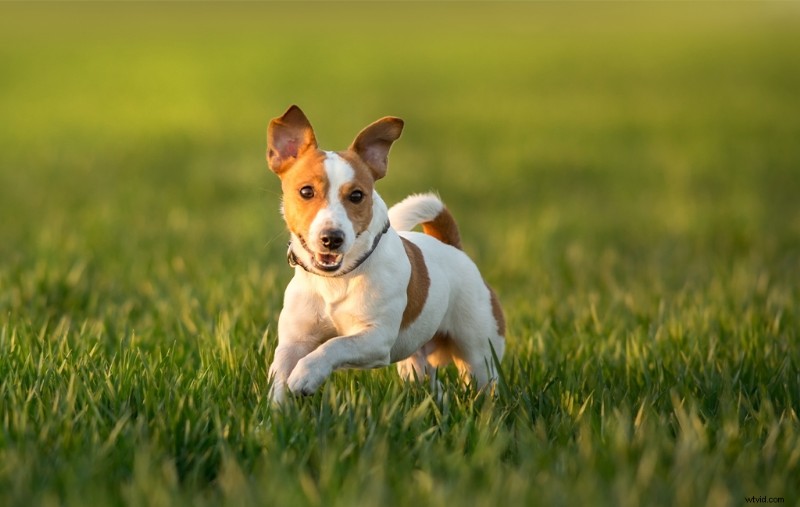
However, when you’re filming real-world subjects that can’t precisely be directed or controlled—dogs playing in the garden or young children chasing after said dogs—dictating which way to focus can be a guessing game and one that often proves wrong.
Autofocus, mainly if your camera can track a specific subject, is incredibly useful in these situations.
Telephoto Lenses
The area of acceptable focus on a telephoto lens is minimal compared to a wide-angle. This is especially true with longer focal lengths, and even more so when filming with a wide aperture. Just having your actor move a step forward can throw them out of focus.
Additionally, because still lenses typically have a small focus throw (how far you need to rotate the focus ring), it can be tough to judge where to focus. Using autofocus will allow you to track your subject, keeping them in focus while they move.

Solo Creators
For just over a year, most of my Shutterstock Tutorial content, like the video below, was shot with the Blackmagic Pocket Cinema Camera 4K and a Voigtlander 17mm. The BMPCC4K doesn’t house continuous AF, and the Voigtlander is a manual focus lens.
Therefore, before filming the tutorials, I’d often situate an object to where I intended to stand to find my focus. Even then, as I’d often film at F/1.8 to F/2.8, I’d still sometimes find the focus window was perfectly hitting my nose but leaving my eyes to fall slightly hazy. As a result, the take would have to be recaptured.
Now, using a camera with continuous autofocus that specifically tracks the face removes many headaches from the self-solo setup.
In Conclusion
There are positive aspects of both autofocus and manual focus. Ultimately, for complex work, manual focus will reign supreme. When there are multiple moving subjects within the frame, even the most advanced camera software will have a hard time tracking the selected subject.
However, while the naysayers will state that autofocus is for video and manual focus is for cinema, if you’re creating music videos for YouTube, do what works for you.
We’ve got a few more filmmaking tricks and tips up our sleeve. Take a look at these:
- 14mm Focal Length for Filming Conversational Scenes
- 5 Filmmaking Software Programs You Didn’t Know You Needed
- 7 Filmmaking Podcasts That Are Worth Your Time
- 5 Inexpensive Filmmaking Accessories You Need to Own
- The 6 Best Filmmaking Cameras Under $1,000
Cover image via guruXOX.