
From smartphones to portable game consoles and cameras, here’s why a memory card is an essential piece of technological equipment.
Even though they’re critical to storing images and files, advances in memory card technology rarely get marketed except at tech conferences. What’s more, the information on a memory card tends to read like a foreign language. Numbers, letters, and roman numerals take up precious space for savvy consumers looking at writing speeds, reading speeds, and storage capacities.
But it’s not hard to understand.
While we may take memory cards for granted, there are several innovations — some big, some small — worth noting, especially if you plan to record footage in 4K or 8K. As we’ve seen with other technologies, memory cards of all types are continually improving their speed, storage capacity, and (more recently) their durability.
More Storage, More Files
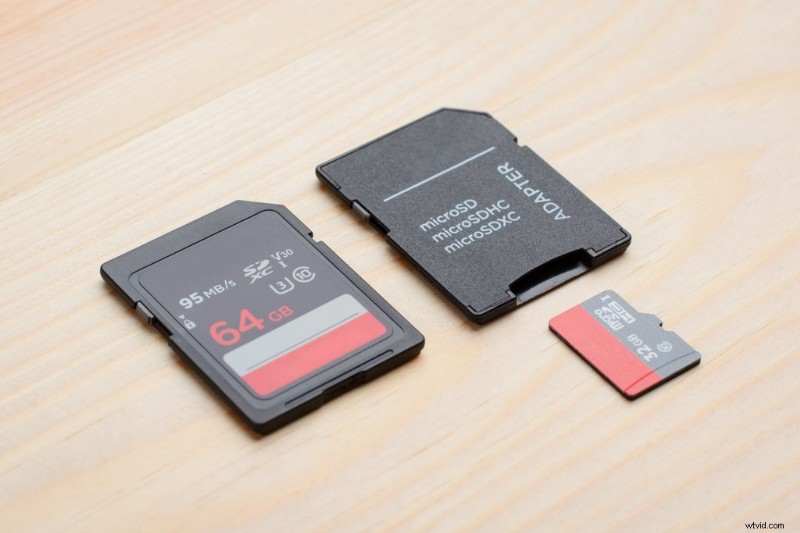
SD and MicroSD Cards
Two of the most popular memory cards out there are SD and MicroSD cards. That’s because they’re readily available, affordable, and compatible with multiple devices across many manufacturers. Their storage capacity and speed have increased dramatically in the last few years, but so has the price for premium offerings.
It was only a few years ago that a 128GB SD card seemed like the pinnacle of the technology, but the new 1TB SD and MicroSD cards surpassed that milestone. These memory cards are not meant for the typical consumer. Rather, they’re tailored for “prosumers” and professionals — just check the price tag. Even with substantial discounts, the majority of 1TB SD or Micro SD memory cards cost upwards of $300.
While the price may be steep for most, there are some significant advantages, especially if you record lots of high-quality footage. With 1TB of space, you don’t have to replace your card as often. Its read/write speeds can also handle most tasks from 4K video to 8K video, in some cases. Cards with a V60 or V90 rating are best suited for 8K, while V30-rated cards can handle 4K. For reference, a V30 rating means that there’s a constant write speed of 30MB/second, which keeps video files smooth and stutter-free.
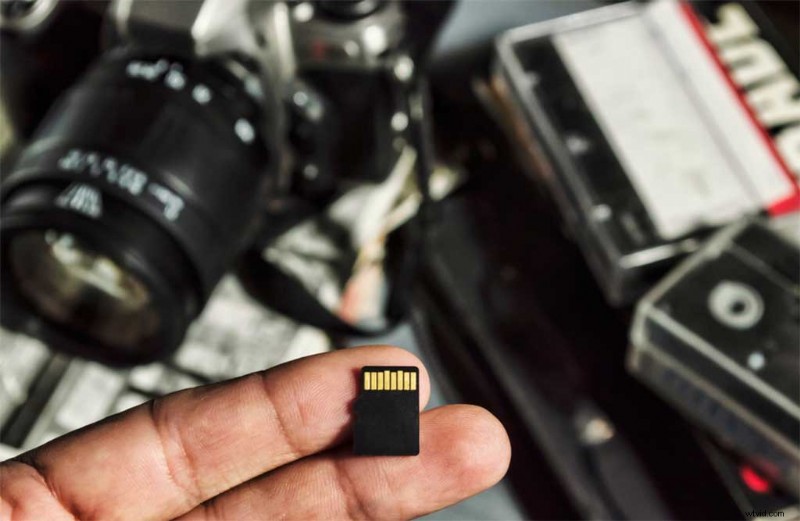
In the future, expect 2TB SD and MicroSD cards to hit the market. The SD Association already has a designation for cards of that size, which will be branded with an SDUC symbol. Currently, SD and MicroSD cards between 32GBs and 2TBs have the SDXC branding, while cards under that threshold have an SDHC branding. Cards with only an SD or MicroSD symbol are outdated, and hold a max of 2GB.
XQD and CFexpress Cards
As for other cards, albeit less-popular ones, there are advancements as well. Sony’s XQD and the backward-compatible CFexpress cards have yet to cross the 1TB threshold, but they offer unheard-of writing speeds. One of the fastest CFexpress cards on the market has a gasp-inducing writing speed of 1400MB/second, while it reads at 1700MB/second.
XQD and CFexpress cards, however, are only compatible with a small number of cameras, primarily Sony and Nikon. Although, for recording RAW 4K video, there’s likely no better memory card. The downside, of course, is the limited compatibility, smaller storage capacity, and the steep cost. The card mentioned above sells for $599, and a 32GB card, their most modest offering, retails for around $89.
CFast 2.0 Cards
Before SD cards became a camera mainstay, Compact Flash memory cards reigned supreme. These cards are old news though, and new cameras no longer support them. In its stead, the CFast 2.0 memory card is getting its moment in the sun.
These cards have writing speeds better than their SD, MicroSD, and XQD counterparts — and CFexpress takes the crown. The largest CFast cards have a storage capacity of 512GB, which is halfway to a terabyte. The price, not surprisingly, is high, but that’s because these cards are newer and only compatible with higher-end professional cameras. The price will most likely stay the same unless mass adoption of the technology happens in the coming years, which is hopeful if not unlikely.
Expect More For Less
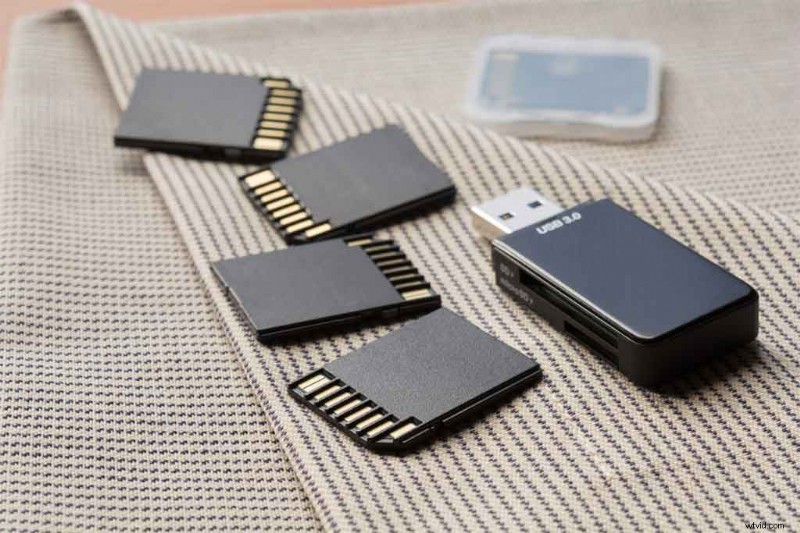
Memory card technology is always improving — getting better, larger, faster — and it’s all done, for the most part, behind the scenes. New advancements rarely get shouted from the rooftops in the vein of new smartphones, but it’s worth paying attention. As cameras improve and record higher-quality footage, so will the memory cards they use — after all, they must. When it comes to prices and specs, expect prices to fall and storage capacities and speeds to increase until we reach the limit, at which point a new card will take the old one’s place. Such is the world of memory cards.
Top image by successo images.
Want more on video production? Check these out.
- How to Create a Realistic Miniature Look with a Drone
- Your Guide to Contrast Ratios for Cinematography
- Can You Successfully Shoot a Film on the New iPhone 11 Pro?
- Top 10 DIY Lighting Rig Tutorials to Light Up Your Set
- The Tools You Need to Start Shooting Stock Footage