
Whether you’re making a big-budget feature or a small short film, knowing which roles are essential to your production can make your life easier on set.
Film School will tell you if you want to make a movie, you need a gaffer, a grip, 1st AC, 2nd AC, director of photography, 1st AD, 2nd AD, Best boy grip, best boy gaff, makeup artist, PAs, DIT, sound engineer, boom op, stunts, choreography . . . but . . . you don’t.
You can get by with 20 people, or you can get by with five people. But, who are those five people? What are their roles? And is it possible to get the same quality in your final product with a five-person crew as you would with a 20? Yes. But, it takes a lot of planning and some really talented folks.
So, we’re going to answer the age-old question: How many people do you really need on set?
The Traditional Film Set Hierarchy
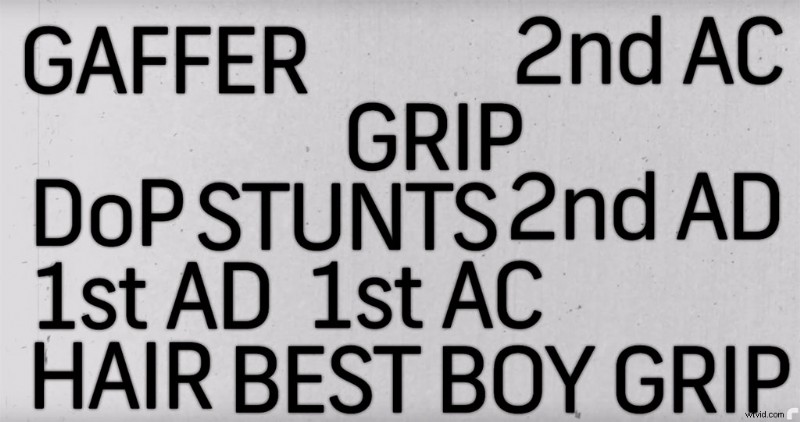
So before we start, let’s take a crash course on the hierarchy of the traditional film crew. First, we’ve got the director, who is the creative mastermind behind the film. This is a “big picture” person. To get all of the day-to-day stuff done like organizing actors, staying on time, and relaying info from the director, you need a 1st assistant director. If your project gets bigger and needs more logistical help, you might hire a 2nd AD or even a second 2nd AD. In that same category would be your script supervisor, who makes sure that the actors cover every line and then maintains continuity.
Then you’ve got your Camera Department. The head is the director of photography, who is in charge of capturing the director’s vision with the camera. Under them is the 1st assistant camera. They help the DP by swapping lenses, taking care of the camera sensors, and pulling focus. Just like ADs, you’ll get 2nd ACs and second 2nd ACs the bigger your project gets. DITs, or digital imaging technicians, compile all of the footage on hard drives and organize it for the post-production team.
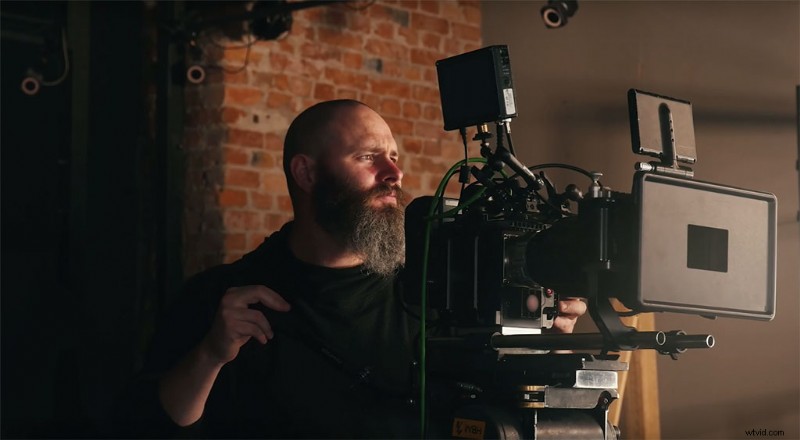
Next is the Grip and Gaff Department. The gaffer controls all aspects of lighting on set and ensures electrical safety. The key grip is in charge of setting up all of the major rigs on set, such as dollies, cranes, and specialized set pieces. Under them are the Best Boys — or their second in command.
In the audio department, You’ve got the sound engineer, who is in control of capturing all on set audio. That sound engineer will have a boom operator who holds the boom mic while the sound engineer rides the gain knobs to adjust for changing volume levels on set.
As for the rest of the roles, there are endless positions depending on your set. Production assistants, hair and makeup, set designer, Art Department, stunt coordinator, choreographer, VFX supervisor, animal wrangler — the list goes on.
Working with a Leaner Crew
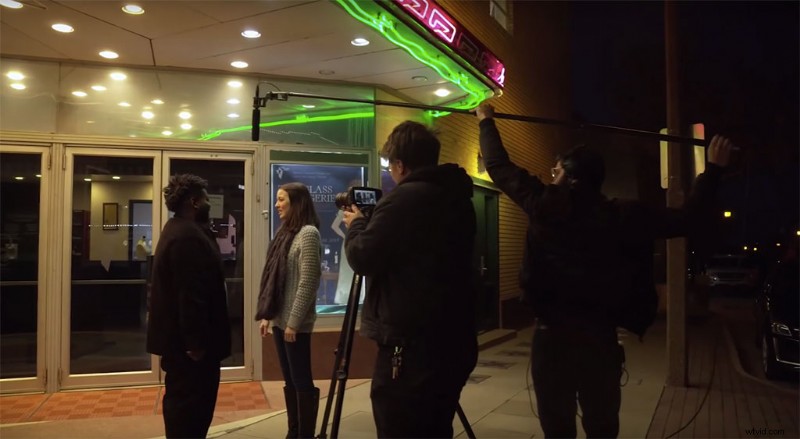
So right now, we are sitting at just around 20 people on your set at one time. This is a crew that can get just about anything you need done: action sequences, big crowd scenes, huge set pieces, and well-orchestrated shots. But, let’s be realistic. Not everyone’s going to have the budget for this kind of crew. By not everyone, I mean like 90 percent of filmmakers. So unless you’ve got the power to get people to work for free, let’s start trimming the fat.
Let’s say you’ve got a short film you’re ready to shoot, and you’ve got a little bit of a budget to work with. You, the writer of the short, are going to be the director. Along with you as the director, you will have a 1st AD who will act as your set coordinator and script supervisor. Your camera department is going to Be condensed down to a DP, who will also be the camera operator. Your sound department is going to combine the sound engineer position with the boom operator, and they will run boom along with controlling the knobs on a handheld/hipside recording device. Your grip and gaff department now becomes a one-man-band, like the rest of the crew. And for good measure, we are going to include a hair and makeup artist because you want your actors to look nice and pretty.
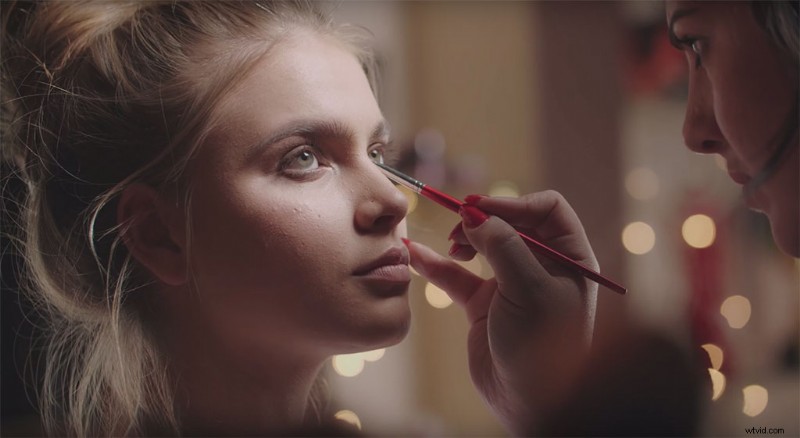
So you have successfully condensed your crew from 20 people to 6. 14 fewer people to pay! But, it’s also 14 fewer people on set to help out. Which brings me to my point about a smaller crew — you can absolutely get a lot done with one, but every crew member becomes more essential. If you lose your 1st AC, you can’t use a follow focus, and your camera equipment (like Steadicams or large-scale rigs) might be out of reach. Without a large grip and gaff crew, it’s going to be a lot harder to light large rooms, and it will slow down your setup and tear-down times on set.
Designing a Project Around a Limited Crew
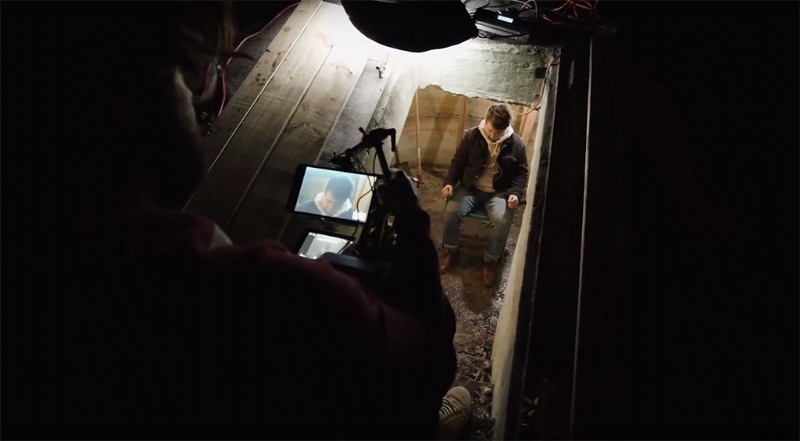
So it kind of shakes out like this — if you’re working with a limited crew, limit the size of your production. Use natural light and conservative lighting set-ups; small, local sets; and character-driven stories that don’t require a studio-sized set or VFX. Everyone will wear multiple hats on set, too. Small crews are an excellent way to really get to know all the positions on set, because usually, you’ll be the one filling that role when the need arises.
You can even create music videos and documentaries done with 1-2 person teams. Fair warning, though: you will be doing everything on your own — setting up lights, prepping gear, talking with your talent, and any other production tasks that come up. It can be tough, but it can be done.
So, What’s the Verdict?
So, back to the main question: How many people do you really need on set? If you have a two-actor scene that you’re shooting in your basement, you only need three or four people. If you’ve got a huge Michael Bay-style action sequence, you’ll need . . . more.
Just know your limits. Know your budget. Know what story you want to tell.
And that’s something that you should really think about. Your script can tell the same story as a small-budget short or large-scale project. Your crew size does not determine the quality of your film. I’ve seen horrible movies with five-minute credit rolls, and I’ve seen fantastic movies produced by a team of less than 10 people.
So don’t get bogged down with the idea that you need a huge crew to get your project off the ground. You can get started with any budget — you’ve just got to make sure to scale the story to the production size you can afford.
Interested in the tracks we used to make this video?
- “Cold String” by Tiny Music
- “Fresh Hip Hop” by Trending Music
- “Hip Hop Sunset” by Trending Music
- “Punchy Hip Hop” by Trending Music
- “Timeless Rose” by Aulx Studio
Looking for more tutorial on film and video production? Check these out.
- Tips for Recording ADR on Your Own — on a Budget
- How to Build A Super-Bright DIY LED Balloon Light
- How to Light Exterior Night Shots with One Light
- 10 Types of Shots and Angles Every Filmmaker Should Know
- Video Tutorial: How to Get Cinematic Lighting In Small Spaces