
The minds behind production company Hometown discuss how video production companies must adapt and find new ways to tell stories remotely and on a global scale.
When the world shuts down, it really gives you an opportunity to sit still and think. That was certainly the case for many in the film and video industry as lockdowns caused productions on projects—big and small—to suddenly come to a halt. And, while many might have been left high and dry without clients or projects ready to adapt, there were a few who used this year of lockdowns as an opportunity to try some radical production ideas.
We chatted with the video professionals behind Hometeam, a video company that specializes in global and remote production, to see how they were able to adapt during a pandemic, as well as help paint a picture for how the industry might change in a post-pandemic world.
A Globalization of Stories and Productions
Speaking with the three founders of Hometeam, Harrison Winter, Brandon Bloch, and Lagan Sebert (via email), they traced some of the origins to their remote and global production to several projects back as early as 2014, with Winter’s company Co.MISSION. Working with clients like Starbucks, Winter quickly realized that the prospects of using just one video production team to shoot content across twenty-eight countries was going to require huge investments of time and resources.
The solution was simple—dig deep through their networks and connections to find talent and assemble crews locally in each region, then produce the project from their home studio in New York. Winter estimates that by producing remotely, they saved up to “fifteen times the cost,” as well as “getting better quality by connecting with talented DPs in each country who could speak the languages, get to know the locations, and tell the best and most intimate stories.”
Producing Videos in a Post-Border World
Bloch joined up with Winter early on and actually worked on the Starbucks campaign as the Director of Photography for their New York location. They would use his work as a boilerplate to help provide a contextual and cinematic template to share with the rest of their crews around the globe.
After the success of the Starbucks campaign, the duo found that plenty of other brands were interested in creating content that spoke of this “borderless world” and could authentically tell “stories which captured the human tradition no matter where you are.”
With Co.MISSION, the duo would work on similar projects with brands like Google, Hyatt, and Instagram, all while continuing to curate and build their global network.
A New Model for Productions
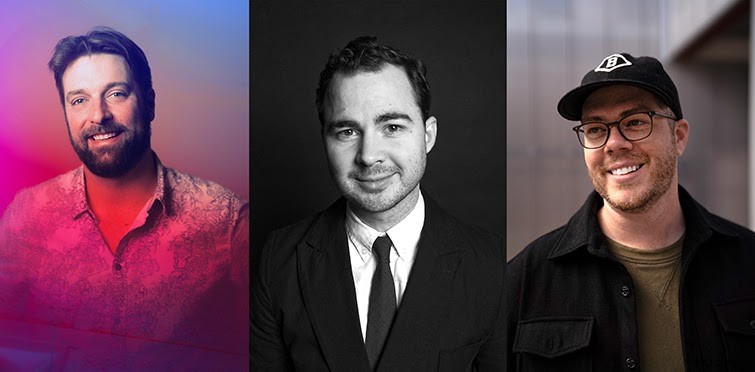
After working with Winter on projects for Co.MISSION in New York, Bloch eventually moved to Austin, Texas, joining Sebert at a production company called Magic Seed, which used a similar model for global production—but, more specifically, tailored for television studios and “band on tour” projects.
Yet, as it became clearer that industries across the globe would shutdown due to COVID-19, Winter, Bloch, and Sebert had many of the same conversations with their fellow filmmakers and creative collaborators as we all did. Projects were halted, clients had few answers, and productions appeared to be lost.
However, based on their global and remote work in the past, Winter, Bloch, and Sebert reached out to their community of filmmakers to quickly bring together a roster of owner-operator crews located throughout the U.S. and abroad. So, work could be shot locally and production could continue during COVID travel restrictions. This evolved into a new production model. A model they created specifically for productions in a COVID world.
More Efficient Productions Moving Forward
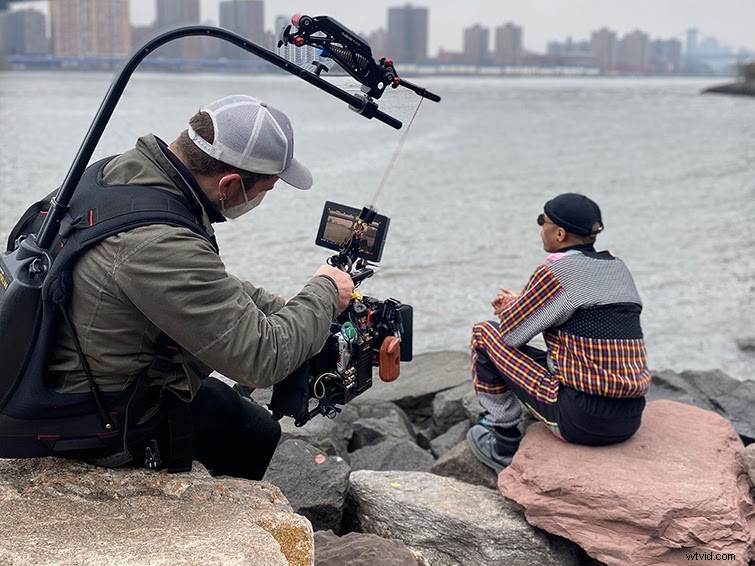
As you might imagine, remote production solves many of the unique problems presented when trying to produce videos in a COVID world. It eliminates travel time, costs, and resources. Clients don’t have to pay for airfare, down travel days, or multiple equipment rentals. It also keeps crews off of airplanes and out of airports. Instead, it relies on talent that’s already local and can travel much more safely, efficiently, and eco-friendly.
Bloch talks about the success they’ve found in working with different DPs and crews across the globe, as Hometeam has “shot some twenty-one contestant ‘Home Follows’ for Seasons 19 and 20 of The Voice on NBC. We also shot seventeen contestant packages across three cities on a single day for Legendary (premiering on HBO Max May 6th).”
Traditionally, big clients and agencies prefer to have “their crews” from New York or Los Angeles for their projects. But, as technology and information have become better, so has the quality of talent across the world. If you’re a true student of the art of filmmaking, producers can now find you based on your project history, shared connections, and even your social footprint.
Serving as directors and producers remotely and on Zoom calls has its own challenges. But, overall, Bloch and Winter report that the quality from their global productions has actually improved along with becoming much more efficient—both plusses clients love.
Will Productions Stay Remote and Global?
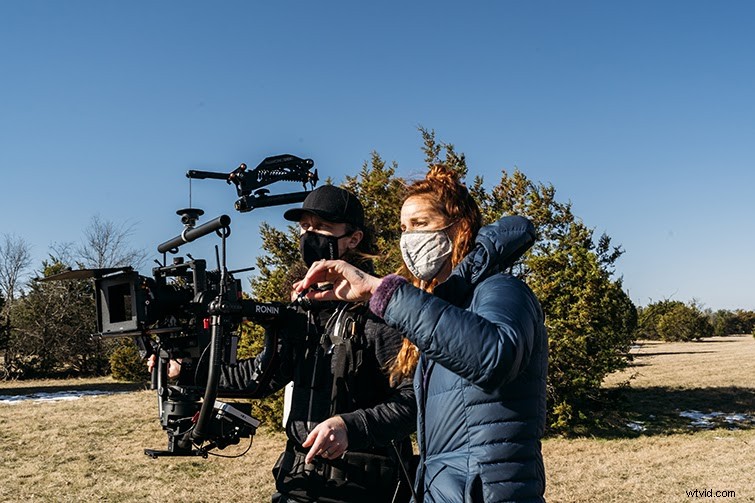
Still, the question remains as to how clients, agencies, and the industry (overall) will react as we settle back into a post-COVID world. Will big brands still want to shoot everything in-house or by flying their NY and LA crews across the world? Or, will some agencies look at the new workflows they’ve been forced to explore during lockdowns?
Ultimately, Bloch—along with the rest of the Hometeam crew—are betting on there being even more opportunities for remote and global productions for three reasons: more efficient in terms of time and cost, better quality with local crews, and a broader range of stories overall, which aren’t just the same old productions that brands tried in the past.
As Winter puts it to wrap things up, “If you truly want to tell global stories, brands and agencies will soon realize that you’ll truly need a global approach.” If you’re someone just picking up a camera for the first time, or someone who has a killer sizzle reel but feels left out from the big agency connections, it might mean that in a post-COVID world, new and better opportunities will be more available for everyone.