
Tracing the Evolution of Sound Effects and Their Impact on Modern Filmmaking
Sound effects, foley, and audio design—these terms converge on a single craft that transforms visual narratives into immersive, emotionally resonant experiences. While dialogue and music receive most of the spotlight, sound effects form the subtle but vital backdrop that anchors a film’s reality.
Who Was Jack Foley?
Jack Foley (born 1891 to Irish immigrant parents in New York) is often called the father of modern foley. Growing up in the bustling docks of the city, Foley later moved to Bishop, California, where his ingenuity turned everyday noises into cinematic storytelling tools. During World War I he guarded the Los Angeles water supply for the American Defense Society, and later, in the 1920s, he leveraged his theater, musical, and cartooning skills to break into Hollywood.
In 1927 Universal Pictures embraced sound for the first time, prompting Foley to organize a publicity drive that attracted production companies to Bishop. By 1929 he was employed at Universal in multiple roles, working on classics such as The Phantom of the Opera (1925), The Jazz Singer (1927), and Tarzan the Tiger (1929) where he famously recorded Tarzan’s iconic yell. His pivotal work on Universal’s musical Show Boat helped establish the term “Foley effects,” a practice that soon became industry standard. Over a 30‑year career Foley contributed to landmark films like Dracula (1931) and Spartacus (1960), earning lasting acclaim for his craft.
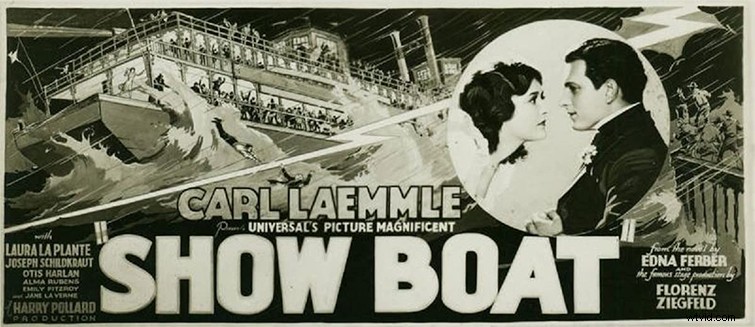
Image via Universal Pictures. In 1927 Universal Pictures first incorporated sound; Foley’s uncredited work on Show Boat in 1929 cemented the importance of music and sound effects in cinema.
What Are Sound Effects?
Beyond Foley’s footsteps and car horns, sound effects encompass every audio element that enhances storytelling— from a spaceship’s hum to a dragon’s roar. Modern sound design blends field recordings, studio foley, and computer‑generated synthesis to create layers that support narrative immersion.
Historically, the first recorded sound effect was the striking of London’s Big Ben in 1890, captured on a wax cylinder by Edison House technicians—an early example of reverb manipulation.
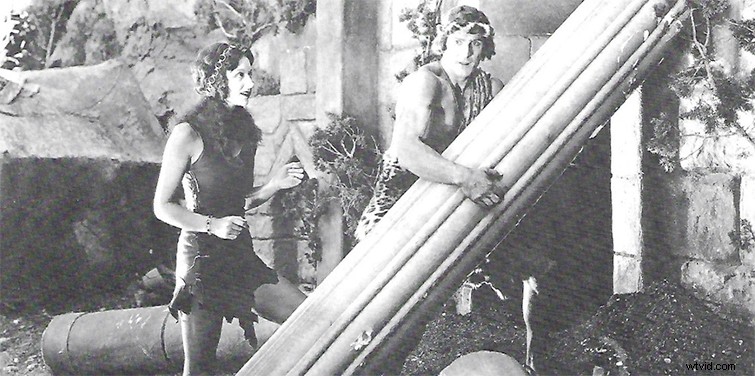
Jack Foley recorded the iconic sound of Tarzan’s yell in 1929’s Tarzan the Tiger. Image via Universal Pictures.
Key manipulation techniques used by sound designers include:
- Echo/Reverberation – Simulates space by layering delayed reflections.
- Flanger & Phaser – Create swirling, “spacey” textures through phase manipulation.
- Chorus – Adds subtle delays and pitch variations to emulate multiple sources.
- Equalization (EQ) – Fine‑tunes frequency content for clarity or mood.
- Filtering – Emphasizes or attenuates frequency ranges (e.g., low‑pass for telephone‑like tones).
- Overdrive – Distorts signals, useful for robotic or interference effects.
- Pitch Shift – Corrects or alters pitch, essential for auto‑tune or character voices.
- Time Stretching – Adjusts playback speed without affecting pitch.
- Resonators – Applies harmonic series for rich, chord‑like textures.
- Robotic Voice & Synthesizer Effects – Generate synthetic vocal timbres or entirely new sounds.
- Modulation – Classic sci‑fi effect altering frequency or amplitude (e.g., Daleks in Doctor Who).
- Compression – Normalizes dynamic range for consistent listening.
- 3D Audio – Creates immersive spatial cues using stereo or ambisonic techniques.
- Sound‑on‑Sound & Reverse Echo – Layer or reverse reverberations for unique ambience.
The Daleks’ voices in Doctor Who exemplify the modulation effect.
Mastering these techniques yields soundscapes that resonate with audiences, often unnoticed yet profoundly impactful.
How to Create Your Own Sound Effects
Begin with the right tools: a high‑quality audio recorder paired with an external condenser or shotgun microphone. While a smartphone can capture basic sounds, a dedicated recorder offers cleaner audio and greater control.
Recording strategy matters. Realistic sound often comes from creative sources: a piece of cellophane can mimic sizzling bacon more convincingly than an actual frying pan. Organize your files with a consistent naming convention and categorize them for easy retrieval.
Processing software is essential. Start with free, beginner‑friendly editors such as Audacity or Reaper—both support the manipulation techniques listed above. Experimentation is key; develop a personal sonic signature through repeated practice.
When integrating effects into a project, timing and quality are paramount. Layer your sounds in a non‑linear editor (NLE) like DaVinci Resolve, which offers robust audio mixing tools at no cost. Fine‑tune fades, adjust levels, and ensure each effect complements the visual narrative.
Where to Find Professional Sound Libraries
Designing every sound from scratch can be daunting. Our curated library of royalty‑free sound effects—available in stereo, 5.1, and ambisonic formats—offers high‑quality audio for any production. This library is exclusive to our customers and continually expanding.
Whether you’re a filmmaker, game developer, or content creator, our sounds provide the depth and texture that elevate your storytelling.
Iterate relentlessly. Test your audio with peers, gather feedback, and refine until the soundscape feels naturally integrated. Remember: the most effective sound design often goes unnoticed because it blends seamlessly with the visual world.
For deeper dives into sound effect creation, explore these resources:
- Free Epic Sound Effects for Film & Video Trailers
- 355 Free Motion Graphics, Sound Effects, Action Elements, and More
- Over 280 Free Sound Effects for Videos, Apps, Films, and Games
- 40+ Free Footstep Foley Sound Effects for Sound Design
- 25 FREE Unique Vintage Sound Effects for Your Film and Video
Cover image from Monty Python and the Holy Grail via EMI Films.