
When you need to dive into a fresh marketing topic, you have two routes: skim a stack of lengthy articles or connect with a seasoned expert in real time. Most professionals choose the latter because it saves time and delivers context‑rich answers.
Live Q&A sessions are a powerful tool to engage audiences and position your brand as a thought leader. By allowing participants to ask questions live, you remove the noise of endless resources and give people an interactive experience they value.
Below are five expert‑backed steps to run a live Q&A that captivates viewers and drives results.
Download our Webinar Guidebook and get deeper insights into pre‑ and post‑event strategies.
1. Conduct a pre‑event planning session
While a live Q&A may feel spontaneous, it actually demands careful preparation. Schedule a workshop with your team to outline the event’s flow, technical requirements, and participant guidelines.
Decide on the streaming platform that best aligns with your audience. LinkedIn Live is ideal for B2B professionals, while Facebook Live and Instagram Live tap into broader consumer bases.
Determine how many audience questions you’ll field live versus pre‑selected. Assign a moderator to screen incoming questions and keep the discussion focused.
Run a dry‑run rehearsal so speakers and moderators understand the sequence and can troubleshoot technical hiccups before launch.
2. Select a moderator who blends authority and charisma
The moderator bridges the audience and speakers, ensuring the session stays on schedule and on topic. Look for someone who can command attention, manage time, and inject personality.
Internal candidates with on‑camera experience can be a good fit; they don’t need deep subject‑matter expertise, but should show genuine interest in the topic.
If you opt for an external moderator, verify they have hosted webinars, town halls, or other interactive events. They should also handle challenging questions diplomatically and have backup questions ready for low‑traffic periods.
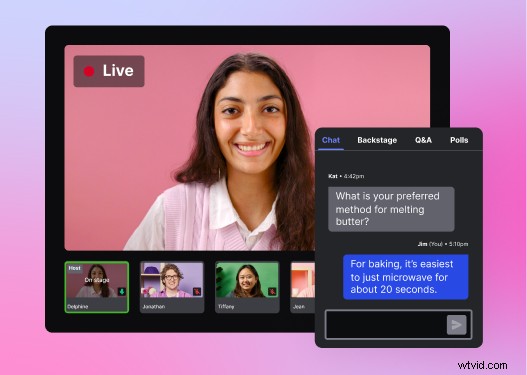
All‑in‑one Video Platform
3. Follow a structured yet flexible agenda
Without clear time blocks, a live Q&A can drift. Work with the moderator to assign a maximum duration for each question—typically five minutes per Q&A cycle.
For an hour‑long session, this framework allows 10–12 questions. If multiple speakers join, distribute the time evenly.
Adapt the pacing based on question complexity: quick “what is X?” queries might take one minute, whereas deep‑dive industry questions could consume 10–15 minutes.
Include buffer time so speakers can expand on important points, reinforcing the brand’s commitment to thorough answers.
4. Build anticipation before the broadcast
Promote the event across all owned channels at least six weeks in advance. Gradually increase posting frequency as the date approaches.
Offer email subscribers early access to submit questions, which not only propels engagement but also builds loyalty.
Encourage guest speakers to announce their participation on their own networks, amplifying reach and credibility.
5. Repurpose the live recording for ongoing content
After the event, email the recording to registrants and host it on your website for broader accessibility.
Identify high‑impact questions for follow‑up blog posts, podcasts, or short video clips. Even unanswered questions can inspire future content.
Share compelling snippets on social media to spark discussion and extend the conversation beyond the live window.
Ready to launch your live Q&A?
Live Q&A sessions empower your audience to connect directly with your brand, enhancing trust and reinforcing your thought‑leadership position. Start planning today to deliver an engaging, valuable experience that benefits both your business and your community.