
Social Media Monitoring Explained
Social media monitoring is the systematic tracking of what people are saying about a brand across every platform—whether they tag the brand directly or mention it in broader conversations. It delivers real‑time, actionable intelligence that can shape marketing, product development, customer support, and reputation management.
Key Takeaways
- Monitoring keeps you in the loop on every brand mention, tagged or not.
- Sudden spikes or tone shifts flag potential crises or golden opportunities.
- It also reveals competitor tactics, industry gaps, and emerging trends.
- Insights should flow beyond social teams to marketing, sales, product, and support.
- Tools like Hootsuite let you track, analyze, and respond in one unified dashboard.

What Exactly Is Social Media Monitoring?
It’s the practice of watching for brand‑related content—comments, posts, and threaded discussions—across all social channels. Monitoring captures both tagged mentions and untagged chatter that can influence perception and engagement.
How It Works
Monitoring combines several data streams to create a holistic view of brand sentiment and competitive activity:
- Brand Mentions: Every reference to your brand or products.
- Sentiment Analysis: Automated classification of positive, negative, or neutral tone.
- Competitor Analysis: Monitoring rivals’ posts, launches, and community conversations.
- Industry Trends: Tracking hashtags, news cycles, and viral moments relevant to your sector.
- Influencer Identification: Spotting advocates who can amplify your message.
- Share of Voice: Measuring your brand’s share relative to competitors.
- Crisis Detection: Alerting you to sudden sentiment shifts or mention spikes.
- Hashtag Tracking: Evaluating the performance of branded and campaign hashtags.
These signals together transform everyday social chatter into clear, data‑driven insights.
Bonus: Turn those insights into action with our complete guide to social listening using Hootsuite x Talkwalker.
Monitoring vs. Listening
- Monitoring is reactive: it alerts you to real‑time mentions and enables immediate response.
- Listening is proactive: it aggregates data over time to uncover patterns, sentiment trends, and strategic opportunities.
For example, a monitoring tool might flag a surge in negative comments about a product launch, prompting your support team to address the issue promptly. A listening platform would then analyze those comments over weeks to determine whether the sentiment trend is improving or worsening.
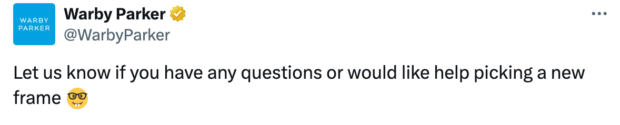
Source: Warby Parker
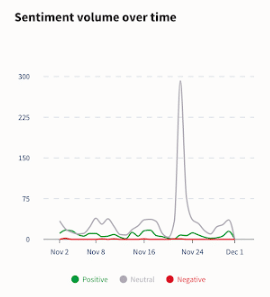
Why Brands Need Social Media Monitoring
Monitoring provides continuous, real‑time insight that helps you:
- Understand Your Audience: Capture conversations even when users don’t tag your brand.
- Preempt Crises: Spot sentiment shifts early and respond before a problem escalates.
- Inform Campaigns: Adjust messaging on the fly and capitalize on positive momentum.
- Benchmark Competition: Track launches, strategy changes, and gaps in the market.
- Engage Proactively: Respond to questions, concerns, and praise across all channels.
Case in point: Chipotle swiftly addressed backlash about a CEO comment by monitoring both tagged and untagged posts, preventing a larger reputational hit.
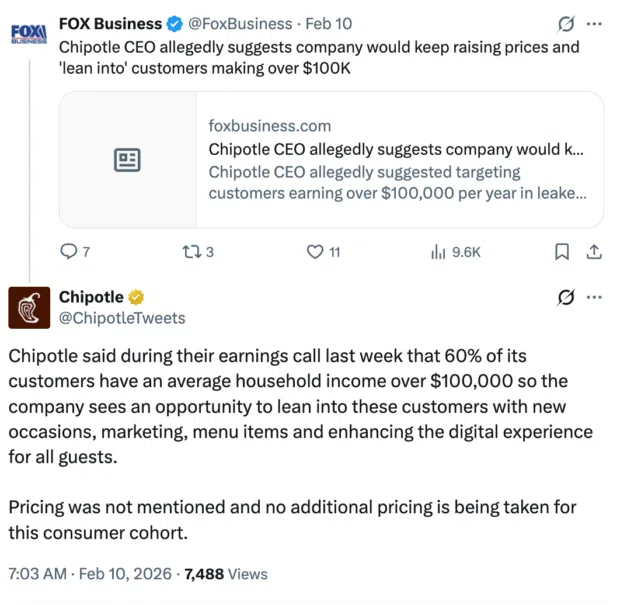
Source: Chipotle
Tools that provide real‑time alerts and share‑of‑voice metrics are essential for staying ahead of potential crises and seizing positive opportunities.
Monitoring also reveals emerging hashtags, memes, or industry shifts that can be leveraged in your content strategy.
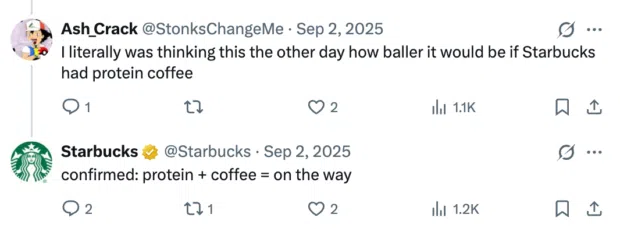
Source: Starbucks
By watching competitors, you learn which tactics succeed or fail, refining your own approach.
Building a Smart Monitoring Strategy
- Set Clear Goals – Define the questions you need answers to: brand reputation, competitor activity, influencer prospects, or support opportunities.
- Choose What to Track – Common keywords include brand and product names (plus common misspellings), CEO names, industry terms, branded hashtags, and location‑specific tags.
- Select the Right Tool – Manual checks are unsustainable. Automation brings mentions, sentiment, and trends into a single view.
- Share Insights Across Teams – Loop social, support, marketing, sales, and product into the conversation so insights translate into action.
1. Set Your Goals
Ask what you want to learn—reputation baseline, competitor gaps, influencer pools, or support tickets—and then map the data needed to answer those questions.
2. Decide What to Track
Include:
- Brand and product names (and misspellings)
- CEO and leadership names
- Competitor names
- Industry keywords and hashtags
- Branded campaign hashtags
- Location‑specific tags (for brick‑and‑mortar)
- Slogans and catchphrases
Tip: If your audience spans multiple regions, add language variations to your keyword list.
3. Pick the Right Tool
Automated platforms gather mentions, analyze sentiment, and surface trends—saving hours of manual effort. Hootsuite combines monitoring, engagement, and analytics in one dashboard, while Talkwalker extends reach to over 150 million sources, including emerging platforms like Bluesky.
4. Share Insights Across Teams
Insights must travel beyond the social team. After social and support teams act on immediate mentions, marketing can refine messaging, sales can identify objections, and product can spot feature requests. Research from Perakakis, Mastorakis, and Kopanakis (2019) confirms that tools that surface actionable data accelerate response times and improve customer satisfaction.
Getting Started with Hootsuite Streams
In the Hootsuite dashboard, create streams for each platform or keyword set. Organize streams into boards—one for brand mentions, another for competitors or industry topics. Adding a Talkwalker Listening Stream brings deeper sentiment and trend analysis directly into your board.

After setting up, you can add trending or recent streams to stay ahead of emerging conversations.

Competitive Analysis with Hootsuite Analytics
Choose up to 20 competitors per platform. The analytics report highlights top‑and lowest‑performing posts, compares engagement across brands, and identifies the hashtags driving the most interaction.


Deep Dive with Talkwalker
Talkwalker’s AI scans over 150 million sources—blogs, forums, news sites, and emerging platforms—to provide granular sentiment, influencer scores, and trend forecasting. It also lets you filter by 50 categories and assign conversations to team members.
FAQs
- What is social media monitoring?
- Tracking brand mentions in real time across all social channels to inform decisions.
- How do companies use monitoring for sentiment?
- By aggregating conversations, they gauge positive, negative, or neutral perceptions and set benchmarks.
- Best tools for enterprise teams?
- Hootsuite and Talkwalker combine monitoring, engagement, and analytics, ideal for large teams.
- Difference between monitoring and listening?
- Monitoring reacts to immediate mentions; listening analyzes patterns over time to guide strategy.
- How does monitoring help manage risk?
- Early detection of spikes or negative shifts allows swift response, mitigating potential crises.
Save time managing your social presence with Hootsuite—publish, schedule, monitor, engage, measure, and grow—all from a single dashboard. Try it free today.

 The #1 social media tool
Create. Schedule. Publish. Engage. Measure. Win.
By Christina Newberry

Christina Newberry has written about digital marketing since the early 2000s, evolving from email campaigns to social media strategy. Since 2016 she’s contributed to the Hootsuite blog, sharing insights that help brands navigate the digital landscape.
Related Articles
The #1 social media tool
Create. Schedule. Publish. Engage. Measure. Win.