

Shreshtra – October 24, 2025 – Share your thoughts. 8‑minute read
2D animation has enriched media for decades, from classic cartoons to modern explainer videos. 3D animation, meanwhile, has reshaped entire industries with depth and realism, powering blockbuster films, immersive games, and cutting‑edge virtual experiences. Which is better? The answer hinges on your creative goals, budget, and timeline.
In this guide we dissect the key differences between 2D and 3D animation, weigh their advantages and disadvantages, and help you decide which style aligns with your objectives.
Let’s dive in!
- What is 2D Animation?
- What is 3D Animation?
- Key Differences – 2D vs 3D Animation
- Pros and Cons of 2D vs 3D Animation
- How to Choose the Right Style for Your Project
- Final Verdict
What is 2D Animation?
2D animation creates motion in a flat, two‑dimensional plane, giving characters and objects height and width but no depth. Historically, animators painstakingly drew each frame by hand to produce a few seconds of motion. Today, sophisticated software—such as Animaker, Powtoon, Vyond, and Adobe Animate—enables creators to generate smooth movement with just a few clicks, dramatically reducing production time.
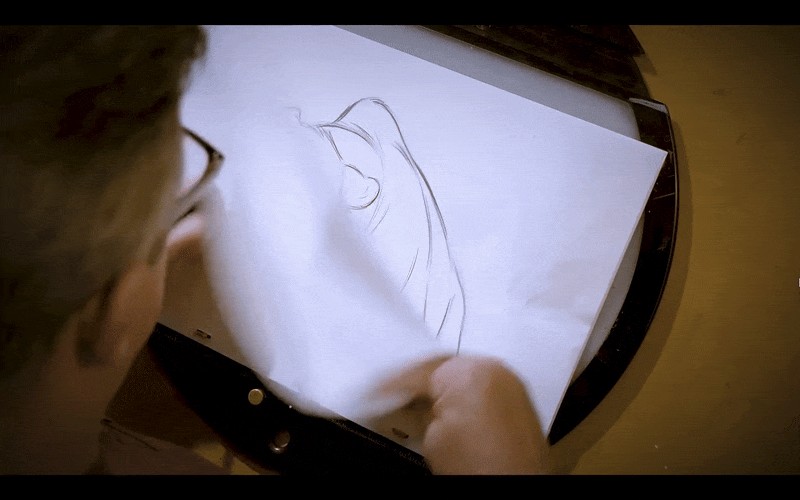
2D animation thrives in cartoons, explainer videos, marketing campaigns, and educational content.
Notable 2D examples:
- Cartoons – Oswald, Tom & Jerry, Rick and Morty, Gravity Falls
- Games – Papa’s Pizzeria, Hollow Knight, Among Us, Street Fighter II
- Series & Films – The Simpsons, BoJack Horseman, The Lion King (1994), Spirited Away
Popular 2D animation tools:
- Animaker
- Powtoon
- Vyond
- Adobe Animate
What is 3D Animation?
3D animation breathes life into characters and environments in three dimensions—height, width, and depth. Instead of flat drawings, 3D animators build and rig digital models that can rotate, move, and be viewed from any angle. Techniques such as rigging, motion capture, and keyframing allow for realistic motion and complex environments.
3D animation dominates film, video games, virtual simulations, and architectural visualization.
Notable 3D examples:
- Movies & Series – Toy Story, Frozen, Arcane, Love Death + Robots
- Video Games – Grand Theft Auto, Fortnite, Call of Duty, Minecraft
Popular 3D animation tools:
- Blender
- Autodesk Maya
- Cinema 4D
Key Differences – 2D vs 3D Animation
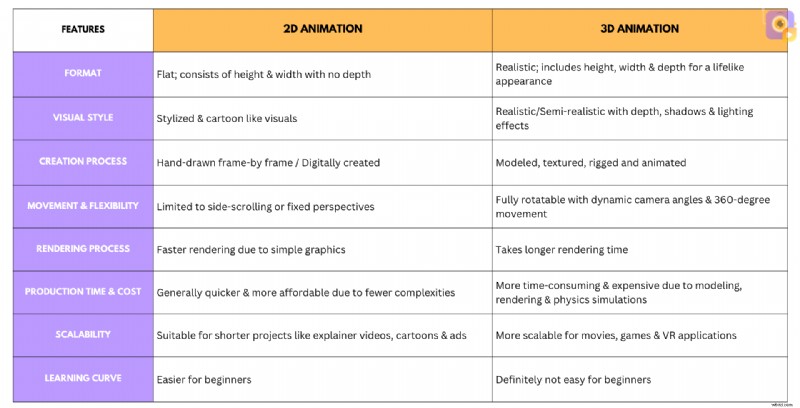
1. Visual Style & Aesthetics
Flat 2D visuals often convey a stylized, expressive feel, while 3D offers realistic textures, dynamic lighting, and true spatial depth. The choice depends on artistic intent: 2D excels in vibrant, exaggerated movements; 3D shines when immersive worlds and cinematic realism are required.
2. Animation Techniques
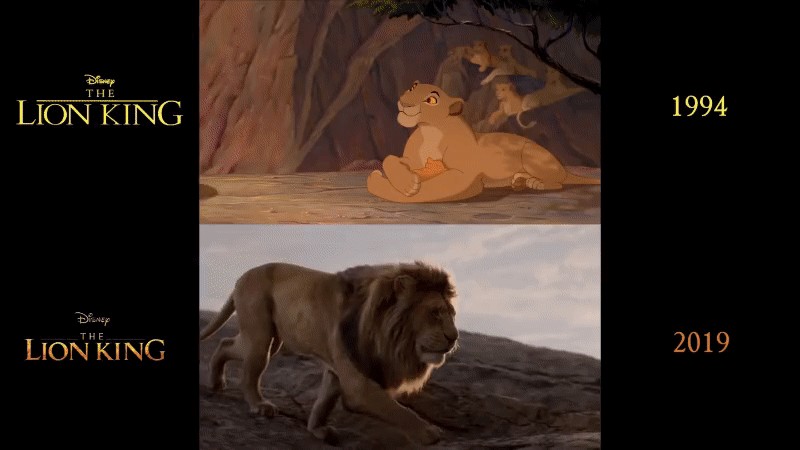
2D animation traditionally relies on frame‑by‑frame drawing, though modern tools now allow drag‑and‑drop character rigs and motion presets, making it accessible even to non‑artists.

3D animation, by contrast, uses rigged models—digital puppets with skeletal structures—and can incorporate motion capture to record real human movements, producing highly realistic results.
3. Cost & Time
2D production is typically faster and more affordable, especially for short projects, as it demands fewer computational resources. 3D production involves modeling, texturing, rigging, and rendering, requiring powerful hardware and specialized software, which drives up both time and cost.
Pros and Cons of 2D vs 3D Animation
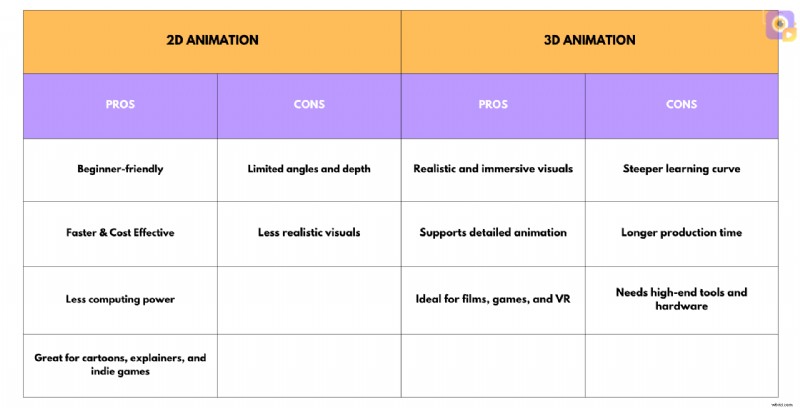
2D Animation
Pros
- Low learning curve for beginners.
- Rapid production and budget‑friendly.
- Runs on modest hardware.
- Ideal for cartoons, explainer videos, indie games, and marketing content.
Cons
- Limited camera angles and perspectives.
- Less realistic, unsuitable for projects demanding depth and intricate detail.
3D Animation
Pros
- Realistic, lifelike motion.
- Complex lighting, shading, and physics.
- Essential for movies, video games, VR, and simulations.
Cons
- Steeper learning curve.
- Longer production cycles.
- Higher software and hardware costs.
With these factors in mind, let’s explore how to match the right style to your project.
Choosing Between 2D and 3D Animation
Opt for 2D when:
- You want a stylized, hand‑drawn aesthetic that’s instantly recognizable.
- Your budget and timeline are tight; 2D demands fewer resources.
- The project relies on expressive characters rather than realistic physics.
- You value an accessible learning path; many tools enable quick, drag‑and‑drop creation.
Opt for 3D when:
- You need cinematic realism and immersive environments.
- Your work involves gaming, VFX, VR, or architectural visualization.
- You have the budget and talent for high‑end production—powerful rigs, rendering farms, and seasoned artists.
- Dynamic camera angles and realistic lighting are core to the storytelling.
Final Verdict – What’s the Best Choice for You?
For fast, cost‑effective projects that emphasize stylized storytelling, 2D remains the optimal choice. When realism, depth, and high‑end visuals are paramount, 3D delivers unmatched impact. Many creators now blend both styles—using 2D characters in 3D environments—to capture the strengths of each.
Explore the tools that streamline your workflow, and choose the animation style that aligns with your vision, resources, and audience.

Shreshtra
Shreshtra is a Content Marketer at Animaker, where she has helped creators and businesses bring stories to life with 2D animation for over three years. She has authored SEO‑driven guides that propelled Animaker’s community from 18 M to 30 M+ users worldwide. Her expertise spans AI voice tools, subtitle generators, and cutting‑edge video creation technology, all aimed at making animation simple, fun, and accessible. Shreshtra also explores how animation transforms learning and development, showcasing Animaker’s growing influence in corporate training. When not writing, she enjoys thriller novels and K‑pop playlists, believing that compelling video connects people across the globe.